AI mutations make phages up to one million times more effective against bacteria
Researchers at the University of Wisconsin–Madison have used an AI model, trained on their own lab data, to suggest mutations in bacteriophages — viruses that attack bacteria.

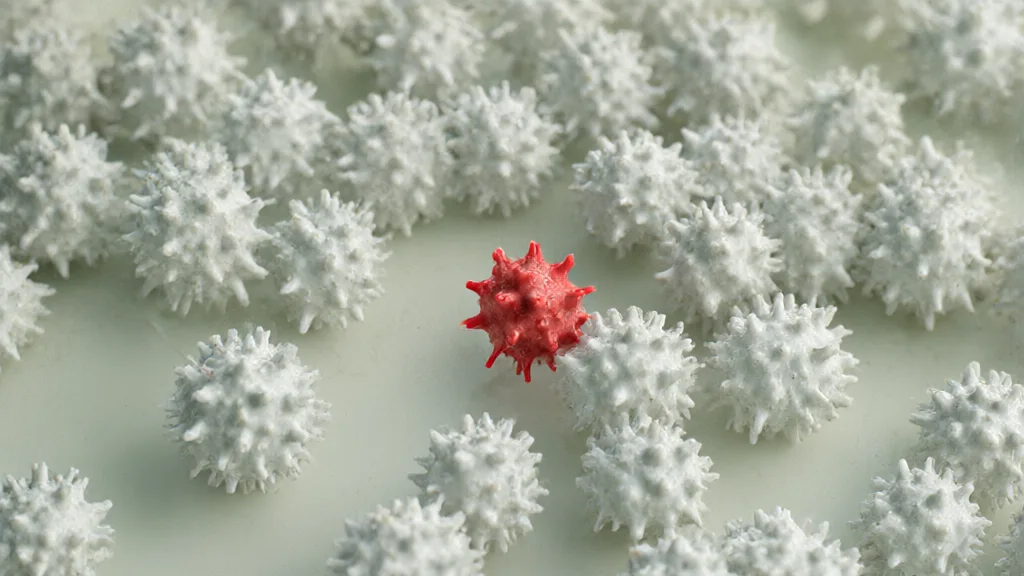
AI mutations make phages up to one million times more effective against bacteria
Researchers at the University of Wisconsin–Madison have used an AI model, trained on their own lab data, to suggest mutations in bacteriophages — viruses that attack bacteria. According to the university's announcement, dated September 24, 2026, the engineered phages infected their bacterial hosts up to six orders of magnitude — that is, up to roughly a million times — more effectively than natural phages. The results are published in the peer-reviewed journal Cell Systems, but for now all the numbers rest on the university's own press release.
What Is New
Biochemistry professor Vatsan Raman and his team in the Raman Lab built an AI model based on data collected in their own laboratory. The model's task is to identify new ways to fight bacteria using "one of their natural enemies" — bacteriophages, the university writes. The findings are published in Cell Systems, and according to the announcement they could help accelerate the development of alternatives to traditional antibiotics.
The core result is concrete: the team identified phage mutations that made the phages infect their bacterial hosts up to six orders of magnitude more effectively than their naturally occurring counterparts. That is the phrasing the announcement uses; the headline figure of "a million times" is a rounding of six orders of magnitude (10⁶).
Why Natural Phages Fall Short
Raman's explanation of why phages need help is central to the announcement: natural phages have, in his words, evolved for mediocrity — not for maximum lethality. If a phage kills an entire bacterial population, it loses the hosts it needs to survive and reproduce. Evolution, in other words, punishes overly effective hunters.
That means natural phages carry an inherent compromise: they must be good enough to reproduce, but not so good that they wipe out their own resource base. An AI model without this evolutionarily self-interested constraint can, in principle, suggest mutations that natural selection would never have sustained over time.
How the Model Works
The model is not trained on general biological datasets, but on data collected in the Raman Lab itself. According to Raman, the model learns the rules for which mutations make phages successful, and uses those rules to construct new ones: "The model can learn the rules by which phages evolve to be successful and can use those rules to engineer phages that are highly effective against pathogens," he says in the announcement.
The team also trained the model to find mutations that hit specific bacteria while sparing others. The university describes this as a key step toward treatments that can fight infections without disturbing the beneficial microbial communities in the gut — a well-known problem with broad-spectrum antibiotics, which affect both disease-causing and useful bacteria.
What It Could Mean
According to the researchers' own framing, the findings point to two possibilities:
- Alternatives to antibiotics. Phage therapy against antibiotic-resistant bacteria is a research field with a long history, and a model that can construct substantially more effective phages could, according to the university, accelerate development.
- More precise treatment. Phages that target selected bacteria and leave the rest of the microbiome alone could yield treatments with fewer side effects than traditional antibiotics.
It is worth noting that these are the researchers' assessments of potential, not documented clinical results.
Caveats and Open Questions
All the quantitative findings — including the six-orders-of-magnitude figure — come from a single source: UW–Madison's announcement. The text was republished nearly verbatim by both MSN and Madison.com on September 24, 2026, but that is the same press release in both cases, not independent coverage. The Cell Systems paper itself has not been reviewed for this story, and the press release does not state:
- which bacterial species were tested;
- whether the phages were tested in cell culture or in living organisms;
- details about the training data;
- timelines for any therapeutic use.
One larger question the press release does not raise at all: the biosafety implications of using AI to engineer viruses that are substantially more effective at infecting their hosts. Phages attack bacteria, not humans, but the method — a model that learns the rules of successful viral evolution and applies them — raises questions that the research community and oversight authorities will have to address.
For now, the safest summary is that this is a promising laboratory result, described by the researchers' own university, that deserves verification through the actual peer-reviewed publication and independent replication before the big conclusions are drawn.