
Alibaba Swaps Away Apache 2.0: Qwen-Image-2.1 Is Free to Download, but No Longer Free for Commercial Use
Alibaba's Qwen released the image model Qwen-Image-2.1 on September 20, 2026, combining text-to-image generation, image editing, RGBA transparency, and people and object extraction in a single model with free weights. But unlike its predecessors Qwen-Image and Qwen-Image-Edit, the model is no longer licensed under Apache 2.0: the new research license permits only research and evaluation, and commercial use requires a separate agreement with Alibaba. The model has already been run in ComfyUI on a single L40S GPU, but no independent quality measurements exist yet.
One Model That Does It All
The most striking thing about the release is not any single feature but their combination in one model. According to the official model card, Qwen-Image-2.1 handles generating new images from text descriptions, editing existing images, generating transparent images, and extracting people and objects — all in the same model (heise; Ishikawa Akira, note.com).
The RGBA explanation is worth pausing on: the format adds an alpha channel with transparency information to the color data. In practice, that means the model can deliver images with truly transparent backgrounds, and it can cut out people and objects as ready-made "assets" to overlay onto various backgrounds. According to heise, the model also supports targeted editing of specific image areas and the inclusion of up to ten reference images.
The feature list from the official repository, reproduced by the note.com author Mochiomochi, confirms the same points: combined generation and editing, editing of transparent images, up to ten references, local editing, and improved text rendering. The model follows Qwen-Image from August 2025 and Qwen-Image-Edit (Mochiomochi, note.com).
One common misunderstanding is worth clearing up: the "7B" in the official description refers to the number of parameters in the component responsible for visual generation, not to the model's memory requirements, as the note.com author Ishikawa Akira points out after reading the model card (Ishikawa Akira, note.com).
Running Locally in ComfyUI on a Single GPU
Two independent hands-on articles published on September 23, 2026, describe the model running locally. Mochiomochi got it up and running in ComfyUI on a single NVIDIA L40S GPU, with downloadable weight files for the diffusion model, the text encoder (qwen3vl_8b), and the VAE (Mochiomochi, note.com).
Neither of the two hands-on articles claims to have conducted quality measurements. Ishikawa Akira explicitly states that image quality, speed, and memory requirements were not measured. Moreover, both articles are AI-translated from Japanese, and the sources themselves warn that nuance may be lost — something to keep in mind where they carry the documentation burden, for example on the license terms.
The model can be downloaded free of charge, including via Hugging Face (heise).
The License Change That Alters How It Can Be Used
The practically most important thing about the release may not be the feature list but the license. The predecessors Qwen-Image (released August 2025) and Qwen-Image-Edit were licensed under Apache 2.0, a permissive open-source license that grants free use, including commercially. Qwen-Image-2.1 is not.
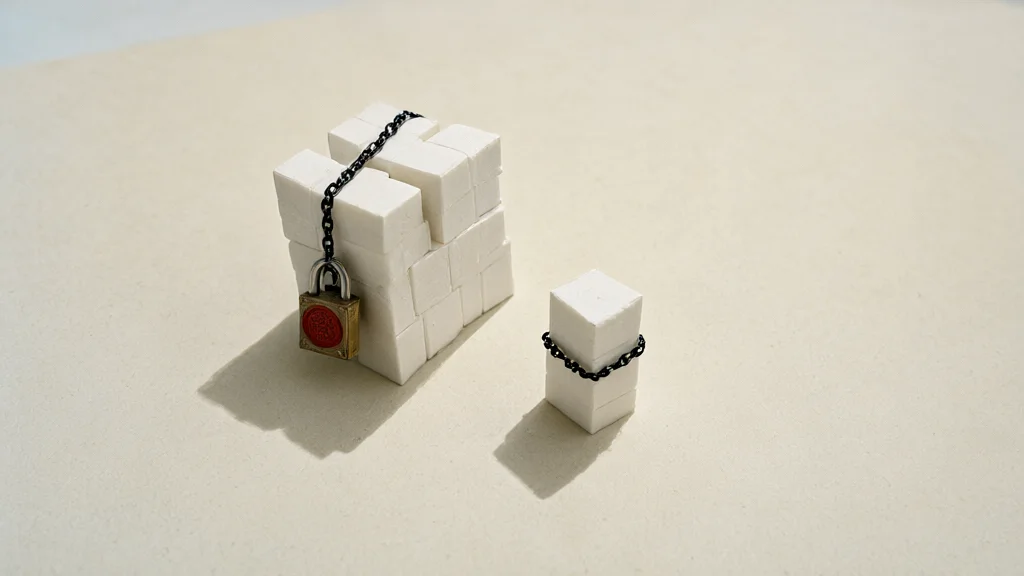
According to heise, Qwen has departed from Apache 2.0. The current research license permits private experimentation and research. For commercial use — for example, in one's own product or service — a separate commercial agreement with Alibaba is required (heise).
The reading from note.com is slightly different but points in the same direction: the license defines non-commercial use as research and evaluation only, and requires a separate commercial license for commercial use of the model. In addition, it imposes conditions on redistribution, such as requirements around the contract text and marking changes (Ishikawa Akira, note.com).
The two sources thus describe the details somewhat differently — "separate agreement with Alibaba" versus "separate commercial license" with distinct redistribution terms — and neither reproduces the license text verbatim. Before concrete advice on commercial use is given, the exact license text should be verified. The direction is nevertheless clear in both readings: the model is free to evaluate and research, but not automatically free to build products on.
For the part of the ecosystem that built workflows on the Apache 2.0 versions of Qwen-Image and Qwen-Image-Edit — where the models could be used freely in commercial tools and services — this is a real change in the terms developers operate under.
The Company's Own Benchmark Claims — Unverified for Now
The Qwen team claims that the model outperforms Google's AI image model "Nano Banana 2" in its own tests. heise notes this is a significant statement, but it is a claim from the company itself, based on Qwen's own tests — not an independent verification — and the actual quality remains to be seen in testing. For now, there are no independent quality benchmarks, and neither of the hands-on articles from September 23 provides measurements (heise).
Another open question is text handling: the model card highlights improved text representation, but there is currently no information on how well the model handles non-Chinese, non-English text, according to heise. Since the model comes from Alibaba's China-based AI group, this is a relevant question for, among others, European users who need reliable text in images.
Why This Matters
Three things stand out in this release. First, the combination of generation, editing, RGBA transparency, and object extraction in a single locally runnable model is a practically relevant workflow for anyone producing graphics with cut-out elements. Second, the independent tests show the model can actually run on a single L40S GPU — availability is thus not just a promise from the model card. Third, the license change shows that "open weights" is not the same as "free use": Qwen appears to be testing a model where research is free, but commercial use is a matter for negotiation.
Much uncertainty remains. The quality is independently untested, the company's comparison with Nano Banana 2 is unverified, the handling of non-Chinese and non-English text is undocumented, and the license's precise terms should be verified against the original text. But all the concrete facts — the September 20, 2026 release date, the feature list, the ComfyUI run on the L40S, and the direction of the license change — are documented through heise's coverage from September 22 and the two independent hands-on tests from September 23.