

Apple and Meta Team Up: Meta's 816-Billion-Parameter Open AI Model Runs on Clustered Mac Studios
Apple and Meta, longtime bitter rivals, announced a partnership on Thursday, October 15, 2026, that lets developers run Meta's new open AI model, Muse Spark Open, locally on Apple's powerful desktop Macs. But the price of fitting an 816-billion-parameter model into working memory is steep: according to the Wall Street Journal, buyers must pool at least one terabyte of memory across machines, at a total cost upwards of $40,000.
What Was Announced
The collaboration was made public on Thursday, October 15, 2026, and is, according to CNBC, the first public partnership between the companies since 2017 (CNBC). At the core of the deal is Muse Spark Open, an open model that Meta describes as the most capable open-weight model released under a license permitting limited commercial use. The model's standing among open models is thus Meta's own claim, not independently verified.
It is also worth noting what Meta itself admits: according to the Wall Street Journal, the company says the model was built for coding and agentic work, but that Chinese open models remain superior when it comes to software development and certain other tasks (WSJ via MSN).
How It Works
Muse Spark Open uses a so-called mixture-of-experts architecture with 816 billion parameters. Such models activate only parts of the network per request, but the entire model must still reside in memory — and that is where the Mac approach comes in. Apple's approach is to provision devices with particularly large memory capacities and let multiple machines share the work.
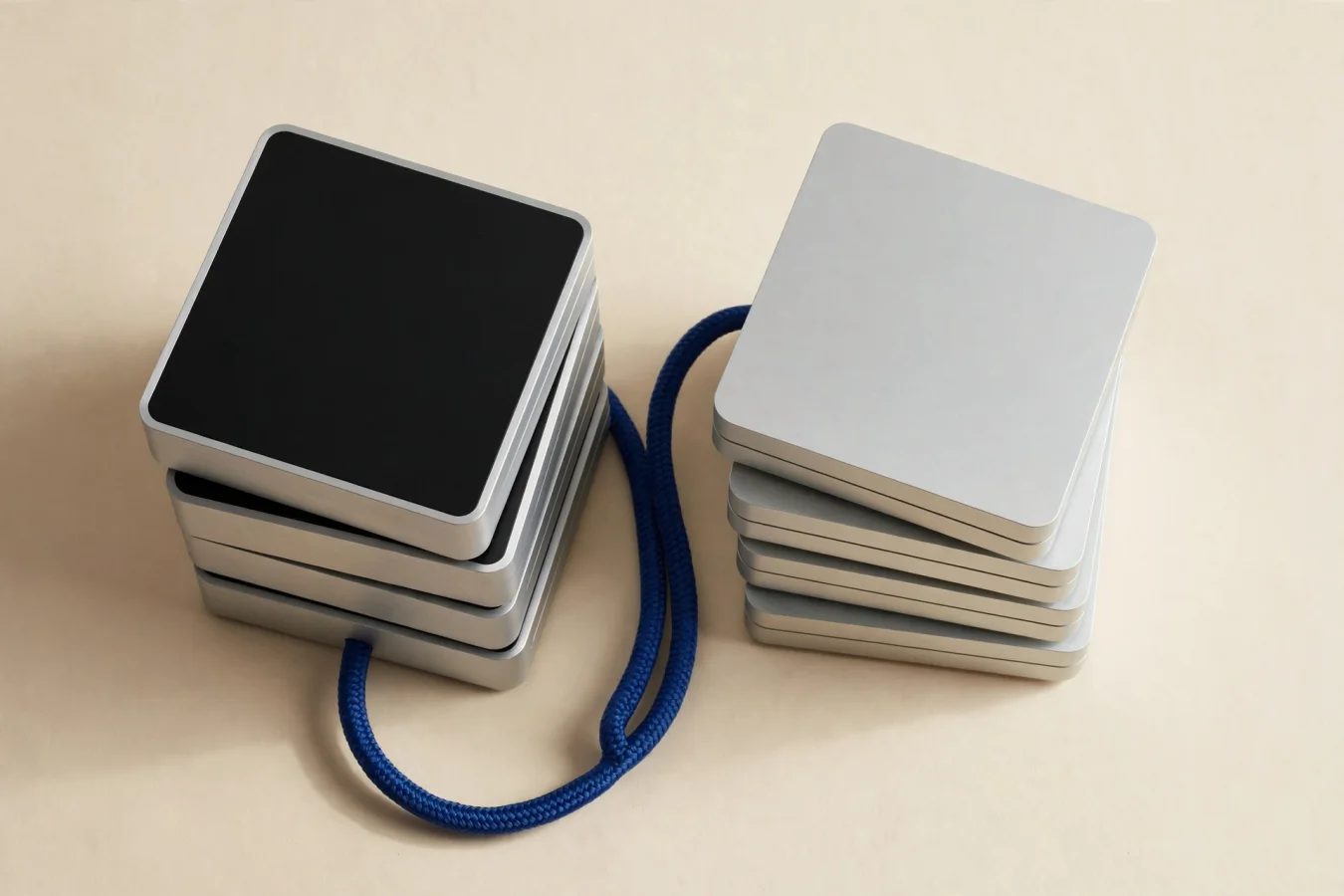
Concretely, it requires a Mac Studio with Apple's M5 Ultra chip. Customers can link between two and four Mac Studio machines to use Muse Spark for coding, video analysis or other agentic work, according to CNBC.
Apple has updated its MLX toolkit so that Meta's model works well on Macs, according to the WSJ. The company has also published new benchmarks for its chips and technical documentation on the MLX framework's ability to split open models across multiple machines, CNBC writes.
Meta's AI chief Alexandr Wang set the tone in the announcement: "We worked with Apple to bring leading agent capabilities to your desktop for the first time on Apple M5 Ultra Mac Studios," Wang said, according to CNBC.
What It Costs
The figures from the two newspapers frame the cost from different angles:
- Per machine: A Mac Studio with the required M5 Ultra chip and 256 GB of memory costs at least $10,799, according to CNBC. A version with 512 GB of RAM arrives later this month.
- Full setup: The Wall Street Journal writes that customers need Macs with at least one terabyte of memory in total to run the model, and that the total cost sits at upwards of $40,000.
The figures are not necessarily contradictory — one is a minimum price per machine, the other a total for a multi-machine setup — but the exact configurations have not been reconciled in the available sources. On either reading, the message is the same: this is local AI for those with a substantial budget, not for ordinary consumers.
Wang himself acknowledged that the model's memory requirements make it "a poor fit for most hardware," but that it is well suited to Macs, according to the WSJ.
A Historic Break Between Rivals
That Apple and Meta are publicly cooperating is news in itself. According to CNBC, the two companies have not entered any public partnerships since 2017. The relationship has been strained, not least after Apple's privacy changes in 2021, which Meta itself estimated would cut $10 billion from the company's 2022 revenue.
What Remains to Be Answered
Several key questions are open after the announcement:
- Scope: Representatives of both Apple and Meta have declined to say whether the partnership signals a deeper relationship between the companies. The partnership thus appears limited in character for now.
- Verification: Meta's claim that Muse Spark Open is the most capable open model under its license is not confirmed by independent benchmarks in what is available. The model's position relative to Chinese alternatives is also known to us mainly through Meta's own admission.
- Documentation: All figures and details in this story rest on coverage from CNBC and the Wall Street Journal; Meta's announcement post, Apple's MLX documentation and the model release itself are not available as direct sources here.
- License terms: It is known that the license permits limited commercial use, but the exact terms are not described in the sources.
What this means for local inference of open models at scale on consumer-adjacent hardware, and whether more major model publishers follow with Mac optimization, remains unknown.