

Chinese agent model with open weights: LongCat-2.5 nears frontier models on Terminal Bench
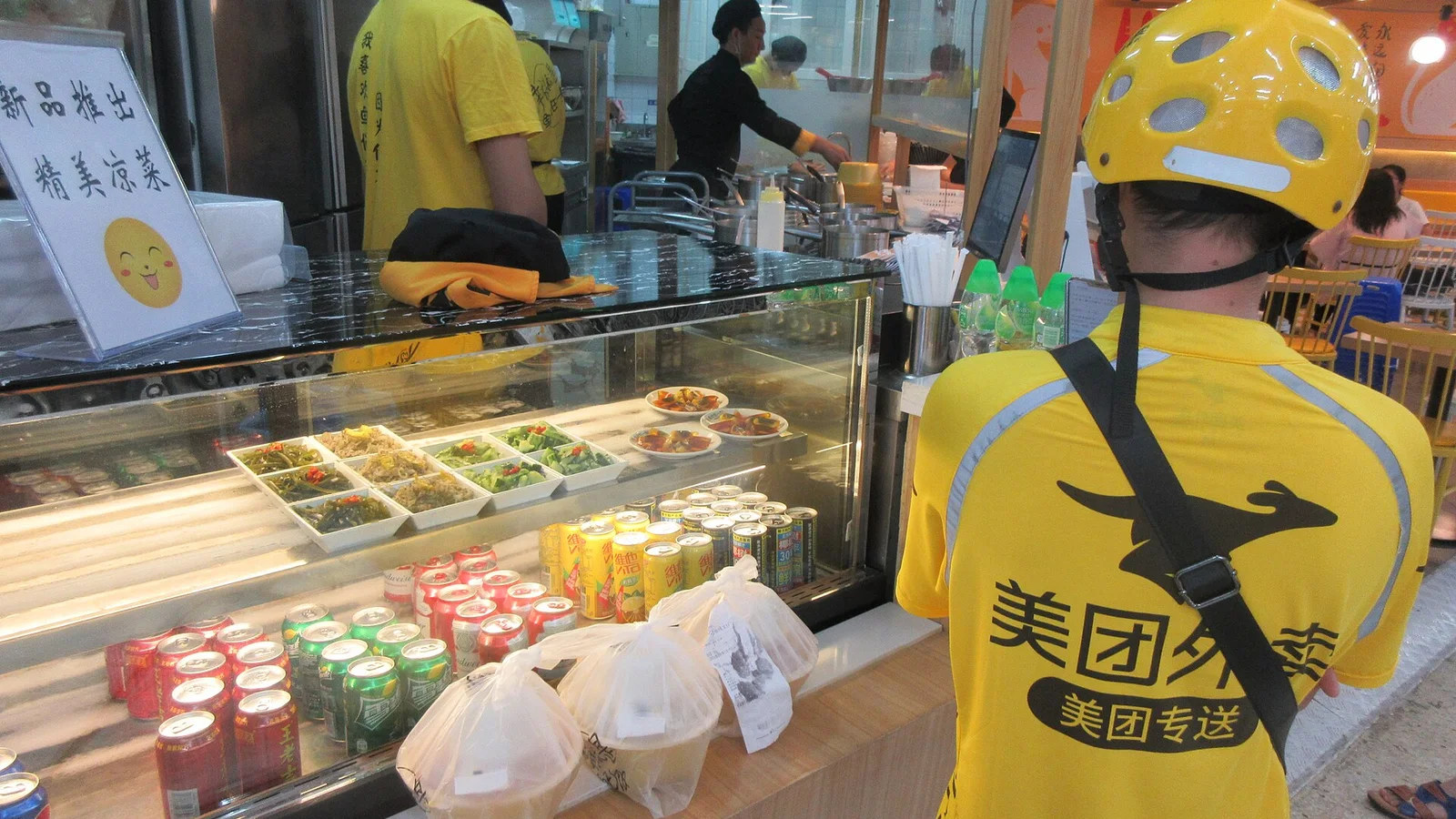
Food-delivery giant Meituan has made the weights of LongCat-2.5 publicly available — a large agent model with 1.6 trillion parameters, published on Hugging Face under an MIT license roughly a week after the model was unveiled. What sets the release apart is not just its size or license, but what Meituan's own documentation describes: a training and deployment path running on Huawei's Ascend Atlas A2 accelerators, with little to no guidance for Nvidia GPUs — at a time when US export restrictions limit China's access to Western AI hardware.
All figures on hardware, performance and throughput in this story come from Meituan itself. Several of the cited results are labeled as internal measurements in the model card, and none of them have been independently verified in the available source material.
What kind of model this is
LongCat-2.5 is a mixture-of-experts (MoE) model: of 1.6 trillion total parameters, just under 48 billion are active per token (The Decoder). This architecture lets the model be large enough to store broad knowledge while cheap enough in compute per response to run in agent setups involving many calls.
The model is built for autonomous agents working through long, multi-step tasks — coding in particular. It can read screenshots and video, work through a codebase, and write or revise software across multiple steps (VentureBeat). Via the API it handles up to one million tokens of context and generates responses of up to 128,000 tokens (The Decoder). During a limited introductory period, the API costs roughly €0.27 per million input tokens and €1.07 per million output tokens (PANews).
The Chinese hardware path
The self-hosting guide Meituan has published describes a cluster of 194 Huawei Ascend Atlas A2 accelerators: two handle image processing, 64 handle prefill (reading in the prompt), and 128 handle decoding (generating responses). The guide contains no guidance for Nvidia GPUs (The Decoder). CASRAI, which reviewed the model card and configuration directly, describes the same setup as an SGLang example for NPUs: 194 Atlas A2 accelerators split into two for encoding, 64 for prefill and 128 for decoding (CASRAI).
According to the company itself, the predecessor LongCat-2.0 was trained on a cluster of more than 50,000 Chinese-made AI chips, and LongCat-2.5 continues the strategy of optimizing AI development for domestic hardware (Lapaas Voice). The Decoder's headline — that the model "never touched an Nvidia GPU" — rests on Meituan's own statements and documentation. There is no independent verification of the training hardware in the available source material.
Quantization: 4-bit with no lost performance points, according to Meituan
A central part of Meituan's technical story is W4A4 quantization: both expert weights and activations are reduced to 4 bits. In the company's load tests, throughput rises 43.3 percent for prompt processing and 42.77 percent for response generation compared with an 8-bit version, and Meituan claims accuracy on par with the uncompressed model (The Decoder).
The technical documentation also reports an 86 percent increase in per-device throughput compared with a Distributed Data Parallel (DDP) baseline in tested long-sequence SFT tasks (Lapaas Voice). Lapaas Voice explicitly notes that these figures are based on Meituan's own testing and are not independently verified. The gains are nonetheless meaningful for readers of the documentation: for an agent model making thousands of calls per task, throughput per accelerator is a direct cost driver, and a claimed ~40 percent gain at 4-bit without accuracy loss would mean genuinely lower operating costs on the same hardware.
The benchmarks: a mixed picture
Meituan's own comparisons show an ambiguous result, and the model card is clear about what the numbers are worth: unmarked scores are internal measurements that are only "indicative only," while starred figures come from external reports or leaderboards (CASRAI).
On Terminal Bench v2.1, which measures how well agents solve command-line tasks, the LongCat team reports 88.4 points. In Meituan's table, Claude Opus 5 sits at 89.1, GPT-5.6 Sol at 88.8, and Deepseek-V4.1-Flash at the top with 90.6 (The Decoder). LongCat-2.5 is thus close to, but not at the top of, this group.
Against the leading models on newer benchmarks, it looks weaker: on Terminal Bench v4.0, LongCat-2.5 scored 38.5 against Claude Opus 5's 53.9. The model leads its comparison group on 3DCodeBench, while Claude Opus 5 leads on Vision2Web (VentureBeat).
The most striking change is the leap from the predecessor: on DeepSWE, LongCat goes from 9.7 to 64.6 (The Decoder). The jump illustrates how quickly this generation of Chinese agent models is moving — though the figure is still an internal measurement.
What remains unclear
Several things remain uncertain or unresolved:
- Release date: VentureBeat and CASRAI give November 9, 2026 as the weight release, while The Decoder and Lapaas Voice give November 15. The discrepancy is not resolved in the source material; what is fixed is that the weights came roughly a week after the model's official unveiling.
- No primary sources in the coverage base: All coverage builds on secondary articles, and several of them (Lapaas Voice, PANews) appear to draw on the same press materials or on The Decoder. The hardware and performance figures are therefore largely uncorroborated by primary sources.
- Regulatory status: VentureBeat found no publicly known US federal procurement or usage restriction specifically naming Meituan or LongCat-2.5 as of November 9, despite broader scrutiny of Chinese AI models — including a DHS exclusion order against DeepSeek. VentureBeat notes the rules can change quickly (VentureBeat).
What this means in practice: the release gives developers a large, freely licensed agent model that can run on non-Nvidia hardware with a documented setup — and it provides a concrete data point in the debate over how far China's domestic AI stack has come. But the performance claims rest, for now, on Meituan's own measurements, and the model card's own warning that the figures are indicative only should weigh heavily for anyone considering the model for production.