

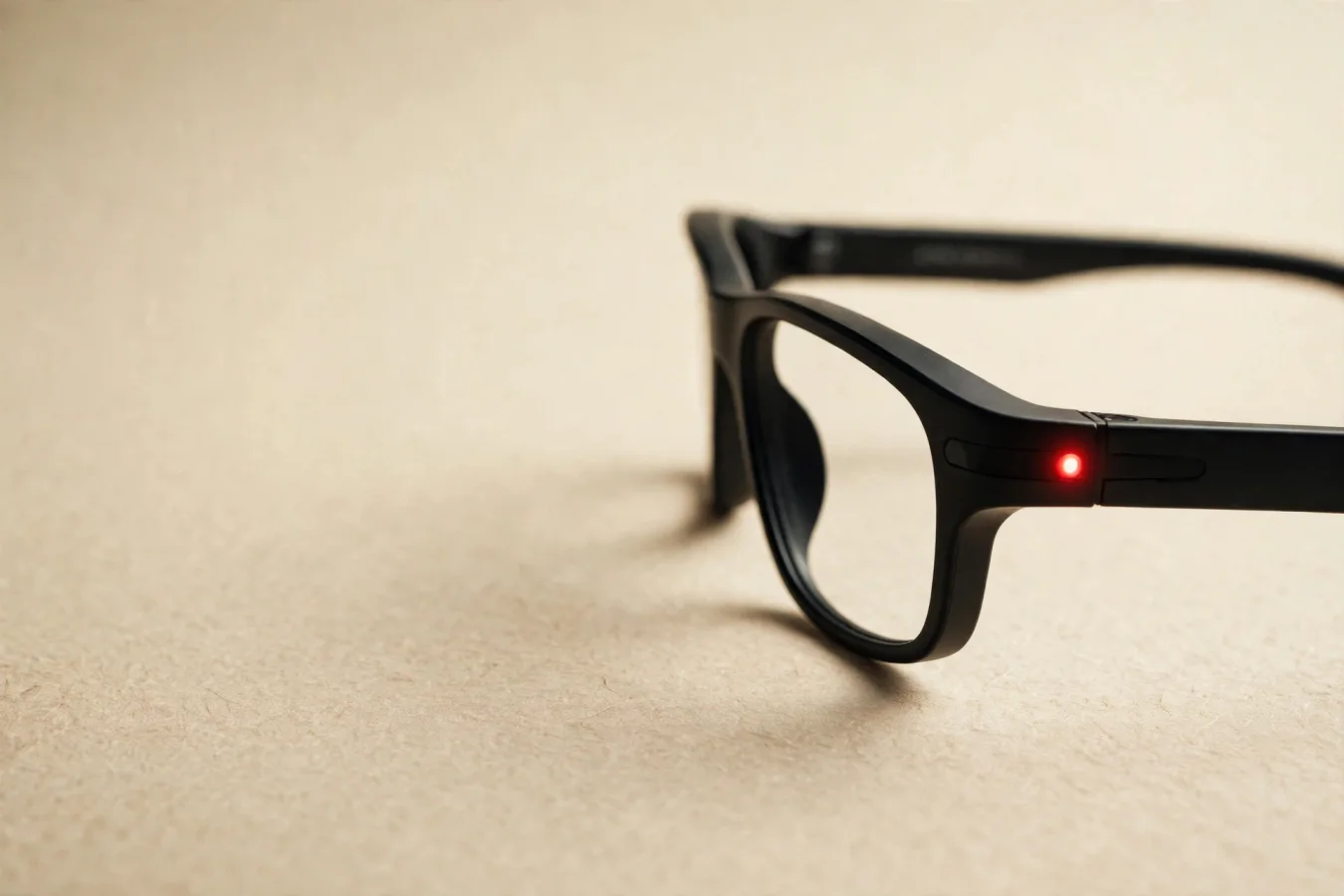
EDPB: Smart glasses should signal recording to bystanders via LED, audio or voice indicators
The European Data Protection Board (EDPB) is urging manufacturers of camera smart glasses to build in solutions that make it obvious when the glasses are recording images and sound — for example bright LED lights, audible signals, or indicators during voice activation. The statement, issued on October 13, 2026 alongside a new report on smart glasses, surveillance and evidence handling, is a formal regulatory signal in a fast-growing consumer category where discreet design makes it hard for those nearby to know they are being filmed.
What has happened
On October 13, 2026, the European Data Protection Board — the umbrella body for the EU's national data protection authorities — issued a statement on camera smart glasses. The message, as summarized by MLex, is that manufacturers should build "privacy-friendly" measures into the devices so that it becomes clear to those nearby when images and audio are being recorded.
Alongside the statement, the board published a report titled "The connected gaze. Video recording, surveillance and administering evidence in the age of smartglasses." Together, the statement and the report mark formal regulatory attention to a product category that is growing quickly but which, by definition, is worn on the face and points a camera at other people.
The proposed measures — and the rationale
The EDPB points to three concrete types of solutions:
- Bright LED lights that illuminate when the camera is active
- Audio signals that give bystanders an audible indication of recording
- Indicators during voice activation, so that it is visible or audible when the glasses are activated by voice command
The rationale comes from EDPB chair Anu Talus. According to MLex's summary of her statement, such measures are necessary because of the devices' "discreet appearance and use." The point is mechanical: a camera function built into an accessory-like garment without conspicuous signals removes the social contract that otherwise lets people know when they are being filmed — and with it the ability to react, object, or leave the situation.
Why smart glasses are a particular problem
Traditional surveillance cameras are visible, and smartphone cameras require a deliberate gesture to hold up. Camera smart glasses break with both: the camera sits at eye level, points wherever the wearer looks, and can be activated without anyone nearby noticing. It is this asymmetry — the person recording has full control, while the recorded have no signal to respond to — that the EDPB seeks to counter with its call for obvious indicators.
EU data protection law protects not only the customer of a service but also "data subjects" — people who appear in the image or audio. When a consumer device records its surroundings as a normal part of use, passers-by and colleagues become data subjects without having chosen it themselves.
What remains unclear
Several key questions cannot be answered on the available basis and should remain open:
- The statement's legal status. It is unclear whether this is formal guidance with enforcement expectations, or a more general position from the board. MLex describes it as an EDPB statement, but the available basis does not allow a definitive judgment on what legal or practical weight it carries for national supervisory authorities.
- The report's content. Beyond the title, the report's specific analyses, conclusions or recommendations are not available in the supplied material.
- Industry response. No responses from smart glasses manufacturers are documented in the available source material, so it is impossible to say how the industry will approach the call for indicators.
- Enforcement. There is no information on concrete enforcement measures, deadlines or implementation expectations.
It should also be noted that the available coverage rests largely on MLex's summary of the EDPB statement; readers who need the precise wording should check the original EDPB press room or report directly.
Why it matters
The statement is an early signal that EU authorities are treating camera smart glasses as a regulatory category in their own right — not merely a variant of wearables or phone cameras. If visible recording indicators become an expectation from data protection authorities, it will directly affect hardware design, product development and marketing in a sector where discretion has often been a selling point. For consumers and those around them, the issue is something more fundamental: the right to know when you are being filmed.