

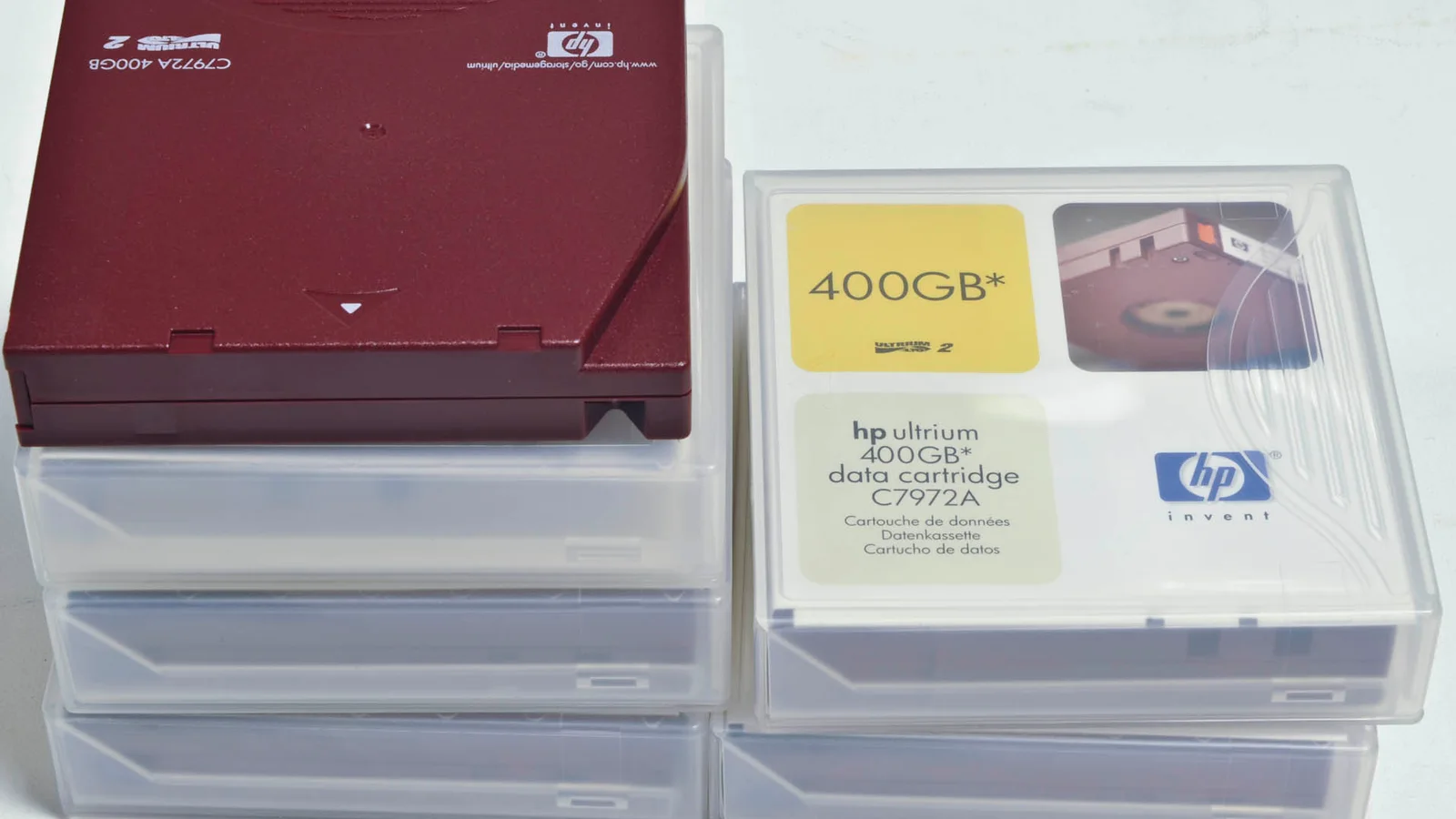

Fujifilm Invests ¥10 Billion to Quintuple LTO Tape Production in Odawara
Fujifilm announced on October 29, 2026 that it will invest around ¥10 billion — roughly $63.3 million — in its Odawara plant in Japan to quintuple its production capacity for magnetic tape used in data archiving by the end of fiscal year 2028. The company ties the expansion directly to archiving demand from generative AI and cloud services, and calls it its largest investment to date in dedicated LTO tape facilities. The announcement, however, provides no absolute production baseline, no customer contracts, and no revenue forecast.
What Was Announced
In a press release dated October 29, 2026, Fujifilm states that it has decided to invest approximately ¥10 billion in its Kanagawa prefecture plant, the Odawara site, to increase production capacity for magnetic tape used in data storage by roughly five times (b3138bdc). The conversion to approximately $63.3 million at an exchange rate of ¥158 per dollar is reported by IBTimes JP (9cd5069e). The announcement was also distributed through press channels, including via a republication at Markets Insider (945b528b).
The expansion is to take place across fiscal years 2026 to 2028, focusing primarily on the company's newest generation, "FUJIFILM LTO Ultrium10," according to the press release. Fujifilm will also increase staffing to ensure stable supply. The company characterizes the amount as its largest investment to date in dedicated LTO tape facilities — a characterization that comes from the company itself, with no comparison figures in the announcement.
The stock market reacted positively: Fujifilm stock (TYO4901) rose to ¥3,477 in Tokyo on October 29, according to the closing quote at 3:30 p.m. Japan time, as reported by Mugglehead (2f262aff).
How the Fivefold Increase Is Measured
The "roughly five times" figure is not a count of cartridges. The footnote in the press release specifies that the target refers to shipping capacity, measured against fiscal year 2025 (b3138bdc). IBTimes JP confirms this reading: the increase is measured in total data storage capacity of tape shipments, not in the number of cartridges produced (9cd5069e).
Because the press release does not provide an absolute baseline — neither current cartridge production nor shipped capacity from Odawara — it is impossible to convert the fivefold increase into concrete terabytes or cartridges. Readers who want a terabyte figure must rely on the product specifications of the tape itself: Fujifilm's US availability announcement on April 2 this year cites 40 terabytes of native capacity per LTO Ultrium10 cartridge, with up to 100 terabytes at a compression ratio of 2.5 to 1, according to Mugglehead's report (2f262aff). The 100 terabytes thus depend on the data actually being compressible by 2.5 times; the reliable baseline figure is 40 terabytes.
Fujifilm's Rationale: Generative AI and the Air Gap
The company itself makes the AI connection explicit: the investment is intended to strengthen the supply system for magnetic tape in response to growing demand for data archiving in the wake of generative AI's spread, according to the press release (b3138bdc). Ars Technica reports that Fujifilm describes global data growth as "exponential" (132e1d2c). Cloud services are also cited as a driver in coverage of the announcement (2f262aff).
One supporting argument Fujifilm highlights is tape's so-called air gap property: tape can be stored offline, so archives cannot be reached by ransomware over the network. This is presented as the company's own argument for tape's relevance. Note that this is the company's framing, not an independent technical analysis — although the underlying principle that offline storage media cannot be encrypted remotely is uncontroversial.
Fujifilm also positions itself as a market leader: according to the company itself, it holds the largest global market share for magnetic tape, and in 2011 it was, according to the press release, the first company in the world to commercialize barium ferrite (BaFe) particles for use in magnetic tape (b3138bdc). Both claims are the company's own information; the announcement contains no independent market data.
What the Announcement Does Not Say
The press release is thin on operational details. There is:
- no absolute baseline for current production at Odawara, so the fivefold increase cannot be converted into fixed quantities;
- no breakdown of the investment — the amount is not divided between facilities, equipment, and staffing;
- no interim milestones — the only timeframe is fiscal years 2026 to 2028;
- no customer contracts or revenue forecast in the announcement, which Mugglehead also notes in its coverage (2f262aff).
In addition, key figures rest on Fujifilm's own reporting. The two republished versions of the press release — at Markets Insider (945b528b) and in Fujifilm's own newsroom — reproduce one and the same announcement. The LTO Ultrium10 capacity figures come from an earlier product announcement in April, cited via secondary coverage, not from the investment announcement itself.
Why an Old Medium Is Gaining New Relevance
Magnetic tape is one of the oldest storage technologies still in commercial use, and the LTO format has long served as a standard for archiving in media companies, research institutions, and large data producers. Tape is slower than disk for random access, but is considered cheap per terabyte, power-efficient for long-term storage, and — as Fujifilm itself emphasizes — isolated from network attacks when stored offline. The AI economy produces enormous quantities of data that are rarely read again: training corpora, model stores, logs, and backups. This type of "cold" data is precisely the market tape traditionally serves, and is the background for the company's link between generative AI and tape demand.
It is worth keeping in mind that the rationale in this story comes primarily from one party. Fujifilm benefits from telling this story, and the announcement contains no independent demand figures, no customer names, and no industry statistics confirming that archiving demand is actually flowing toward LTO tape at the scale the investment presupposes.
The Open Questions
Two factors will determine whether the investment delivers what it promises. The first is whether competitors follow suit: the announcement says nothing about what other tape manufacturers are doing, and there is no independent overview of total capacity growth in the market. The second is whether demand materializes: Fujifilm has not presented a single customer contract or revenue forecast, so the entire expansion in practice rests on the company's own reading of AI-driven archiving growth. By the end of fiscal year 2028, the shipping figures will show whether that reading was correct.