
Government signals ban on AI glasses in selected locations after concerns about hidden recording
The government plan, announced Monday 5 October according to Reuters, is justified by the risk of photography and audio recording without people's knowledge — and comes days after a Dutch eyewear chain halted sales of Meta Ray-Ban while the country's data protection authority investigates further measures.
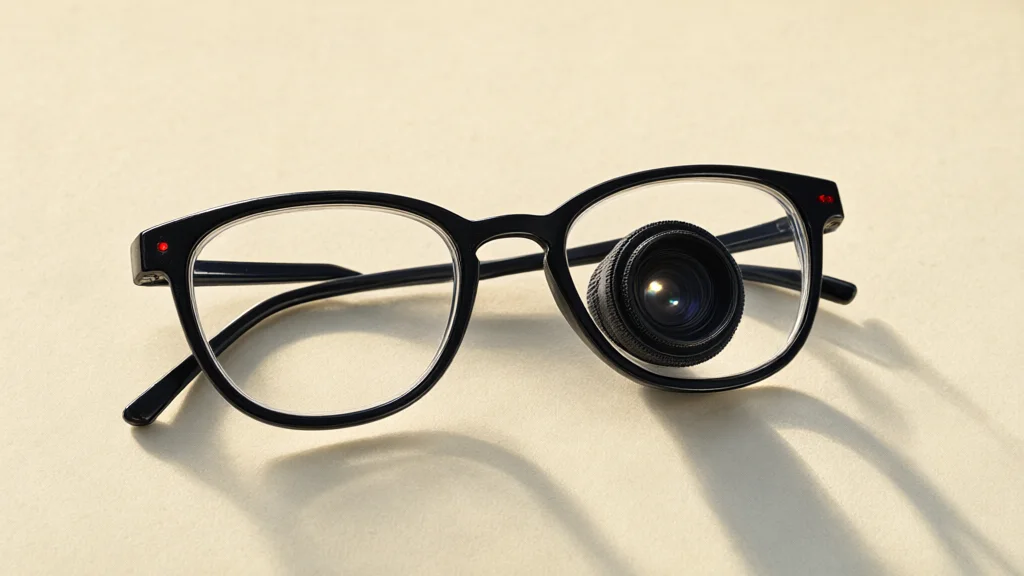
Norway's government announced on Monday 5 October that it plans to propose a temporary ban on the use of AI glasses in selected locations. According to Reuters, the justification is concern that people may be photographed, filmed or audio-recorded without their knowledge (Reuters via MSN).
The announcement lands in the middle of a fast-moving European regulatory story: the Friday before, one of the Netherlands' largest eyewear chains suspended sales of Meta Ray-Ban glasses, and the Dutch data protection authority, the AP, is already investigating further measures against camera glasses. Reuters characterizes the Norwegian proposal as part of "a broader global backlash against camera-equipped smart glasses" over privacy concerns.
What the government has announced — and what is unknown
What is known so far can be summarized briefly: the government will propose a ban, the ban is temporary, and it applies to "selected locations" or, in Reuters' formulation, "some public places." The rationale is thus the possibility of unannounced photography, filming and audio recording.
What is not known from the available source material, however, is substantial: Which locations will be covered? How long will the ban last? What will be the legal basis, and what sanctions could come into play? The timing of a concrete legislative proposal has not been given either. Since the announcement so far is documented through Reuters' coverage and not through a primary source such as a ministry press release, these are open questions that must be followed up when the details of the legislative proposal are presented.
The Dutch prehistory: a sales halt and regulatory scrutiny
The background to the Norwegian move is found to a large extent in the Netherlands. The eyewear chain Hans Anders, a subsidiary of the holding company Nexeye, said the Friday before that it had suspended sales of Meta Ray-Ban glasses in both the Netherlands and Belgium, citing growing privacy concerns and the public and political debate around smart glasses (Reuters via The Economic Times).
At the same time, the Dutch data protection authority, Autoriteit Persoonsgegevens (AP), has warned about camera glasses. In a statement, it said: "The AP is also investigating the possibilities for further measures against camera glasses and other wearables with a camera." That a national data protection authority is explicitly investigating new tools — not merely enforcing existing rules — signals that the regulator is looking for levers beyond those already available under privacy law.
Meta's response: the indicator light that cannot be switched off
Meta defends its glasses by pointing to the built-in notifications. A company spokesperson, quoted via Business Insider, said: "Every pair with a camera has a bright light on the front that blinks when you take a photo or video — it can't be turned off and the camera is disabled if someone covers or tampers with it."
This is the company's own response, not independent verification. The company's point is twofold: the recording indicator is supposed to be impossible to switch off in software, and an anti-tampering mechanism is supposed to ensure that covering the light itself disables the camera function.
One open question — and here it is important to distinguish analysis from documented fact — is how effective an indicator light actually is against covert recording in practice. A small light on a glasses frame can be easy to miss on a busy street or in a dimly lit room, and an observer will often not know whether the light means recording is actually taking place. There is, however, no independent documentation in the available source material quantifying how often such glasses are actually used for covert recording, so both Meta's defense and critics' concerns rest partly on future evidence.
Why this matters
Two factors make the Norwegian announcement more than a symbolic gesture. First, it is a regulatory measure aimed at the use of a consumer product in specific places, not at its development — which raises questions about enforcement in practice (how does one distinguish AI glasses from ordinary glasses in a crowd?). Second, the sequence of events — a sales halt on Friday, a government announcement on Monday — shows how quickly the debate is moving from commerce and markets to legislation.
For readers following the story, the concrete things to watch are: the details of the Norwegian legislative proposal when it is presented — scope, duration and legal basis — as well as whether the Dutch AP actually implements the "further measures" it is now investigating, and whether more European retailers or authorities follow Hans Anders and the Norwegian government.