

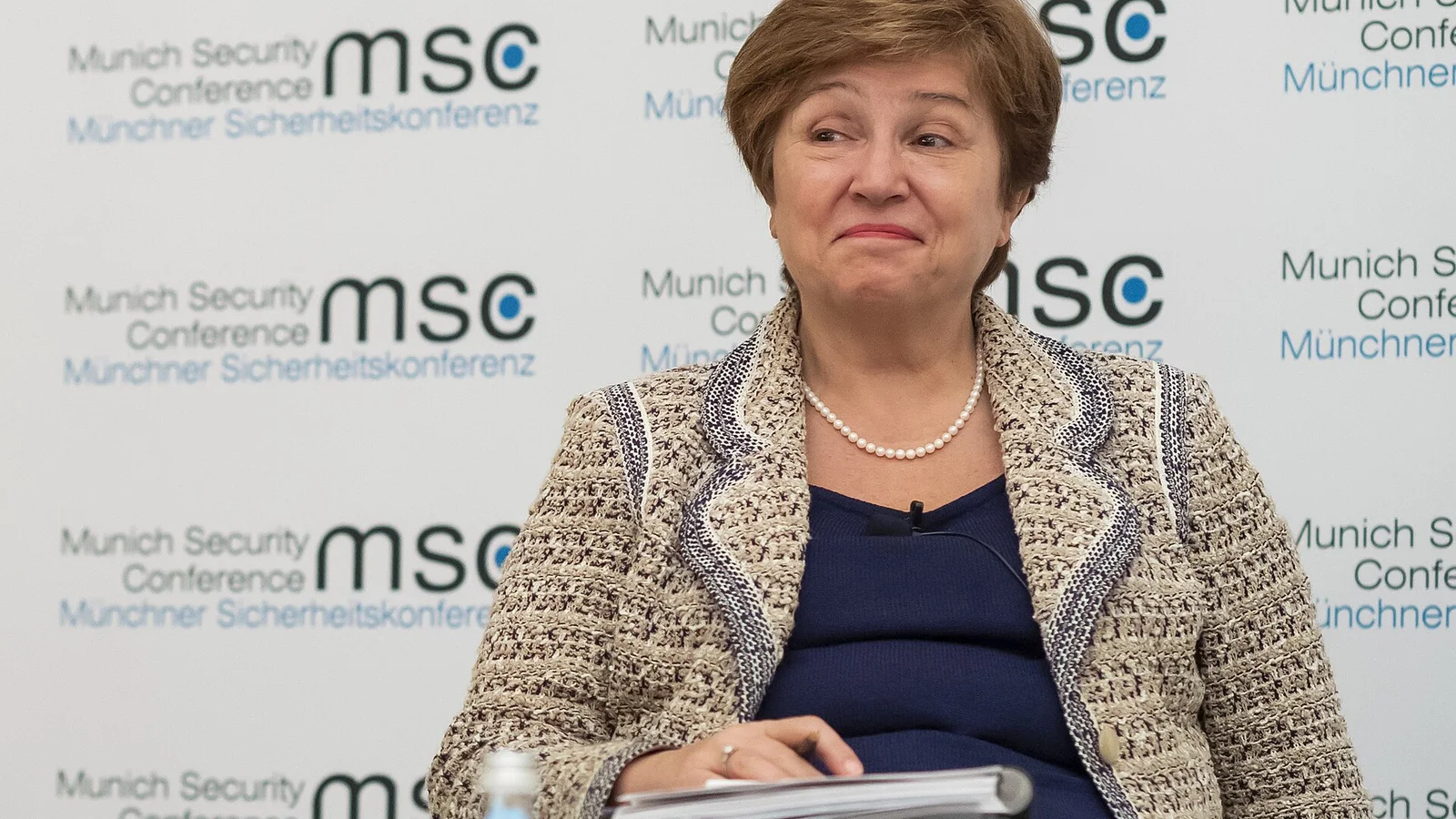

IMF Chief in Shenzhen: AI Hardware Now Accounts for More Than a Tenth of World Trade
At the Apec summit in Shenzhen on 19 November, IMF chief Kristalina Georgieva gave AI demand a fixed place in the macroeconomic picture: demand for AI hardware is pushing up consumer prices globally, and together with the energy shock from the war in the Middle East it will push global inflation up to 4.7 percent this year. The same day, markets priced in a near-certain 25-basis-point rate rise from the Fed in December.
The Warning from Shenzhen
Georgieva, managing director of the International Monetary Fund, said, according to the Guardian's coverage of the summit, that demand for AI hardware and related technology products is driving up consumer prices around the world, and that the boom in this demand will force the most powerful central banks to raise interest rates. That is unusually direct language from the Fund: here AI is framed not as a productivity question but as an inflation and monetary policy question.
She linked the AI rollout to the energy shock following the war in the Middle East, warning that the two factors together will push global inflation up to 4.7 percent this year. The figure and the quotes rest on the Guardian's reporting of Georgieva's presentation at the summit — no official IMF document or speech text is available in the source material.
'AI Is for Ever'
The core of Georgieva's framework is the distinction between two driving forces. The energy shock after the war broke out in February, which sent the oil price above 100 dollars a barrel, will, in her view, eventually fade. AI will not: "AI is for ever," she said. That makes AI a lasting driver of world trade, competitiveness, productivity and economic growth, according to the Guardian's account.
She emphasised the scale: AI hardware and related technology products now account for more than a tenth of world trade in goods, a share that is rising quickly. And she drew it into the competition between countries: those who fail to prepare will lose. Her formulation, as reported by the newspaper, was "you snooze, you lose."
But the Oil Shock Is the Documented Trigger
Here a sharp distinction must be drawn between Georgieva's characterisation and what the sources document. The Guardian writes that central banks, including the ECB, the Fed and the Bank of England, have raised interest rates this year after the outbreak of war in February sent the oil price above 100 dollars and reignited inflationary pressure worldwide. In other words: the actual rate rises this year came in the wake of the energy shock. That AI demand will force further increases is Georgieva's assessment — not a documented causal link in the sources.
Nowhere in the source material is the share of today's inflation actually attributable to AI quantified. The Guardian headlines the story with an AI focus, but the article mentions both driving forces. The open question — how much AI counts in the inflation picture compared with oil — remains unanswered.
A Trillion Dollars in Circular Financing
In an exclusive Bloomberg interview from the Apec summit the same day, Georgieva turned to the financing side of the boom. According to the transcript of the conversation, she said that circular AI financing — in which industry players finance each other through mutual agreements — now stands at around a trillion dollars, split roughly one-third equity and two-thirds debt.
She made no secret of the fact that this is not an acute crisis: in the big picture, the amount is not enormous. What worries her is the pace of growth — the financing is growing quickly, and the growth is moving in the direction of more debt, which she pointed to as a potential financial stability risk going forward.
On the question of correction, she said, according to Bloomberg's summary, that she expects "perhaps a little bit more correction" in AI-related markets. The Fund does, however, see no financial stability risk yet, per this interview. Georgieva also noted that she had expected a correction even before the modest one in recent weeks, because enthusiasm was far too high. The transcript is an automatic transcription with errors and messy passages, so exact wording should be read with caution — but the content is consistent across the summary and the transcript.
AI in the Workplace
Georgieva also presented labour market figures from the IMF: one in ten jobs in the US already requires AI competence, and these positions pay more. Around 60 percent of jobs in advanced economies will be affected by AI in the years ahead, according to her account in the interview. That points to the same structural logic as the trade argument: in Georgieva's framing, AI is not a technology cycle that can be waited out, but a sweeping transformation of work and trade.
The Central Banks Have Already Started
The context for the warning is that monetary policy has already turned. Fed minutes from the October meeting, released on 18 November, show, according to Reuters, that the bank remains focused on inflation risks and acknowledges the need for further rate rises if the economy develops as expected. Financial markets are pricing, according to the CME FedWatch tool cited by Reuters, a near-certain probability of a 25-basis-point rate rise when the Fed's December meeting concludes.
Georgieva's message thus lands in an environment where markets are already bracing for tightening. Her point is that the tightening will not disappear when the energy shock ebbs: AI demand gives inflation, in her assessment, a new and more lasting component that will require further intervention from central banks worldwide.
Open Questions
Three things remain unresolved in the available source material. First, the AI share of inflation: no source quantifies how much of the 4.7 percent stems from the AI rollout as opposed to the oil shock, and the Guardian documents that this year's rate rises came after the outbreak of war. Second, there is no official IMF document from Apec; both the 4.7 percent figure and the speech quotes rest on the Guardian's reporting of a public presentation, and the IMF chief's more extensive figures — such as circular financing and the labour market projections — are supported by an automatic transcript of the Bloomberg interview. Third, Georgieva's "will force" formulation is a forecast, not a fact: which central banks actually raise rates because of AI, and when, has yet to be seen.
This is a message with clear force, but also with a deliberate handling of ambiguity: the IMF chief wants both politicians and central banks to take AI seriously on the inflation side, without the relevant sources yet being able to reveal exactly how heavily AI weighs in the inflation picture. That discussion remains to be seen — when, and whether, the IMF publishes a more detailed basis for the figures from Shenzhen.
Sources: The Guardian (Richard Partington), 19 November 2026; Bloomberg interview with Kristalina Georgieva, transcript via Yahoo Finance, 19 November 2026; Reuters (Stephen Culp and Utkarsh Hathi), 18 November 2026.