

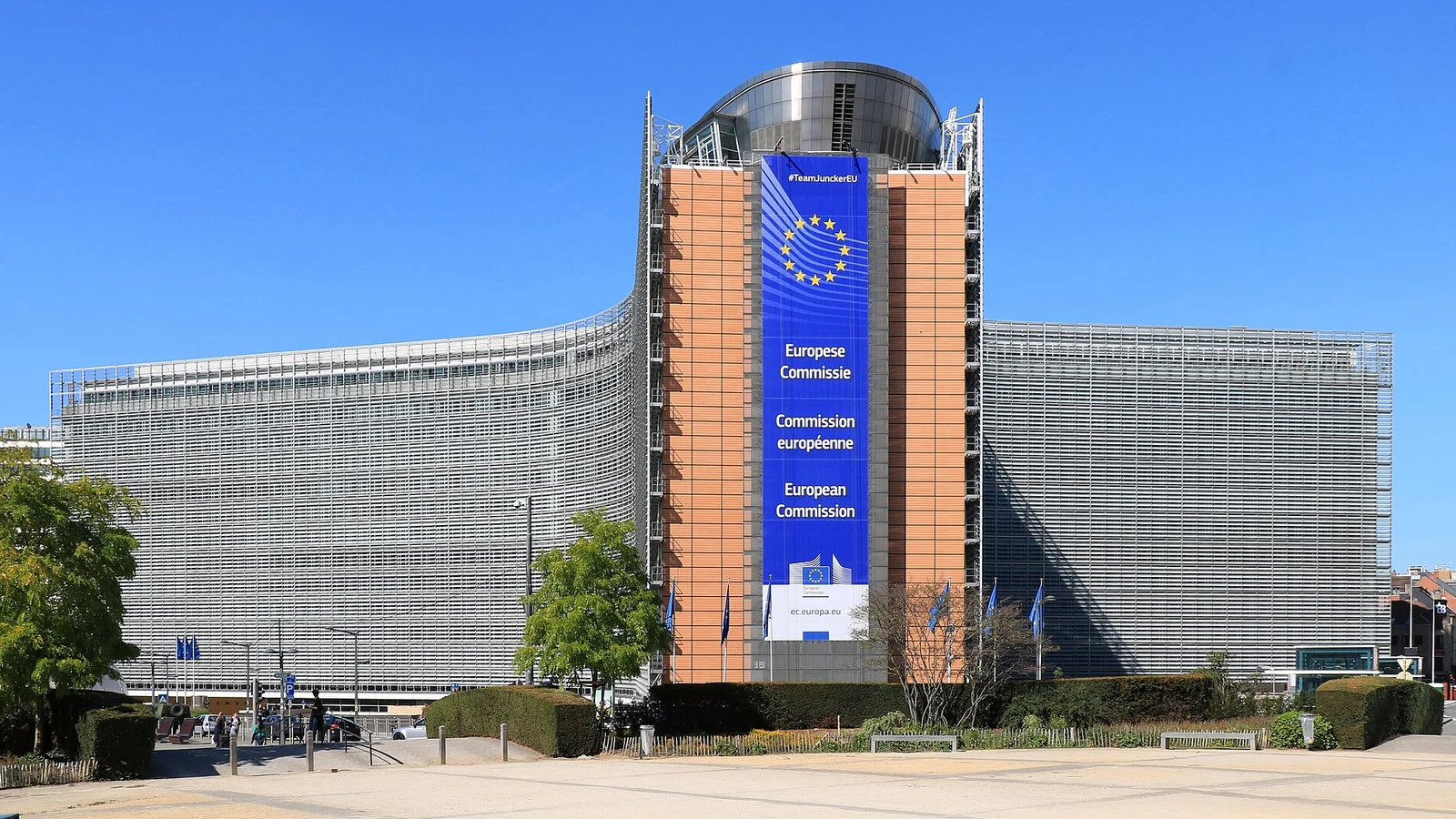

Leaked draft: EU's 2027 agenda bets on industrial AI in five sectors, but the legislative agenda is narrow
A leaked draft of the Commission's 2027 work programme shows the EU executive planning an "action plan" for industrial AI in health, transport, agri-food, advanced manufacturing and defence and space — plus a push to strengthen the entire AI stack. But the agenda is narrow, three proposals are being withdrawn, and the contents could change before the formal presentation on Wednesday.
What's new
The European Commission plans to lift the use of artificial intelligence across sectors as early as next year. That emerges from the draft of the Commission's work programme for 2027, to which the outlet Rapporteur has obtained access (Rapporteur). The article was published on 3 November 2026, and according to Rapporteur the work programme is due to be presented on Wednesday — meaning none of this is yet official policy.
That means everything below rests on a single, independent source describing a leaked draft. The Commission has not confirmed the contents, and text can change between the leak and the presentation. We still walk through the plan as described in the draft, because it offers an early picture of what the EU's political agenda for AI could look like in 2027.
The industrial AI action plan: five named sectors
The most striking element in the draft is a so-called "blueprint for action" to drive forward industrial AI across five sectors (Rapporteur):
- Health
- Transport
- Agri-food
- Advanced manufacturing
- Defence and space
It is worth noting that this concerns the application of AI in established European industries, not fundamental research or general AI regulation. A sector-by-sector action plan suggests the Commission wants a coordinated approach — likely with sector-specific measures, tests or guidelines — but the leak says nothing about what the plan concretely contains, whether it is accompanied by new budgets, or when the elements are to be implemented. There are no details on funding amounts or timelines in what Rapporteur reports.
The AI stack: chips, data, compute and funding
Beyond the sector plan, the Commission will according to the draft "strengthen" Europe's position across the entire AI stack by adding priorities in four areas: chips, data, compute and innovative funding instruments (Rapporteur).
This mirrors a familiar problem in European industrial policy: the EU is described as dependent on non-European actors for advanced chips, large-scale data resources and the computing capacity for training and running large models. The draft signals that the Commission intends to treat these layers as a connected priority in 2027. The same caveat applies here: the leak describes priorities, not concrete programmes, amounts or legislation.
The digital transformation, simplification and copyright package
The third main element is a bundled package that Rapporteur describes as a "digital transformation package, simplification and copyright" (Rapporteur).
In this package, the Commission is to review the targets of the Digital Decade initiative. According to the draft, the review may focus on three things:
- AI infrastructure
- Equipping citizens with AI skills
- Monitoring business adoption of AI systems
The Digital Decade is the EU's framework of digital targets towards 2030, and a review that explicitly foregrounds AI would mean the target-setting is adapted to the new technological developments. That the review is placed in the same package as simplification and copyright suggests the Commission sees these tracks as connected — but what the copyright component actually involves is not stated in what Rapporteur reports.
The draft also mentions, in its explanatory text, "the need to support young people facing the challenges arising from AI's impact on the labour market" (Rapporteur). It is one of the few places where the draft, according to the source, directly addresses AI's societal consequences rather than only opportunities.
A narrow legislative agenda — and three withdrawals
The counterweight to the AI push is that the legislative agenda for 2027 appears narrow. Several pending proposals, including the Digital Fairness Act (DFA) and the European Product Act, are according to the draft to be presented by the end of 2026 — that is, outside the 2027 programme (Rapporteur).
And the draft withdraws three proposals:
- A directive on the taxation of companies with a significant digital presence
- A directive on a common system for a digital services tax on revenues from certain digital services
- A regulation on a framework for financial data access (Financial Data Access)
Withdrawals of this kind are formally part of the Commission's annual work-programme craft: proposals lying dormant in the legislative process can be cleared away. We should nonetheless not read more into this than the source supports. Rapporteur gives no reason for the withdrawals, and we have no basis to conclude whether they signal a political shift, a renegotiation or mere housekeeping. What stands firm is that two digital taxation directives and one proposal on sharing financial data disappear from the programme if the draft is adopted as leaked.
The link to the AI envoy: an inference, not a confirmation
Rapporteur claims the industrial AI action plan "most likely" refers to the forthcoming report from the Commission's special AI envoy, Jim Hagemann Snabe (Rapporteur). Precision matters here: this connection is the newspaper's own interpretation, not something stated in the draft. Until the Commission itself links the action plan to the report, this should be read as Rapporteur's supposition — not a confirmed connection.
What this means — and what we don't know
If the draft holds, it points to a Commission that in 2027 will use non-legislative instruments — action plans, target reviews and funding priorities — as its main tool for AI policy, while the legislative agenda is curtailed and older proposals are cleared away. For European industry, particularly in the five named sectors, this would mean AI measures arriving primarily as industrial policy and skills-building, not as new binding rules.
At the same time, much remains unknown:
- The content of the action plan. The leak names the sectors, but says nothing about concrete measures, tools or amounts.
- Funding. "Innovative funding instruments" are named as a priority, with no amounts or programmes attached.
- The copyright component of the package is referenced only in the title.
- The link to the Snabe report is unresolved, as noted.
- The draft itself could change before Wednesday.
What happens now
The next milestone is the Commission's formal presentation of the 2027 work programme, which according to Rapporteur is due on Wednesday. That will show whether the five sectors, the AI-stack priorities, the digital transformation package and the three withdrawals survive into the final text — or whether any of this was tightened or expanded after the leak. AIMag will cover the formal presentation when it takes place.