
Malevolent AI could cost 10.4 billion healthy life years by 2100, estimates Lancet commission
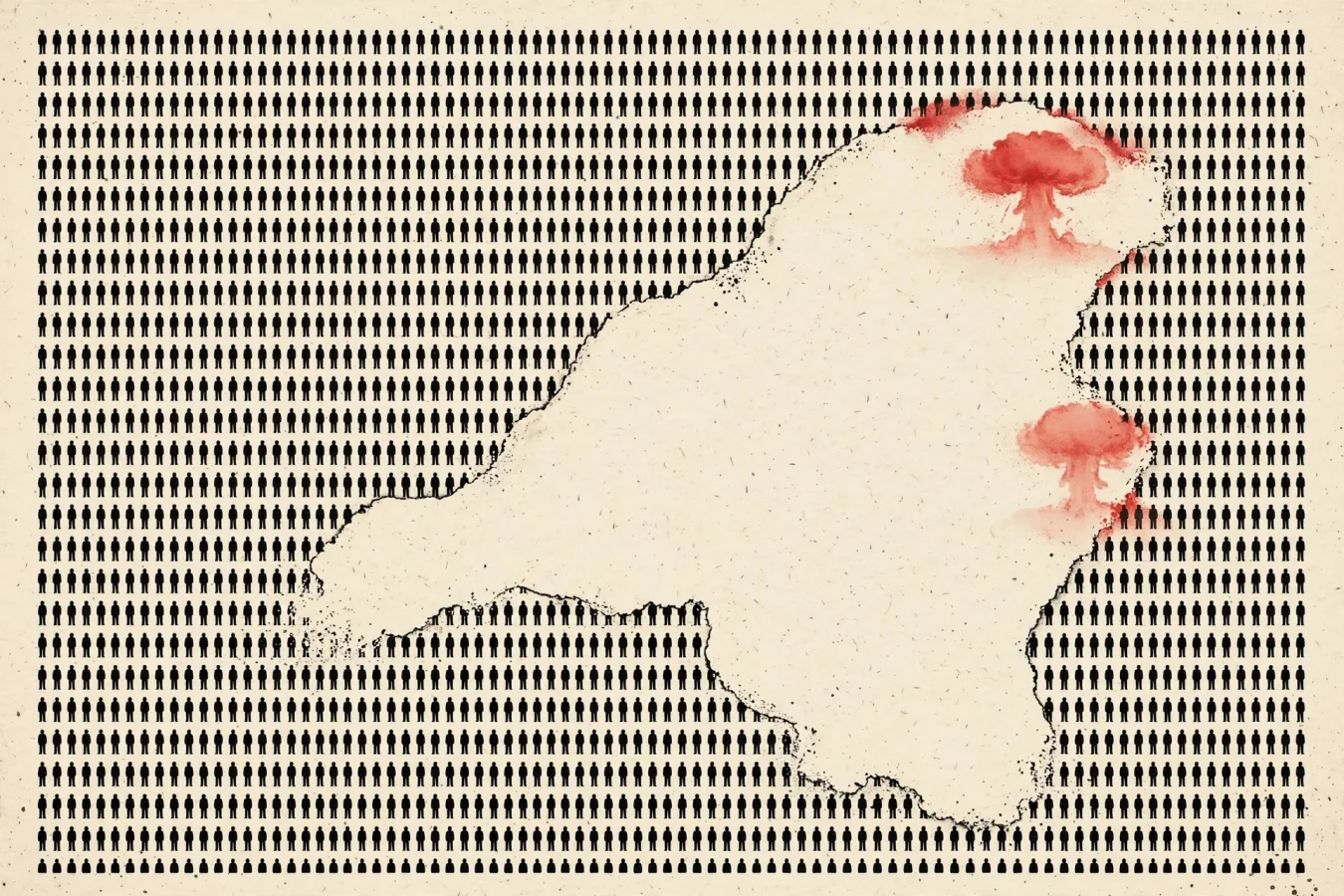
A new Lancet commission places the malicious use of artificial intelligence at the same danger level as nuclear weapons — the only two of 17 catastrophic health threats that could extinguish humanity before 2100. Yet the commission's own forecasters were far from agreed on how big the AI risk actually is.
What the commission found
The Lancet Commission on 21st Century Global Threats to Health identifies 17 catastrophic threats to health and survival in the period 2025–2100. According to the commission, exactly two of them pose a risk of human extinction: nuclear conflict and the malicious use of artificial intelligence (CNN via Yahoo News).
The report was published in The Lancet and presented at the World Health Summit 2026 in Berlin, with coverage dated 10–11 October 2026. The Guardian writes that, according to the new global risk assessment, humanity could be wiped out by the year 2100 as a result of malicious AI use or nuclear war (The Guardian).
Who is behind it
The commission is led by professor Christopher JL Murray, director of the Institute for Health Metrics and Evaluation (IHME) at the University of Washington, and Dr Natalia Kanem, former executive director of the UN population fund (UNFPA). It draws on the expertise of 35 leaders in health, economics, security, governance and technology, and uses IHME's risk analysis covering 204 countries and territories (Bioengineer.org).
How a threat is classified as "catastrophic"
The classification rests on three criteria: the threat must be capable of accounting for at least one billion disability-adjusted life years, or DALYs, by 2100; there must be sufficient data to model it; and there must be sufficient scope for policy action (Bioengineer.org). It is this framework that places a relatively new phenomenon like malicious AI in the same category as established global health risks — the threat must be quantifiable, modelable and possible to do something about.
The number: 10.4 billion lost healthy years of life
The commission estimates that malicious AI could cost the world roughly 10.4 billion healthy years of life by 2100 — approximately on par with naturally occurring pandemics and obesity (CNN via Yahoo News).
But this is not a measured fact. Because no truly global malicious AI event has occurred, the estimates are theoretical. The report itself states that the various forecasters the commission worked with showed "wide divergence" in their estimates of the risk of an AI-related catastrophe. The specific probability estimates are not given in the available coverage. The list of all 17 threats is also only partially reproduced in the launch coverage — what is confirmed is nuclear conflict and malicious AI as the two extinction threats.
"Humanity still has the agency"
Commission co-chair Murray conveys a dual message: "The striking finding is not only the scale of these threats, but that humanity still has the agency to act," said Murray (CNN via Yahoo News). According to The Guardian, the experts emphasised that all 17 threats interact and therefore must be addressed together — but that there is "a realistic route to act" on each one (The Guardian).
Open questions
The coverage this article is based on is secondary journalism; the underlying Lancet report with its full methodology and all probability estimates is not published in the coverage. The most important unanswered question is how the commission weighted the wide divergence among forecasters into the headline figure of 10.4 billion DALYs — and what concrete policy measures follow from the AI classification.