Meta launches Muse Charm: A pocket-watch-sized AI device with 5G — but it can't make calls
Meta surprised attendees at its annual Connect conference on September 23, 2026, by unveiling Muse Charm — a small device the size of a pocket watch that gives users direct access to the company's Muse AI assistant, without the detour…

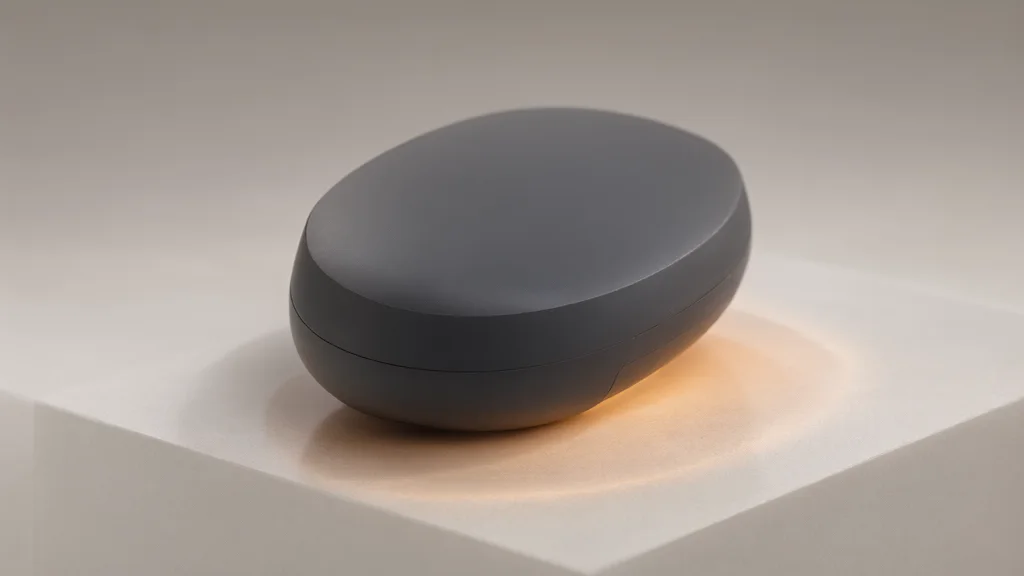
Meta launches Muse Charm: A pocket-watch-sized AI device with 5G — but it can't make calls
Meta surprised attendees at its annual Connect conference on September 23, 2026, by unveiling Muse Charm — a small device the size of a pocket watch that gives users direct access to the company's Muse AI assistant, without the detour through apps on a smartphone. The unveiling came just two weeks after the Muse app reportedly reached millions of downloads, and effectively marks the culmination of Mark Zuckerberg's official pivot away from the metaverse and toward what he calls "personal superintelligence."
What the device is
Muse Charm has a screen of roughly 2 inches (5 cm) that can be navigated with the thumb, with a customizable Muse character at the center, Reuters reported from the venue in Menlo Park, California. A built-in 5G modem provides access to Muse even without Wi-Fi. But the device has an obvious limitation: it cannot make calls. This is not a phone replacement in the traditional sense, but a dedicated window into Meta's AI assistant.
According to Reuters' photo and news coverage, Zuckerberg himself presented the device on stage at the company's headquarters.
Zuckerberg's message: the metaverse has been superseded
The strategic message was as clear as the product. "It's actually pretty clear that personal superintelligence will not only come first; it will be much bigger and more important," Zuckerberg said, according to Reuters, in a formulation that explicitly places superintelligence above the metaverse — the bet he has fronted himself for nearly a decade.
He added: "We have therefore shifted our focus to building the best devices for personal superintelligence." Zuckerberg also said that Muse will "soon" be available across Meta's smart glasses line.
Why Meta is building its own hardware
The most significant thing about Muse Charm may not be what it does, but what it bypasses. The device lets users tap straight into Muse, without passing through the AI apps in Apple's and Google's app stores. Reuters describes it as part of a long-running effort at the social media company, which has long sought to escape Apple's and Google's operating systems with a platform of its own to control the distribution of its services.
The timing is no accident. Muse launched on September 8, 2026, and reportedly attracted millions of downloads within days, according to Reuters. It is worth noting that "the biggest app launch in the US since ChatGPT arrived in November 2022" is the characterization of named but unidentified analysts cited by Reuters — not a quantified or independently verified fact.
The market reaction has been powerful. Meta's stock rose more than 3 percent on Thursday, after gaining nearly 24 percent since the Muse launch on September 8, according to the updated Reuters edition. That gave the company a market value increase of roughly $56 billion heading into Thursday, on top of about $324 billion in growth through Wednesday's closing price.
Investors are trading on the assumption that Muse can automate tasks such as booking flights and filing taxes. That has lifted partners like Shopify, while companies seen as vulnerable to disruption — the travel agency Booking and TurboTax owner Intuit — have been pushed down by investors. It is worth emphasizing that this is investor perception of potential, not documented capabilities demonstrated publicly.
The analysts: nice to have, hard to need
The skepticism came quickly, and it is specific. Linda Sui, founder of Smart Analytics Global, warned against assuming mass-market success: "I would be cautious about the mass-market potential," she told Reuters. "Unless Muse Charm can offer unique functions that smartphones, watches, earbuds or smart glasses cannot easily replace, it is most likely to remain a nice-to-have device for early adopters rather than becoming a mainstream product."
Jitesh Ubrani, a director at the analysis firm IDC, pointed to who the device is actually aimed at: "They are appealing to people who maybe don't want to wear glasses, or maybe don't trust glasses," he said. He also drew a cultural parallel: "Some people may remember Tamagotchi, and this may evoke that association" — a reference to the colorful virtual pets that became a mass phenomenon in the late 1990s. It is an ambiguous comparison: nostalgia and affectionate care on one hand, but also a toy-like impression.
Ubrani further speculated that the device "might be able to run a small language model locally. So you can run AI in as small a form factor." This is his own guess — Meta has not confirmed any local model on the device.
The precedent hanging over the launch
Handheld AI devices have few success stories. The Rabbit R1, a handheld generative AI device from the startup Rabbit Inc with a screen and a single button, launched in early 2024 to great attention — and then flopped, because it overpromised on its AI features and delivered an unreliable experience, Reuters writes.
The difference from that precedent is nonetheless considerable: Muse Charm comes with distribution through one of the world's largest technology companies, an AI assistant with documented download momentum, and an owner that has just added roughly $324 billion in market value — capital and belief it can build on. Rabbit had none of that. But the core of Sui's objection still stands: What does Charm do that the phone in your pocket doesn't already do with the Muse app installed?
What we don't know
Meta has not given a price, launch date, or available markets for Muse Charm. It is also unconfirmed whether the device runs AI locally or exclusively via 5G and the cloud, how much Muse can actually do — for example, genuinely book flights or file taxes — or how profitable a dedicated device program could be for the company.
What remains for now is a clear strategic declaration: Zuckerberg has chosen which future Meta is betting on, and he wants it in people's pockets — ideally without asking Apple or Google for permission.
Sources: Reuters via MSN, Reuters via AOL (dcf40aaa, cbab6c63).