
Meta promises handheld AI device with 5G in December: everything about Muse Charm
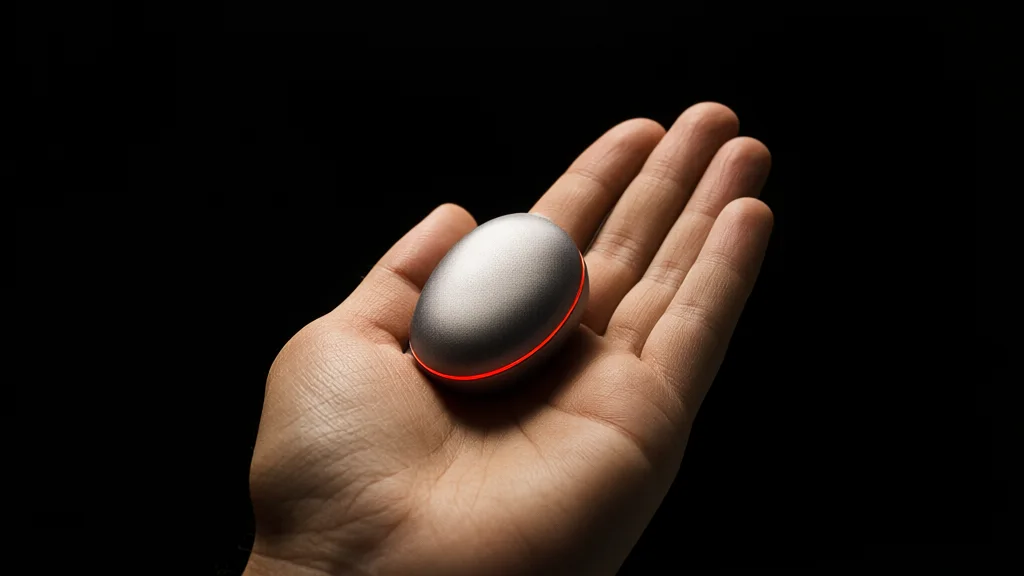
At Meta Connect in Menlo Park on September 23, 2026, Mark Zuckerberg showed off two new products: the Meta VR Glasses, priced at $1,299, and the handheld AI device Muse Charm. The glasses go on sale in spring 2027. According to Zuckerberg, the Charm will be ready to ship in time for December — but the audience wasn't told the price. The stock rose 4.5 percent the next day, toward record levels.
What happened on stage
CNBC's report from the keynote is the primary source for the launch itself. Zuckerberg unveiled the Muse Charm, a handheld device that works with the Muse AI agent, the company's personal AI product launched as an app earlier in September. At the same time, he showed off the Meta VR Glasses, described as a smaller and slimmer device than the company's older Quest VR headsets, with a retail price of $1,299 and a sales start in spring 2027.
About the Charm, Zuckerberg said, according to CNBC, that Meta must "finalize laying out the components," and that the company is "planning to have this ready to ship in time for the holidays in December." He did not give a price.
What the Charm reportedly contains
The hardware details do not come from the stage, but from Bloomberg sources as reported by The Verge. They should be flagged as unconfirmed information: According to Bloomberg, the Muse Charm has a built-in 5G modem, meaning the device doesn't need Wi-Fi to talk to the AI agent, a 2-inch OLED display, a fingerprint sensor, cameras — and the ability to recognize and interact with other Charms nearby.
The pricing picture is equally unsettled from Meta's side. Bloomberg sources say, according to The Verge, that the Charm will "probably cost as much as a smartwatch," but that the company has not yet set the carrier fees for 5G access. Zuckerberg confirmed no price on stage. In other words: the price of the device itself, and everything beyond the AI service subscription, remains outstanding.
The context: The Muse app topped the App Store
The Charm follows in the wake of the Muse app, which launched on September 8 and climbed to first place among free iOS apps in the US around September 18–20, according to Cryptobriefing (citing Sensor Tower data). Cryptobriefing describes Muse as an "agentic" app that can carry out tasks autonomously, powered by the Muse Spark model family running in secure virtual machines.
The revenue model, according to the same source, consists of three subscription tiers: free, $20, and $100 per month, with partnerships including Instacart, Shopify, Expedia, and Stripe. Cryptobriefing is credited to the "Editorial Team" with no named author, so these details should be read as secondary reporting, not confirmed Meta figures.
The download numbers don't add up
Three sources give three different figures for Muse downloads, and they cannot be reconciled with the available documentation:
- About 2.5 million across iOS and Android by mid-September (Cryptobriefing, with Sensor Tower data).
- More than 3.4 million in the US and Canada since the September 8 launch (Seeking Alpha, also with Sensor Tower data).
- More than half a million (CNET, citing "reports").
The differences may stem from different geographies and different points in time for the measurements — the Seeking Alpha writer specifies the US and Canada, Cryptobriefing gives iOS and Android combined, and CNET provides no details. But it is impossible to determine which figure is "correct" from the sources. The safest thing one can say is that the app has had an unusually strong launch — whichever of the numbers is closest to the truth.
The market's reaction
Meta stock rose 4.5 percent on September 24, the day after the keynote, toward its highest level ever, according to Investopedia. The move came the same day Zuckerberg and other executives presented the new AI products at Connect.
Cryptobriefing reports that Meta stock has risen more than 10 percent in total on trading days tied to the Muse launch and its App Store top ranking, and that Wells Fargo raised its price target to $796. Evercore ISI analysts described, according to the same source, Muse's results as a sign that Meta's massive AI investments, estimated at around $200 billion, are beginning to pay off. These are analyst assessments and estimates — not confirmed facts about returns.
CNET's coverage notes that Muse recently had a zero-day vulnerability that has been patched, without this clearly dampening enthusiasm for the products presented at Connect.
What remains open
The price of the Muse Charm itself is the most obvious open question: Zuckerberg said nothing, Bloomberg's sources say only "smartwatch level," and the costs of 5G access remain unset. Privacy around an always-on AI device with cameras and a fingerprint sensor is also unsettled — CNET's piece suggests that privacy details about the smart glasses and the Charm went unanswered at Connect, but does not go deeper.
There are no primary sources from Meta — neither press releases nor spec sheets — among the available sources. Everything beyond what was said on stage comes from secondary sources and unnamed sources to Bloomberg. That means the reader must distinguish between what was actually said at Connect — the Charm's existence, the holiday shipping timeline, the VR glasses' $1,299 price and spring 2027 sales start — and what is so far only sources' and analysts' estimates.