

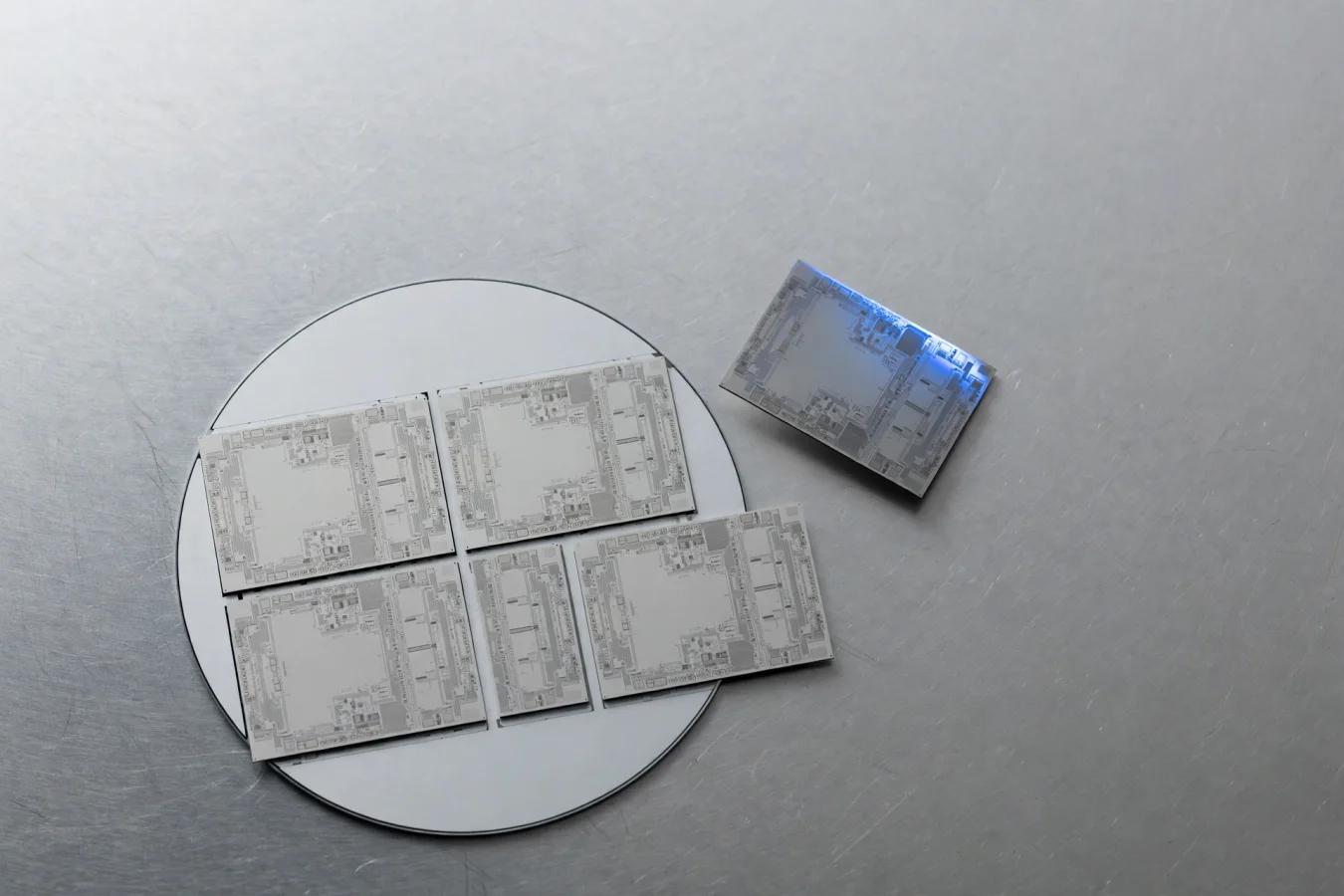
Microsoft launches Maia 300: Custom-designed chip to become the main system for AI inference from 2027
Microsoft unveiled its third generation of in-house AI chips, the Maia 300, on Monday, October 12, 2026, with plans for large-scale deployments beginning in 2027 — and with the stated goal of making Maia the company's primary system for AI inference. But the most striking numbers are the company's own estimates for chips that are not yet in production.
What was actually announced
On Monday, Microsoft launched the Maia 300, the third generation of its in-house AI chip, with large-scale deployment beginning in 2027, according to GeekWire (cb400d43). Azure chief Scott Guthrie wrote in a blog post that Maia is to become "the primary AI inference system for Microsoft products and services." CEO Satya Nadella called the push "our biggest bet yet on our own silicon" in a post on X, as reported by GeekWire.
That is what makes the announcement more than a routine product launch: Microsoft is moving its own chips from an experiment to the planned backbone of inference for its own services such as Copilot and Teams. It is not about dropping Nvidia and AMD — but about reducing reliance on them.
The numbers Microsoft itself promises — with caveats
The performance figures in the announcement are all the company's own estimates, and should be read with that in mind:
- 40 percent more tokens per megawatt than "leading GPU-based systems" — according to Stocktwits (b26f6d46). Yahoo Finance/TIKR points out that Microsoft has not named which systems it is comparing against, and that no Maia 300 chips are in production before 2027 (7afb026a).
- Up to seven times the processing capacity for a system of 96 Maia 300 chips compared with the Maia 200, according to the company's own statement (b26f6d46).
- Doubled rack density: a Maia 300 rack is to hold 96 chips, versus the Maia 200's 48 (4c03585c).
Where Maia stands today
The foundation for the promises already exists, but is modest measured against them. According to Microsoft, Microsoft 365 Copilot is powered today by its predecessor, the Maia 200, which also runs models from OpenAI and Microsoft's own models. The chip is now being rolled out in the US, Europe and Australia, and GitHub Copilot and Microsoft Foundry are to move over to it by the end of the year (cb400d43). Nadella says the Maia 200 delivers "up to 1.7 times more tokens per watt" across Teams and Copilot experiences (4c03585c) — also a company-owned figure.
The context is worth noting: Microsoft's first Maia chip was announced in 2023, the Maia 200 only arrived in January 2026 after delays, and in August The Information reported that the Maia 200 was running in just two US data centers over the summer (cb400d43). The leap from two data centers to "primary inference system" in one year is therefore significant.
Scale and money
Reuters reports that Microsoft could have potentially more than one million Maia chips in operation next year to power its own AI services (7afb026a). The report's power math — 96 chips per 167 kW rack, roughly 10,400 racks and a total of about 1.7 gigawatts for one million chips — is stated as the newspaper's own calculation, not a Microsoft figure. One million chips is also not independently confirmed.
The investments behind the numbers are documented: Microsoft's cash spending on property and equipment reached $35.80 billion in the quarter ending in June, more than double the $17.08 billion a year earlier, according to TIKR. Gross margin has fallen from 69.05 to 67.20 percent over three quarters. The analysis firm FactSet estimates that Microsoft is investing $189 billion in the current fiscal year, with expected Azure growth of 43 percent in fiscal 2027 (100ccc7c).
What it means for suppliers
Microsoft designs the chips itself, but Taiwan's TSMC manufactures them (cb400d43). And it is neither a break nor a replacement: in July, Nadella reiterated that Microsoft will be among the first cloud providers to adopt Nvidia's Vera Rubin systems and AMD's Helios infrastructure, alongside Maia (b26f6d46).
The market reacted measurably nonetheless: Nvidia shares fell 1.5 percent on Monday, AMD fell 3.4 percent, while the S&P 500 was roughly flat (100ccc7c).
"This is a meaningful step in MSFT's vertical integration strategy, giving the company direct control over cost, supply and system-level optimization in a way that buying third-party GPUs does not," wrote Rishi Jaluria, an analyst at RBC Capital Markets, in a note on Monday (100ccc7c).
Evercore ISI analysts estimate — according to CNBC, as reported by GeekWire — that Maia will account for around 10 percent of Microsoft's AI chip spending in early 2027 (cb400d43). In other words: even optimistic analyst estimates place in-house chips as a supplement to, not a replacement for, purchases from Nvidia and AMD.
The open questions
Several things remain unresolved. The efficiency estimates of 40 percent and seven times cannot be tested until the chips are in production from 2027, and the basis of comparison has not been published (7afb026a). The plan for more than one million chips rests on Reuters' sources. And while Google's and Amazon's own chips can be rented by external customers, Maia is not available for hire — a limitation that distinguishes Microsoft's strategy from its competitors', even as Google, Amazon, Meta and OpenAI all bet on their own chips (cb400d43).
Microsoft promises more details at the Ignite conference in San Francisco next month. Until then, the safest thing to say about the Maia 300 is that the intention is large and clear — while the numbers meant to justify it still exist only in Microsoft's own presentations.