


NVE scenario: Norway's 15 TWh power surplus could become a 4 TWh deficit by 2035
NVE's new scenario analysis shows that Norway's power surplus of 15 TWh could flip to a shortfall of around 4 TWh by 2035 if data center growth continues. Statnett's fresh market analysis points in the same direction. But the figures are conditional projections – not forecasts.
The news: NVE warns of historically rapid consumption growth
Norway's Water Resources and Energy Directorate (NVE) published the report "Scenarios for the Power Market 2026" on 29 October. In it, director Kjetil Lund points out that today's growth in the data center industry could trigger the fastest increase in Norwegian power consumption in modern times, according to E24. The warning is explicitly conditional: "If today's strong growth of data centers continues, Norway could face the fastest growth in power consumption in modern times," Lund is quoted as saying.
The wording is important for understanding what the report actually says. NVE is not presenting a prediction of a shortfall, but a scenario – a projection of what happens if one particular development continues without corresponding growth in new power production.
The numbers: from a 15 TWh surplus to a 4 TWh shortfall
Today, Norway produces roughly 15 TWh more electricity than the country consumes in a normal year. In NVE's most amplified growth scenario, this surplus could flip to a shortfall of around 4 TWh in a normal year by 2035 – a swing of close to 20 TWh over ten years.
The consequences extend beyond normal years. In colder and drier years – when Norwegian reservoirs are depleted and consumption peaks – Norway could, in this scenario, need to import up to 30 TWh of power from abroad to cover its needs. For comparison: 30 TWh corresponds to a substantial share of Norway's total annual power production.
The price picture also changes. NVE estimates that normal-year electricity prices in 2035 could be between 35 and 55 percent higher than the agency has previously assumed, if the growth scenario materializes. That means not only energy security, but also households' and businesses' electricity costs, are part of the same equation.
The signal that comes first: reserved grid capacity
Data centers currently account for a relatively modest share of Norway's total electricity consumption. So it is easy to assume the industry is marginal. But demand for grid capacity tells a different story: around half of all reserved grid capacity in Norway is today tied to data center projects, according to NVE.
This is why reserved capacity is an earlier warning signal than measured consumption: when a project reserves capacity in the grid, it signals a concrete intention to connect within a few years, well before the electricity meters start spinning. If only a large share of the reservations are realized, consumption growth will come faster than today's consumption figures can suggest – and faster than the power system has managed to build capacity for.
Statnett points the same direction
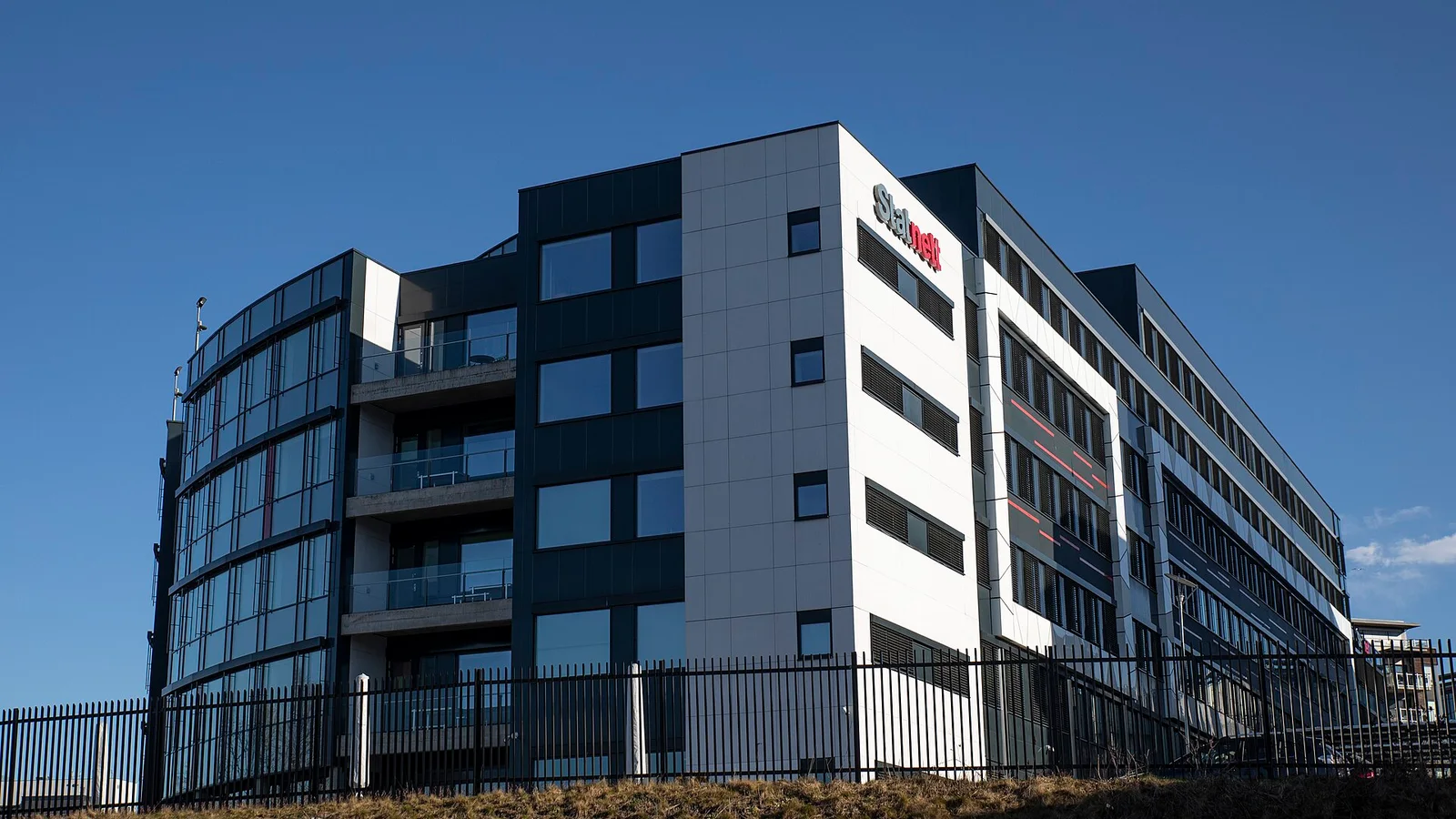
Ten days before the NVE report, on 19 October, Statnett published its long-term market analysis LMA 26. It points out that Norway could enter a structural power shortfall of close to 20 TWh from around 2035 onward, extending toward 2060, according to 24ai.no.
The explanation in Statnett's analysis differs from NVE's, but it converges on the same picture: the build-out of new power production, such as offshore wind and onshore wind power, is lagging behind consumption growth. In other words, the problem is not just that demand is rising – it is that supply is not keeping up.
A broader European pattern
Norway is not alone in this trend. Bloomberg wrote on 19 October that European electricity consumption is rising again after years of decline, because consumers and businesses are increasingly loading the grid with electric vehicles, air conditioning and data centers – a new era of demand growth. That means Norway, if it ends up in a shortfall, would have to compete with other European countries for available power in import markets – precisely in the years when demand is highest.
How to read the numbers: scenarios, not predictions
None of the figures are predictions. They are conditional projections, and the outcome depends on two factors: how many data center projects are actually realized by those who have reserved grid capacity, and the pace of new power production build-out. If several of the reservations come online simultaneously and power build-out stalls, the shortfall scenario materializes; if, conversely, build-out accelerates, it does not.
A source-critical note is warranted: the core figures in this story – the 15 TWh surplus, the 4 TWh shortfall, the 30 TWh import need, the 35–55 percent price increase and Statnett's "close to 20 TWh" – are known via press coverage from 24ai.no, which in turn builds on E24, Teknisk Ukeblad and NTB/TV 2. Neither NVE's own report nor Statnett's LMA 26 has been available for direct verification here, and details or caveats in the primary documents may differ.
What now determines the outcome
The reports arrive at a time when energy policy is under active political consideration, and political reactions have already begun according to the press coverage. The open questions are therefore largely political: how quickly can new power production – hydropower, onshore wind, offshore wind – be permitted and realized? Should large consumers like data centers be required to provide their own production or flexibility? And how should Norwegian electricity prices and security of supply be weighed against the desire to attract digital infrastructure?
The next ten years will show which of NVE's scenarios plays out. But both state analyses converge on one point: the window between surplus and shortfall is no longer decades away – it falls within the current planning period.