

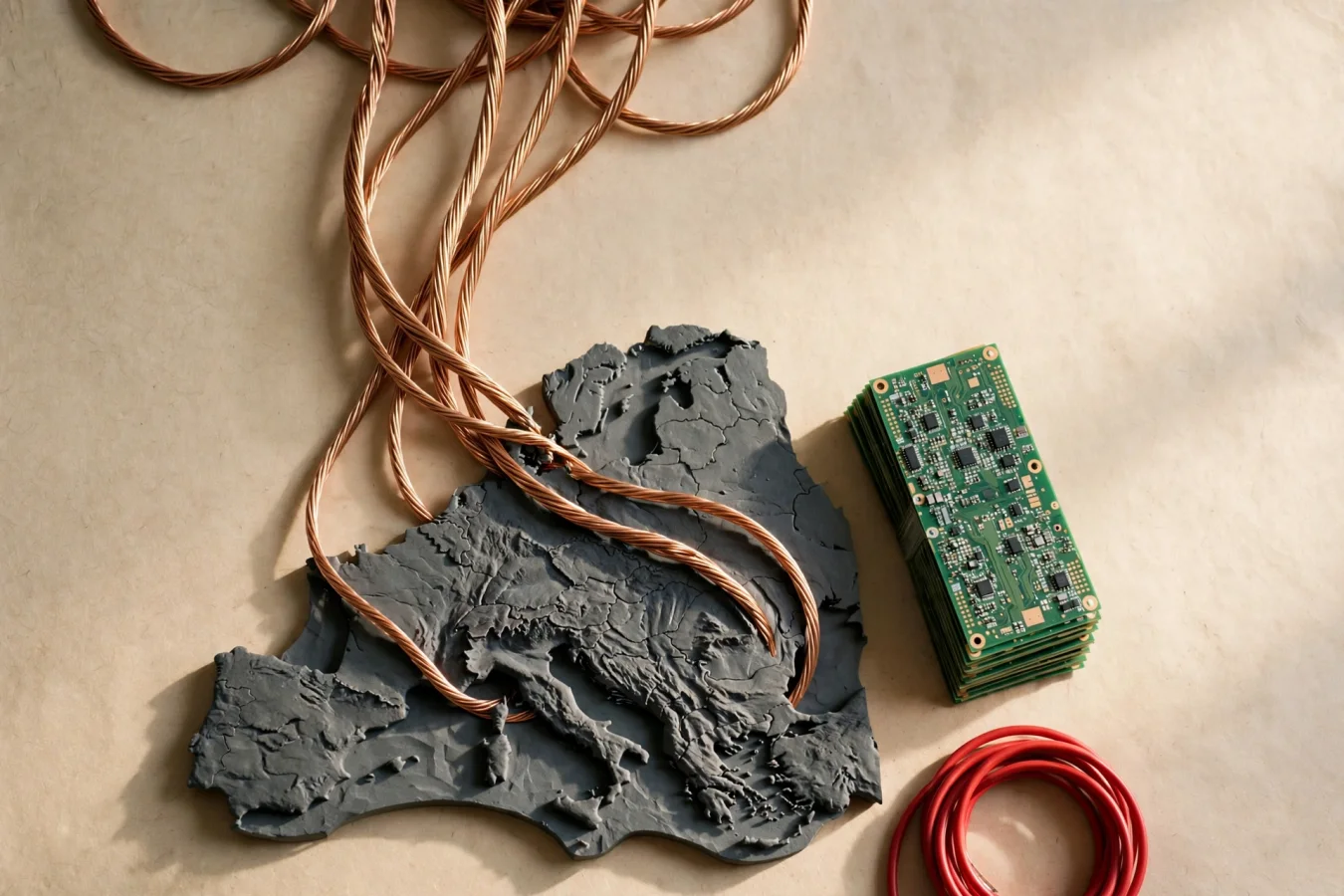
Nvidia has invested $8 billion in Europe in one year – more is coming
At an event in Paris on Tuesday 13 October 2026, Nvidia CEO Jensen Huang said the company will announce $2 billion in new European investments "within a week."
The pledge comes on top of roughly $8 billion Nvidia is reported to have already placed in Europe over the past year — but individual amounts, ownership stakes and company confirmation are still missing.
The news from Paris
Huang announced the plans at an event in Paris on 13 October, according to MT Newswires via Yahoo Finance, which cites multiple outlets. Nvidia did not immediately respond to requests for comment on the statement, meaning that everything known so far comes from secondary reporting of Huang's own words — not from a company announcement.
Alongside the pledged total, Huang announced new funding in four French companies: Doctolib, Genesis AI, Pigment and Entalpic, according to the reporting MT Newswires points to, including from Bloomberg and Les Echos (c2b0dcef).
What the four companies do
The investments span several layers of the AI stack, according to Let Data Science (LDS), citing Quartz (e10a294e):
- Doctolib works on healthcare administration, and an Nvidia minority stake has been reported.
- Genesis AI develops AI for robotics.
- Pigment makes business planning software.
- Entalpic conducts research on chemistry and materials.
What has not been made public is just as important: neither the size of the individual investments nor the ownership stakes in most of the companies have been disclosed. Only the Doctolib stake has been characterized as a minority position.
Huang's sovereignty argument
At the event, Huang argued that Europe must compete far more actively in AI. "Europe needs to get in the race," he said, according to Quartz as relayed by LDS. He also maintained that open models are important for Europe, precisely because they can be adapted to local languages and European sovereignty requirements (e10a294e).
The argument does not come out of nowhere. According to the Stanford AI Index, as reported by Semafor, the United States has 59 notable AI models and China 35, while France and the United Kingdom have one each (5967392c). That is the gap Huang's open-model pitch targets: open weights make it easier for European players to build on existing models rather than start from scratch.
There is also another backdrop to the sovereignty rhetoric: European public skepticism toward autonomous AI agents and toward the data centers' energy demands, which the Quartz reporting relayed by LDS points to as context for the tour.
A tour with several stops
Paris is the first stop on a European tour that, according to Quartz, continues to London and Berlin (e10a294e). The $2 billion "within a week" announcement is thus Huang's own planned timing — pointing toward a follow-up announcement in the days after the Paris event, with London and Berlin as likely stages for further promotion of the push.
Nvidia's existing European involvement
The new money, according to LDS citing Quartz, comes on top of roughly $8 billion Nvidia is reported to have already placed in Europe over the past year (e10a294e). This figure is attributed to secondary sources and has not been independently confirmed by the company in the available source material.
Nvidia's closest French relationship is Mistral AI, in which the company is both a partner and an investor. According to Quartz, Mistral's newest model was trained on 4,000 Nvidia Grace Blackwell chips, while TipRanks separately gave an estimate of around 3,800 chips (e10a294e). The two figures are not reconciled; what can be said so far is that the model was trained on somewhere between 3,800 and 4,000 such chips, depending on the source.
What remains unclear
Several significant questions remain open after the Paris announcement:
- Is the $2 billion confirmed? No — the figure is Huang's own statement as relayed in secondary sources. Nvidia did not immediately comment to MT Newswires.
- What does the amount cover? It has not been clarified whether the $2 billion includes or comes in addition to the investments in the four French startups announced at the same time.
- How large are the individual investments, and which stakes are being bought? No per-company amounts have been disclosed, and beyond the report of a minority stake in Doctolib, no details about the ownership structure are available.
- Who stands behind the $8 billion figure? The figure is attributed to Quartz and is not independently corroborated in the source material.
- When will the announcement actually come? The "within a week" timing is Huang's own estimate, and there is no confirmation of an exact date or content.
Why it matters
Despite the unresolved level of detail, the announcement points to a clear pattern: Nvidia is using capital placements in European companies — from healthcare administration via robotics and business software to materials research — to strengthen the ecosystem around its own platform, while Huang rhetorically positions the company as Europe's foremost advocate for AI sovereignty and open models. Semafor frames the same push in terms of the continent's economic prospects, which, according to the newsletter, are getting a boost from AI (5967392c).
For the European companies involved, the point is concrete: capital and access to computing power from the market's dominant chip supplier. For Europe as a whole, the question is whether the investments actually strengthen the continent's own model development — measured against the Stanford AI Index figures of 59 American and 35 Chinese models — or primarily tie European companies more tightly to Nvidia's stack. The answer depends on the details that are still missing, and that Huang has promised to present within a week.