

One Camera Record, 13 Days in Jail: Wrongful Flock Arrest Reaches the Senate
Lindsey Isaacs, 23, was arrested for a fatal crash she did not commit — after a Flock camera had recorded her plate two to three miles from the crash site. On September 23, she told her story to the Senate Judiciary Subcommittee on Crime and Counterterrorism, at a hearing with the pointed title "Always Watching: Flock's Nationwide AI Surveillance Network." Her case shows what an automated plate camera can actually prove — and how little it sometimes takes to take away a person's freedom for two weeks.
From traffic camera to arrest warrant
The chronology, as laid out in reporting from FOX 35 Orlando, Yahoo News and Jezebel, looks like this:
In October 2025, a fatal collision occurred on Interstate 4 in Florida, killing three people. Roughly seven months later, on April 17, 2026, the Florida Highway Patrol (FHP) issued an arrest warrant for Isaacs. She spent 13 days in jail before the charges were dropped. According to her written Senate testimony, she spent around 86 of those hours in jail in solitary confinement.
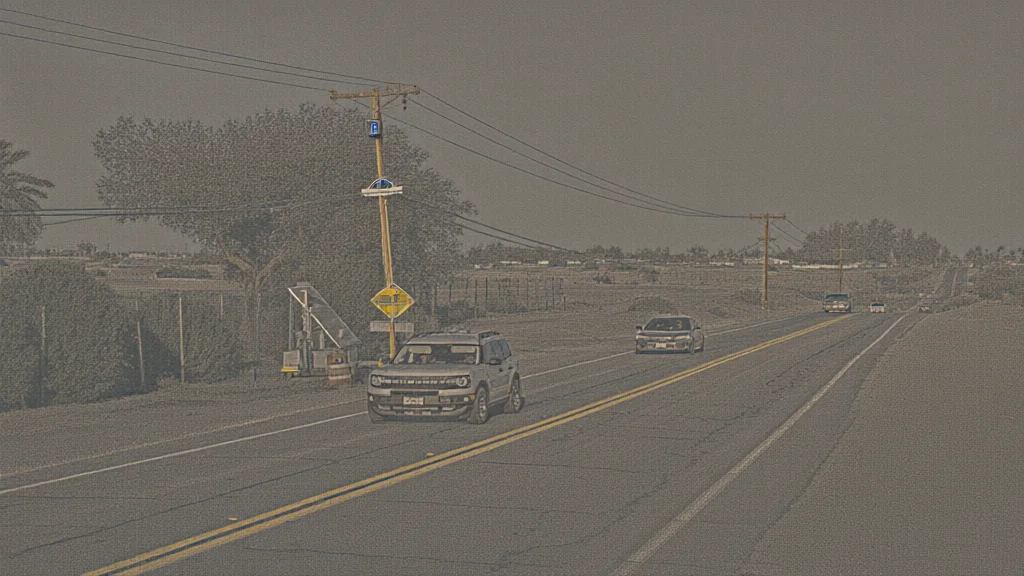
The evidence pointing to her: a Flock camera had recorded her black Dodge Durango two to three miles from the crash site, according to Yahoo News, citing WFTV and CBS12. Isaacs herself described to lawmakers what she was told: "They said, 'We have your plate on a Flock camera, and your car has damage consistent with a collision,'" she has stated, according to Jezebel.
But there were contradicting threads from the start. Witnesses had described a maroon Durango — not a black one. And according to FOX 35, a separate FHP team that subsequently reviewed Isaacs' vehicle found zero crash damage. The arrest report nevertheless claimed that troopers had observed "smudge or rub marks" on the car, which her attorney says photos contradict.
FHP has since cleared Isaacs and arrested another woman, Alisa Montalvo, in connection with the crash.
What an ALPR hit actually proves
An automatic license plate reader (ALPR) records a plate at a given time and place. That is all. It does not document who was driving, not that the vehicle was involved in any offense, and not that it was at the crash site — two to three miles can mean many routes and many purposes.
Flock Safety itself has publicly said that its cameras are designed to provide leads, not to establish identity or guilt, according to Atlanta News First, as cited by Yahoo News. The case against Isaacs shows the gap between that definition and how the data can function in an investigation: for a time, a single camera record outweighed witness descriptions of a different car color and a physical inspection that found no damage.
It should be noted: it is secondary reporting that characterizes the camera record's role in the investigation. The arrest report also relied on the "smudge or rub marks" claim, so the complete basis for the arrest cannot be independently verified from available sources. But her attorney, Patrick McGeehan, makes a structural point regardless: the technology is growing faster than the regulation of it, according to NewsNation via KXAN.
The hearing no industry executives attended
The September 23 hearing, chaired by Senator Josh Hawley, addressed Flock's nationwide network of surveillance cameras. According to WBAP, chief executives from Flock Safety, Axon Enterprise, Motorola Solutions and Verkada were invited to testify — none of them appeared. The companies have not responded directly to the account Isaacs gave, and nothing suggesting they have is reported.
Isaacs is herself suing FHP and the troopers who accused her, in a federal lawsuit that remains ongoing. According to FOX 35, she also supports a proposal called "Lindsey's Law," which would require verification before any arrests based on plate-reader hits. There is no documentation that such a bill has been introduced with a name, number or sponsors — so far it is Isaacs' stated wish.
What remains open
Several questions remain unanswered in the available reporting. No primary documents — neither Isaacs' written testimony, the arrest report nor the lawsuit — have been published directly, so key details such as the 86 hours in solitary, the warrant date and the "smudge marks" claim rest on secondary sources citing her and her attorney. Details in the lawsuit are only partially reported. Whether a bill of the "Lindsey's Law" type will actually be introduced in Congress or in the states remains to be seen.
What is documented, however, is the core of the case: a 23-year-old woman spent 13 days in jail, including roughly 86 hours in solitary, in an investigation in which camera data pointed to her while several other pieces of evidence pointed away. FHP has since cleared her and arrested another suspect. And the company whose technology generated the lead did not show up to answer for itself in Congress.