

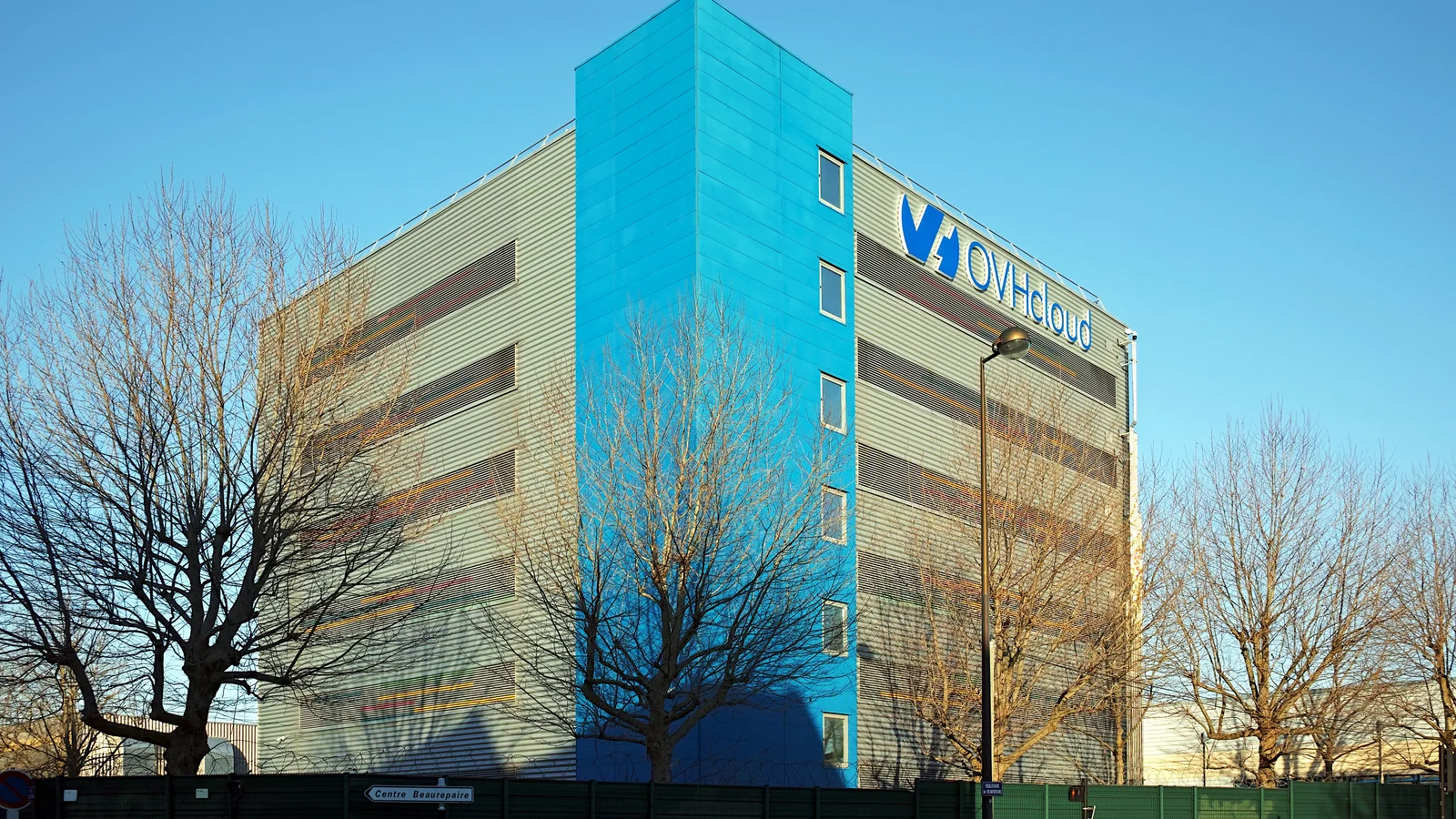

OVHcloud goes from cloud provider to model developer with open 7-billion-parameter MoE model
Cloud host OVHcloud has built its own language model: Olala mini 7A1B is a sparse mixture-of-experts model with 7 billion parameters that, according to the company, runs at 50 tokens per second on an ordinary CPU, is released under Apache 2.0 with AI Act documentation, and is already in use by the search engine Qwant. The official launch takes place at the OVHcloud AI Summit on 19 November.
The news: from cloud provider to model builder
OVHcloud, the company best known as Europe's alternative to the large American cloud providers, announced this week its first family of large language models. The family is named Olala, and the first model out of the gate is Olala mini 7A1B (IT Pro).
The official launch takes place at the OVHcloud AI Summit on 19 November, where the company will present all of its cloud and AI news to customers in detail (MarketScreener). The announcement was published on 17 November, a few days before the summit. The two sources do not fully clarify the relationship between the announcement date and the official launch.
Neither source names which customers the models are primarily intended for, but the point is clear: OVHcloud wants to own the whole chain, from hardware in its own data centres to its own models — a hard pivot on European digital sovereignty.
What kind of model is this?
Olala mini 7A1B is, as the name suggests, a compact model with 7 billion parameters in total, of which only 1 billion are activated per token (MarketScreener). This is a so-called sparse "mixture-of-experts" architecture (MoE), in which the model is divided into 256 experts per layer, and a routing mechanism selects which experts process each individual token.
Two technical choices stand out:
- 256 experts per layer is a very large number. The more experts, the more specialised each one can become, and the fewer parameters need to be activated per token. This is the explanation for how the model can be both "large" (7B) and "fast" (1B active) at the same time.
- Hybrid attention with Differential-TPA and Mamba-3 (MarketScreener). Mamba is a "state space" architecture that handles long sequences more efficiently than traditional transformer attention, with linear rather than quadratic compute cost in sequence length. The combination suggests OVHcloud is trying to capture the benefits of both worlds.
The model is trained in BF16 format. The 7B total parameters with 1B active mean the model can be stored on hardware like ordinary 7B models but runs with the compute cost of a 1B model — which is the core of the company's claim about CPU performance.
Why CPU performance is the point
According to OVHcloud, Olala mini 7A1B runs at 50 tokens per second on an ordinary CPU, and 160 tokens per second on an Nvidia RTX A4500 graphics card (IT Pro). The company also adds that the model has a 32,000-token context window, which the next version will expand to 128,000 by the end of the year.
These figures are the company's own and not independently verified. But if they hold, they have a direct economic consequence: inference on CPU means customers can run the model on existing, cheap hardware instead of renting expensive GPU resources. For European organisations considering self-hosting — a legitimate need under the AI Act — the barrier is lowered considerably.
Training on public European supercomputers
Olala mini 7A1B was trained exclusively on three European public supercomputers: Jupiter, MeluXina and Jean Zay, equipped with GH200, A100 and H100 GPUs (MarketScreener, IT Pro).
This is a deliberate strategic choice. Europe's limited access to cutting-edge GPUs and enormous data centres has long been seen as a structural weakness. Building a model solely on public European infrastructure is partly a political signal, partly a practical answer to the question "could this be done in Europe?" The answer: yes, with public resources.
Licensing and AI Act compliance
Olala mini 7A1B is distributed under the Apache 2.0 licence via Hugging Face, with model weights, technical specifications and documentation for compliance with the AI Act (IT Pro).
The last part deserves separate attention. The AI Act is coming into force gradually, and the documentation burden for companies building on AI systems is substantial. A model vendor including compliance documentation from day one is a differentiator for regulated European buyers, who would otherwise have to build this documentation themselves.
Qwant as first customer
The search engine Qwant is already using Olala mini 7A1B for its "flash response" feature. According to the reporting, the model has delivered answers 20% faster than the model it replaced, with running costs reduced by a factor of three (MarketScreener, IT Pro).
These figures come from the company/Qwant and have not been independently benchmarked. But they provide a concrete usage story: the model is not meant merely to survive in the lab, but is already paying for itself in production at a European technology company with real latency requirements.
Klaba's argument about falling training costs
OVHcloud founder and chief executive Octave Klaba explains the initiative with two arguments (IT Pro):
"We cannot simply rely on the generosity of certain labs to share their LLMs as open source in the years to come."
And further:
"The expertise in model training has become widely available, and the cost of training has been divided by 20 in three years. It is now possible to build LLMs while making this activity profitable."
The claim that training costs have fallen 20-fold in three years is the company's own and is presented without methodology in the sources. It is consistent with broader observations about falling costs of training compact models, but the figure should be read as a strategic argument, not a verified measurement.
Roadmap and open questions
Version 1.1 is expected by the end of the year and will expand the context window to 128,000 tokens. Version 2.0, according to the roadmap, will develop specialised models for enterprise agentic AI, cloud DevOps and cybersecurity (MarketScreener).
Several questions remain open:
- No independent benchmarks. The only performance figures available come from OVHcloud itself. Until a third party has measured the model on standard evaluations, the claim that it is production-ready on CPU is an act of faith, not documented fact.
- What kind of training? The sources do not specify training data, dataset size or the number of training tokens. That makes it hard to assess the model's actual capability.
- The sovereignty question. Even though the training took place on European hardware, the model's properties are not inherently "European." The value of the sovereignty argument depends on what kind of dependency is actually being reduced.
What it means
For European organisations that need a small, open language model with documented AI Act compliance and the option of CPU inference, Olala mini 7A1B is a concrete new option. Whether it is a good option depends on performance figures that no independent party has yet verified. But the technical design — 7B parameters with 1B active, hybrid Mamba architecture, trained on public European hardware, released openly with compliance documentation — shows that the road from cloud provider to model builder is shorter than many have assumed.