

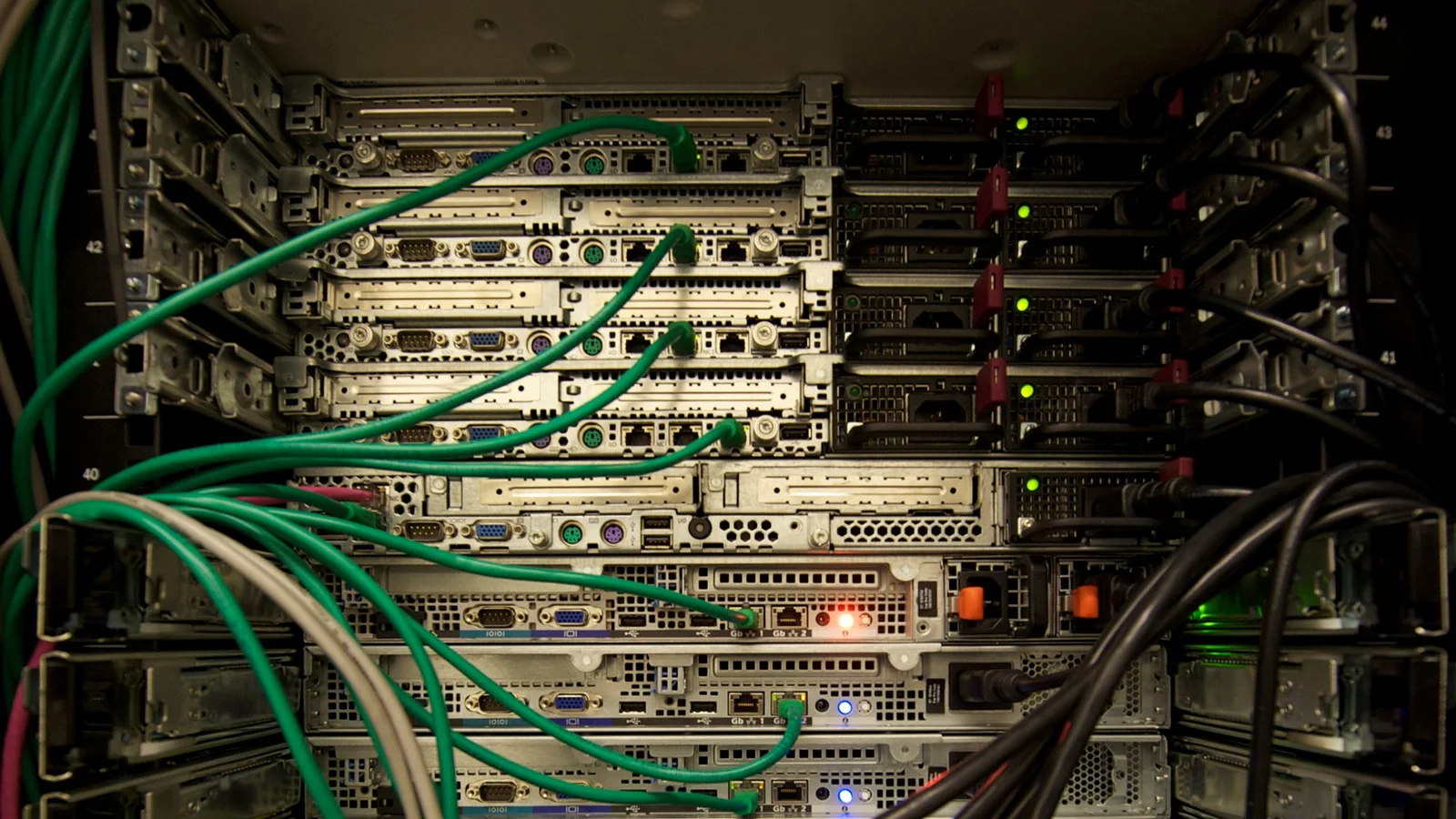

Seized in Malaysia: 30 AI Servers Worth $12.2 Million Stopped at the Main Airport
In just a few days in late October 2026, the entire tension in U.S. chip restrictions became visible in a single country: On October 28, Malaysian customs authorities announced they had seized 30 servers carrying advanced AI chips, suspected of violating export controls. Two days later, The New York Times published a report from Johor, where Chinese companies such as ByteDance get access to the same Nvidia chips — entirely legally — in data centers outside China. And in the background runs an American investigation into the company Megaspeed, which according to The Wall Street Journal allegedly diverted Nvidia chips to China. Together, the three events show something important about how the controls work in practice: They bind the seller, not the buyer — and they stop smuggling only where customs officers actually open the box.
The seizure that reveals the route
The concrete starting point is the customs seizure. On October 15, a shipment was stopped during inspection in the free trade zone at the country's main airport, and on October 28 the customs department announced the seizure: 30 servers equipped with advanced AI chips, worth roughly 50 million ringgit, or $12.2 million. The airport's customs director, Aspalila Ag Tuah, told journalists that the servers came from an Asian country, were falsely declared as electrical components to avoid detection, and were to be exported onward to another Asian country without the necessary permit.
The authorities believe a syndicate was using Malaysia as a transit hub to export the chips onward, and have linked the shipment to five attempted smuggling operations — among them a seizure in June this year of 72 servers. The fact that there are at least two seizures tied to the same network suggests this was not a one-off, but a route in repeated use before it was uncovered.
There are two important limitations in the official picture: Neither the country of origin nor the destination has been named, and the chip models in the servers have not been made public. The seizure is therefore proof that the route exists — not of how many chips passed through it before it was discovered.
Nor did the seizure occur in a regulatory vacuum. Last year, under pressure from the United States, Malaysia introduced permit requirements for the export, transit and transshipment of high-performance AI chips of American origin — precisely to prevent sensitive technology from being routed onward to China via third countries. The October seizure shows the rules working: the requirement exists, customs caught the violation. But the declaration fraud — chips labeled as "electrical components" — also shows how easily the border system can be circumvented.
The legal channel: Johor and the data centers
In Johor, in southern Malaysia, the same chip purchases are happening — but entirely within the rules. With cheap land, affordable power and proximity to undersea cables, Malaysia has become a magnet for technology companies, and according to The New York Times' October 30 report the country has "secured an unusual position in an AI industry that is increasingly split along geopolitical lines between China and the U.S. Rather than choosing a side, it has welcomed both."
This is where the structure of U.S. export control strategy becomes visible. Nvidia's chips are largely banned from China. But the ban applies to shipment into China — not to Chinese companies' access to computing power. The New York Times points to ByteDance, which is the largest customer of the data center operator DayOne: the restrictions "generally do not prevent Chinese companies like ByteDance from accessing the same chips in data centers outside China." The conclusion is that the controls no longer bind the use of chips, but their location — and location can be purchased in Johor.
For Malaysia, this neutrality is a strategy, but it comes at a price. The NYT report notes that the construction boom has "reshaped Malaysia's economy and landscape, raised fears of strain on the power and water supply, and drawn scrutiny from American officials worried about Chinese access to advanced AI chips." The data centers require large amounts of both, and local pressure on infrastructure is a real cost of being the world's neutral hub.
The investigation that stalled — and the one that took over
The third layer of the story is the alleged illegal channel at larger scale. According to The Wall Street Journal, the U.S. Commerce Department began in late 2024 investigating whether Singapore-based Megaspeed International diverted Nvidia chips to China, in violation of export controls. That investigation "largely stagnated," according to people familiar with the matter — that is, sources speaking anonymously to the newspaper. The Justice Department is now leading the Megaspeed investigation.
WSJ also reports that U.S. officials in 2025 concluded that Alice Huang, a senior executive at Megaspeed, shared information with the Chinese government. These are serious allegations — but they are allegations, not established facts, and several factors cloud the picture:
- The company rejects everything. Megaspeed has denied any violations, saying late last year in a statement that "these thorough investigations have confirmed that there is no evidence of violations related to the illegal transfer of chips or any illegal activities, and this shows that we are a proper and legitimate company."
- Singapore speaks with two voices. A representative of the Singapore Police Force told the newspaper: "While we do not enforce unilateral export controls imposed by other countries, we take firm action against companies and individuals who break our laws and engage in fraudulent and dishonest practices," describing investigations into Megaspeed as ongoing. But Singapore's Home Affairs Ministry has since denied that any investigation into Alice Huang's contacts with China is underway — a contradictory stance that remains unresolved in the public picture.
- No primary documents. The entire case rests so far on press reporting from anonymous sources. There are no public court documents or official communications confirming the allegations.
The political logic behind the Singapore statements is worth noting: the country does not enforce other countries' unilateral trade restrictions. That means the allegations against Megaspeed, if they hold up, are not violations of Singapore's own terms — but of American rules enforced from a distance, with a weaker grip.
Why the controls bind Nvidia — but not China
It is tempting to conclude that export controls have failed outright. Nvidia's own numbers point in a different, more nuanced direction — and at the same time reveal what the controls actually achieve.
Nvidia has said that H200 sales to China accounted for less than 1% of the company's $89 billion in data center revenue in the second quarter. In other words: the restrictions work well on what they are designed to hit directly — Nvidia's own sales to Chinese customers. The direct commercial trade has been marginalized.
But the same number also shows how little that means for Chinese access to computing power. ByteDance does not need to run Nvidia chips inside China to use them. Johor is close enough. And the illegal route — smuggling via Malaysia, alleged diversion via companies like Megaspeed — shows the barrier can be crossed both over and under the border.
This is the core conclusion of October 2026: the controls have shifted Chinese chip access from being a trade relationship to being a matter of geography and investigation. The cost falls on Nvidia, which loses a market, and on customs officers and investigators, who must hunt for physical servers in transit — not on Chinese companies, which have multiple paths to the same chips.
What we don't know
There are major gaps in the public picture, and they are worth being honest about:
- The scale of smuggling. We know of two seizures — 30 servers in October, 72 in June — but not how many got through before the routes were uncovered, or how many routes remain open.
- Origin and destination. Customs authorities have not named where the chips came from or where they were headed. That limits how much can be said about who is behind it.
- The actual substance of the Megaspeed case. None of the allegations against the company or Alice Huang have been confirmed by primary sources, and the contradictions from the Singapore authorities make it impossible to know what is actually being investigated.
- Malaysia's total data center investment. The NYT report sketches the boom, but the available excerpts do not quantify the overall investment volume or capacity.
What remains certain is the local accounting in Johor: the growth strains the power and water supply, and the burden of being the world's neutral AI hub ultimately lands on Malaysian infrastructure — while the geopolitical questions are settled in Washington, Beijing and Singapore.
Sources: Associated Press via U.S. News, The New York Times, Wall Street Journal via MSN, Nvidia via Yahoo Finance.