

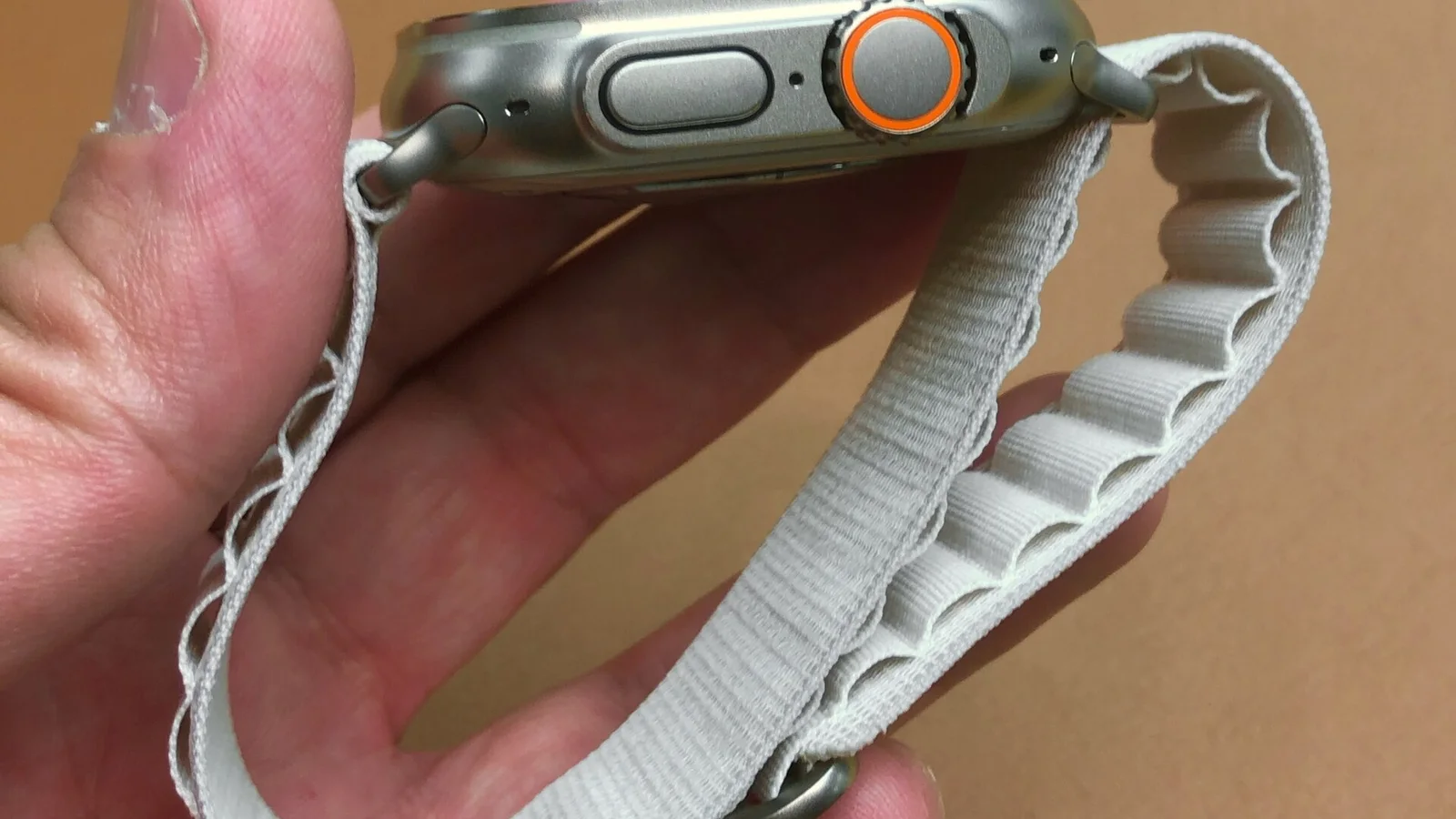

Siri Recap beta on Apple Watch Series 12 and Ultra 4 is opt-in — but bystanders get no indicator
Three independent hands-on reviews of Apple's Audio Intelligence beta landed within a single week in November 2026 — and the verdicts diverge. The feature summarizes your conversations throughout the day, but according to ZDNET, one reviewer switched it off after a week over inaccuracies and ethical concerns.
Apple has now put an always-listening AI on the wrist — albeit as a beta you have to switch on yourself. The feature is called Siri Recap and is part of Audio Intelligence, which shipped with the Apple Watch Series 12 and Apple Watch Ultra 4. It creates summaries of what you've talked about during the day, while its sister feature Live Rewind provides a transcript of the last 15 seconds of audio if you missed something. Three major reviewers — CNET, The Verge and ZDNET — published their experiences in November: CNET on the 14th, The Verge and ZDNET on the 19th. That makes a rare, concentrated moment of independent testing of an always-listening wearable ahead of its public release, which Apple (as relayed via CNET) says comes "later this year."
The assessments split along a pattern: the feature works best in dedicated meetings, but is unreliable in everyday conversations. And two of the three reviewers point to the same unresolved problem — the people around you barely know the watch is listening.
How it works
Siri Recap is not on by default — you have to actively opt in. All three reviewers stress this. ZDNET (Nina Raemont) writes that the feature launched on the two newest Apple watches, the Apple Watch Series 12 and Apple Watch Ultra 4, and that it is disabled by default, so you must opt in to use it (ZDNET, source c9fb5554).
Once it's on, users can schedule when it should be active. The Verge (Victoria Song) gives an example: "only at the office between 1 to 2PM on weekdays." Unless saved, all summaries are set to self-destruct after an optional one, three or seven days. There is no viewable transcript in the summaries showing who said what and when — details from The Verge (source df49fedb).
Apple's described privacy architecture
Apple presents a carefully worked-out architecture for how the audio is handled — but it is worth noting that this is Apple's own description, relayed through reviewers. According to The Verge, the audio is processed and then immediately deleted in a "secure exclave" in the S11 chip of the 2026 Apple watches, an area said to be inaccessible to Apple and other third parties. Most of the processing reportedly happens locally on the device, and anything that goes to the cloud passes through Apple's Private Cloud Compute. Because the feature requires this hardware, it is impossible to use on older Apple watches.
In practice, that means the always-listening feature is limited to the newest watches — both as a technical requirement and as a vendor claim about privacy. No primary Apple documentation (press release, support page or security blog) is available in this material, so the security architecture should be read as Apple's claims, not independently verified facts.
What the reviewers actually found
CNET's Vanessa Hand Orellana tested the Audio Intelligence beta in the WatchOS 27.3 (and iOS) public beta for two weeks. Her verdict: Siri Recap worked best in dedicated meetings, but was more hit-or-miss otherwise. She describes the test as a "sneak preview," precisely because this is not the final version (CNET, source b46eabd8).
ZDNET's Nina Raemont came to a far more negative conclusion. After one week, she switched the feature off for good: she says she disabled it after a week of testing because it was often inaccurate and raised ethical concerns (translated from English; ZDNET, source c9fb5554). She says the feature, among other things, mixed up topics and people across conversations (ZDNET, source c9fb5554). The details of ZDNET's accuracy criticism beyond this example are not complete in the available material.
The Verge had a testing period of about two weeks according to its title, while the body text refers to "the last week" — the exact duration is therefore somewhat unclear, but the report describes first-hand experience with the Siri Recap beta on the Apple Watch Ultra 4.
The bystander problem: who has actually consented?
The most pervasive theme across the reviews is not accuracy, but the people around the user who never consented. CNET's Hand Orellana describes it this way: beyond a barely audible chime when she double-clicks the Digital Crown to activate Live Rewind, she says there is no way to make others aware the feature is in use, and that everyone nearby is unintentionally drawn into the experiment (source b46eabd8).
The Verge points to the same thing, but even more sharply: unlike Live Rewind, Siri Recap, according to Victoria Song, has no external indicator or audio signal marking that recording is underway (source df49fedb).
There is, however, an unresolved difference between the reports here: The Verge says Siri Recap lacks an indicator or audio signal, while CNET describes a barely audible chime — but tied to Live Rewind, not Siri Recap. The reviewers may be describing slightly different behaviors in the beta, and the available material does not allow this difference to be resolved. What remains in any case is that the existing signals — to the extent they exist — are so weak that both CNET and ZDNET believe they do not genuinely inform the people within listening range. This is exactly what Raemont points to as one of the reasons she switched the feature off.
What remains
Several questions are still open. The feature is in beta, and its accuracy may change before launch — which CNET's two-week test already suggests with its hit-or-miss pattern outside meetings. Apple has, according to CNET, only said the public version is coming "later this year"; no exact date has been given. Since the beta runs on WatchOS/iOS 27.3, both the behavior around indicators and the quality of summaries may change before it reaches all users.
And the privacy promise is still primarily Apple's own: the secure exclave, immediate deletion and Private Cloud Compute are described by the company and relayed by reviewers, not documented with primary sources. It is worth noting, however, that CNET and The Verge independently relay a consistent architecture.
The biggest open question may not be technical but social: three independent reviewers in one week conclude that Apple's on-hardware privacy architecture solves much of the technical privacy problem, but not the social one — that always-listening technology also listens to those who were never asked. Whether Apple adds clearer indicators, better accuracy in everyday conversations, or something else before the public launch is, for now, unknown.