The Muse agent gets its own hardware: glasses with compute puck and 5G keyring from Meta
**On Wednesday, Meta launched a $1,299 VR headset with an external compute puck and a keychain device called Muse Charm equipped with cameras and 5G.

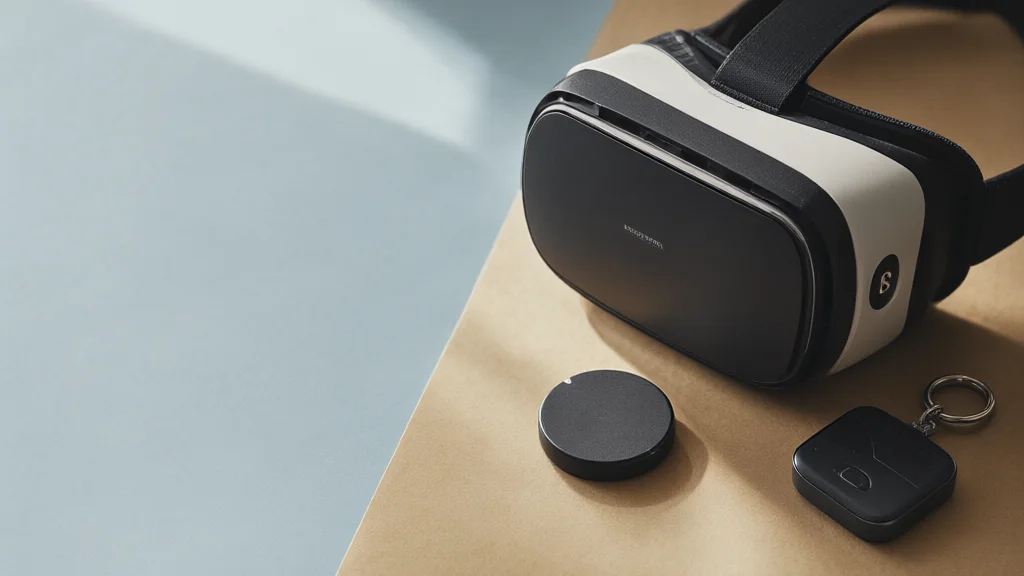
The Muse agent gets its own hardware: glasses with compute puck and 5G keyring from Meta
On Wednesday, Meta launched a $1,299 VR headset with an external compute puck and a keychain device called Muse Charm equipped with cameras and 5G. But the launch arrives amid a storm: Amazon has blocked the Muse agent, and unreliable reports of iMessage reading hang over the keynote.
At the Meta Connect keynote on September 23, 2026, Mark Zuckerberg showed off two new hardware products both built around the company's AI agent Muse: Meta VR Glasses, a slimmer VR device set to go on sale in spring 2027, and Muse Charm, a keychain device aiming to ship in December. That is according to CNBC, which covered the keynote, and The Verge.
The VR Glasses: Light Weight, Heavy Compute in Your Pocket
Meta VR Glasses is, according to CNBC, a smaller and slimmer device than the company's earlier Quest headsets. The technical move is to shift the computing power out of the headset itself: an external puck houses a Qualcomm processor and the battery, functioning as a kind of mini computer. That reduces both the weight and size of the headset portion.
TechTimes, which also covered the presentation, reports that the display unit weighs around 100 grams and that the puck is to contain a Snapdragon Reality Elite chip. These specifications were presented by Meta at the keynote and have not been independently verified. TechTimes frames the weight as the product's core engineering story.
The glasses will have eye- and hand-tracking, according to CNBC, reducing the need for controllers. They are Meta's first VR device since the Quest 3S arrived in 2024 at a price of $299 — in other words, a leap in both price and positioning: the new glasses cost $1,299 according to CNBC, while TechTimes reports $1,299.99. Sales begin in spring 2027.
Muse Charm: The Agent You Carry on Your Keychain
Muse Charm was briefly shown by Zuckerberg at the end of the presentation, The Verge writes. The device has a fingerprint sensor at the top right that you press to activate and start talking to the agent, and an apparently small camera.
According to Yahoo Tech/Decrypt, Charm has both front and rear cameras, allowing Muse to identify products, read signs, or describe whatever it is pointed at. The device also has its own 5G connection — the same mobile technology used in phones — meaning it can reach the internet on its own, without being tethered to a phone. That sets it apart from most AI accessories, which so far have required a mobile device as an intermediary.
But the product is early: Meta plans to ship "in time for the holidays in December," but Zuckerberg said, according to The Verge, that the company has "only built a few of these so far." Materials and finish are not finalized either. The price has not been announced, and full specifications are lacking.
The Context: Muse's Rapid Growth — and Its Headwinds
The Muse agent launched on September 8, barely two weeks before the keynote. Meta claims the app has surpassed 2.5 million downloads — a company statement reported by Yahoo Tech/Decrypt, not an independently verified figure. According to CNBC, the app has shot to the top of Apple's App Store, past ChatGPT, and Meta's stock has risen more than 20 percent in the two weeks after launch.
At the same time, the Charm announcement came just hours after two negative stories. First, Amazon has blocked Muse from making purchases on its shopping platform, citing the company's terms of service, CNBC writes. This is not an isolated case: Amazon has previously blocked agentic tools from both OpenAI and Google, and has sued Perplexity. The dispute centers on who controls the customer relationship when AI agents shop on users' behalf — and Meta's new agent hardware thus begins its life inside a commerce ecosystem where a central player has shut its door.
Second, the press reported — according to Yahoo Tech — ahead of the keynote that Muse had allegedly read more than 187,000 rows of a columnist's private iMessages. This report has been verified by none of the sources in this material and should be treated as exactly what it is: an unreliable press report, not documented fact. But it sets the tone: an agent built to see, read, and act on your behalf faces an audience already asking where the boundaries lie.
The Broader Line: Glasses in a Hundred Styles
The VR glasses and Charm are not isolated products, but part of a larger hardware push around Muse. According to Pulse2, Meta expects to offer more than 100 AI glasses styles by the end of 2026 — the company's broadest wearables lineup to date. The VR glasses are also set to come with entertainment partnerships, including with Disney, ESPN, and Lightstorm Vision, Pulse2 reports. This too is the company's own information relayed through secondary sources.
The pattern is clear: Meta is positioning Muse not just as an app, but as an ecosystem with dedicated hardware — from glasses on your head to a keychain in your pocket, both carrying sensors that give the agent eyes and ears in your physical everyday life.
What Remains to Be Answered
Several central questions remain open after the keynote. Muse Charm's price and final specifications have not been announced; Meta, according to The Verge, says details will come later this year. It is unclear whether the December date will hold, given that Zuckerberg himself says only a few devices have been built.
The price of the VR glasses should also be read with some caution: CNBC reports $1,299, TechTimes $1,299.99, and the complete lineup arrangement — TechTimes suggests a range starting from $249 — is not confirmed in detail. And the two headwinds, Amazon's block and the iMessage report, remain unresolved: Amazon has not lifted the block, and the question of what Muse has actually read and stored is not answered in the source material.
The VR glasses arrive in stores in spring 2027. Until then, the pricing picture, the privacy debate, and the relationship with platforms like Amazon will likely shape how these products are received.
Sources
- Meta's New AI Toy Is a Keychain That Watches, Listens, and Never Blinks — tech.yahoo.com
- Meta's standoff with Amazon over Muse comes ahead of Meta Connect — www.cnbc.com
- Meta VR Glasses, Camera-Free Audio Specs, and Keychain AI Lead Connect 2026 Haul — www.techtimes.com
- Meta Unveils $1,299.99 VR Glasses, Expands Muse AI, And Introduces More Than 100 AI Glasses Styles — pulse2.com
- Mark Zuckerberg debuts $1,299 Meta VR Glasses and Muse Charm pendant — www.cnbc.com
- Meta is making a standalone Muse AI gadget | The Verge — www.theverge.com