
Zuckerberg Promises Muse Charm for December — but Neither Price nor Specs Are Ready
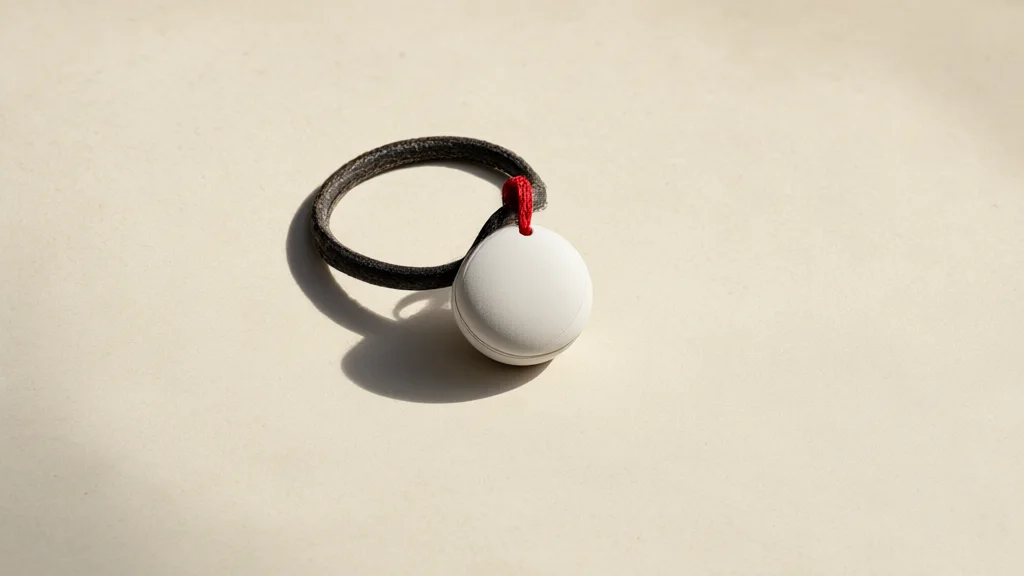
Mark Zuckerberg unveiled a small, round keychain-like device that will give users direct access to Meta's AI agent Muse — without a phone, laptop, or smart glasses. Muse Charm was presented during the keynote at Meta Connect on September 23, 2026, and Zuckerberg promises it will be ready for sale in December. Neither a price nor full specifications are in place yet.
What Muse Charm Actually Is
Muse Charm is part of a broader push by Meta into the market for AI wearable devices — alongside camera-free Ray-Ban glasses at $349, third-generation Ray-Ban Meta at $449, display glasses at $799, and the new Meta VR Glasses at $1,299.99 arriving in spring 2027.
According to CNET, which had the device in hand at the event, Muse Charm is a small, round device with a fingerprint sensor used to activate it — without needing to pull out a phone or laptop. The purpose is simply stated: to be able to talk to the AI agent Muse at any time.
Meta itself describes the device in its news roundup following the keynote: "Muse Charm is a delightful and fun device built for you to talk and interact with your Muse. It brings the power of Muse with a state-of-the-art real-time voice model into a pocketable device" (Meta, translated). The company promises more details later this year.
Zuckerberg framed the device as the fastest route to the agent for people who don't wear glasses: "We've packed a lot of technology into this little guy," he said, according to CNBC (translated). "So, if you don't have glasses on, this is going to be by far the fastest way to talk to your Muse, and to show it what's going on around you" (translated).
Associated Press describes the palm-sized device as a keychain carrying the "entire Muse experience" inside, noting that Muse is the "centerpiece" of Meta's vision.
What's Missing: Price and Specifications
For now, Muse Charm exists mostly as a promise. Zuckerberg provided neither a price nor full specifications. He said, according to CNBC, that Meta still needs to "finalize laying out the components" (translated), but is planning a December launch. A device announced for sale within three months without finalized components and without a price is unusual — which is why the December date should be read as an intention, not a guarantee. Consumers considering a purchase will have to wait for both a price and details on battery life, microphones, and how the device actually connects to Meta's services.
The Glasses Lineup Around the Keychain
Muse Charm alone is a small product; together with the rest of the lineup, it sketches a pattern. Meta is betting on many form factors for the same AI agent, from pure audio glasses to full VR:
- Ray-Ban Meta Audio — $349, on sale October 13. A glasses model deliberately designed without a camera, with open-ear audio. According to Lifehacker, the glasses have a stated 12-hour battery life, with the case adding another 48 hours.
- Ray-Ban Meta (Gen 3) — $449, available now, according to Popular Science's pricing table.
- Meta Ray-Ban Display — $799, according to Popular Science.
- Meta VR Glasses — $1,299.99 (CNBC reports a rounded $1,299), launching in spring 2027. According to Popular Science, the glasses weigh around 100 grams — about the weight of a deck of cards — because the processor, battery, and storage have been moved out of the frame and into a puck that clips into a pocket. The puck runs a Snapdragon Reality Elite processor, and the glasses are designed to be used without controllers.
Meta further claims that Muse is coming to its AI glasses "in the coming months" (translated). These are the company's own statements, not independently verified.
The Agent It's All About
Muse launched in early September 2026, so the keychain is a distribution vehicle for an agent already on the market. CNET writes that reports suggest the Muse app has been downloaded more than half a million times — but this is a figure CNET itself attributes to unspecified reports, not to Meta or app store data, and it should therefore be treated as unverified.
CNET also mentions reports this week of a serious zero-day vulnerability in Muse — said to have been patched now. There are no primary sources, such as Meta's own security advisories, in the available picture, so the severity and details of the vulnerability rest on secondary sources.
To make Muse more capable of taking action, Meta claims the agent launched with "dozens of partners" (translated) and access to the entire Shopify catalog, and that the company is now adding Walmart, Best Buy, American Eagle Outfitters, DICK'S Sporting Goods, Fanatics, Gap, Michael Kors, Sephora, Ulta, and Wayfair, in addition to Shop Pay and PayPal for payments. The company also mentions Expedia, Instacart, Notion, and GitHub as connectors. For now, these are only claims from Meta, without documentation of how the integrations work in practice.
The Privacy Questions That Weren't Addressed
A pocket-worn AI with a microphone and fingerprint activation raises obvious questions about when it listens, what it stores, and where the data goes. Meta said nothing about these topics in what is publicly known following the keynote.
Gizmodo has already come out swinging, in an opinion column describing Muse Charm as a "Trojan horse" move: "It's going to do the dirty work of desensitizing people to the idea of having an always-on AI on their body at all times, listening for their voice and collecting who knows what else along the way" (translated). This is clearly commentary, not fact — the column's framing of how the product works is unconfirmed, and some figures in the post (such as a claimed nine million smart glasses sold) cannot be verified in the available sources.
Zuckerberg himself took up counterarguments of a different kind on stage. According to the Associated Press, he rejected calls for a coordinated slowdown in AI development: "We believe the best way to create a positive future for everyone is to put power in people's hands" (translated), he said, arguing that the path to a safe future is to "distribute this technology widely" (translated) rather than concentrating it among a few.
The Questions Before December
The big question is whether Muse Charm actually reaches store shelves by the holidays. The components are not finalized according to Zuckerberg himself, and the price is unknown — two things normally settled well before a launch. Details on battery, storage, and connectivity are also missing.
For Meta VR Glasses, questions remain about the display experience: Meta has not published any field-of-view figure, and Popular Science cites only unofficial numbers from people who have tried the glasses, so comparisons with competitors' VR devices remain preliminary for now.
And the broadest uncertainty: Muse itself. The half-million download figure is unverified, the details of the zero-day vulnerability rest on secondary sources, and it is unclear how much of the agent's capability — the partner connections, the shopping access — actually works in practice today. Muse Charm is a bet that people will wear an AI on their body. The answer comes in December — if the device arrives.