
Alibaba's New Zhenwu V900: 216 GB of Memory and 1200 GB/s Interconnect — But No Benchmarks
The announcements came at the Apsara conference in Hangzhou on Tuesday, 22 September 2026, the day before Xi Jinping travels to a summit with Trump. All performance figures are company claims — and Alibaba has given no production timeline for the chip.
Alibaba used its annual Apsara conference in Hangzhou on Tuesday, 22 September 2026, to announce three things at once: a new AI chip called the Zhenwu V900 from the company's semiconductor unit T-Head, a roadmap for Qwen models set to scale to 5 and 10 trillion parameters, and a target of more than 20 gigawatts of data center capacity by 2032. The announcements came a day before Chinese leader Xi Jinping arrives in Washington on Wednesday for a summit with President Donald Trump, at which AI, trade and tariffs are expected on the agenda, according to Associated Press.
The chip, and what Alibaba claims about it
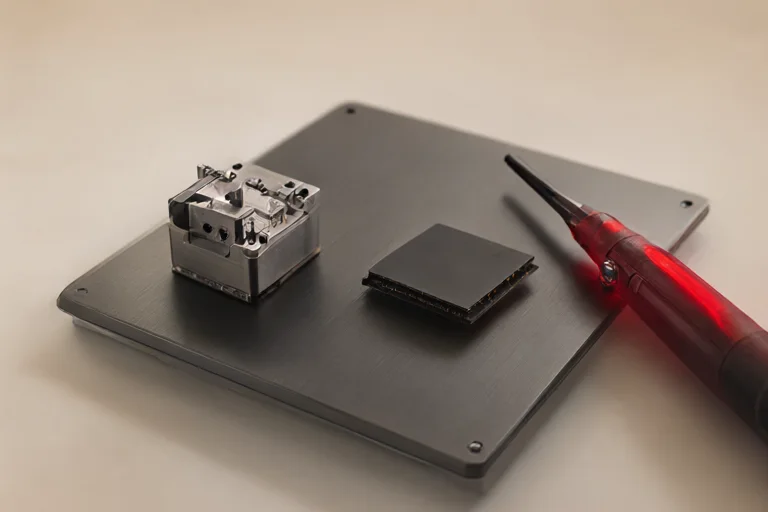
CEO Eddie Wu described the Zhenwu V900 as "the most powerful AI chip in China today" and said it can deliver three times the performance of its predecessor, the Zhenwu M890, according to AP. Both claims originate with Alibaba itself and are not independently verified.
The published specifications that do exist come from T-Head's own technical datasheet, as reproduced by The Register: 216 GB of memory and 1200 GB/s of interconnect bandwidth between chips. Wu further stated that the chip can be combined into clusters of up to 500,000 units for training frontier models — a figure Bloomberg also reports. Bloomberg frames the chip as an accelerator intended to compete with Nvidia.
The decisive catch: no production timeline. The Register notes that Wu did not say when the chip will actually enter production.
The model roadmap: from 2.4 to 10 trillion parameters
Wu also announced that Alibaba has begun training its next-generation model, Qwen 4, and that two successors are on the roadmap with targets of 5 and 10 trillion parameters respectively, according to The Register. For comparison, today's Qwen3.8-Max — the most powerful model in the Qwen series — has 2.4 trillion parameters, Alibaba says via AP. Parameter count is a measure of a model's learning capacity, not necessarily of quality.
The Register additionally reports that the Qwen team is exploring "Recursive Self-Improvement" — models increasingly contributing to improving themselves. The details of what this concretely means in Alibaba's case have not been made public.
The scale: 20GW against the US's 37.7GW
The target of more than 20 gigawatts of computing power by 2032, reported by AP, is set six years out. The Register characterizes the pace as relatively modest, with a concrete comparison: the property firm Cushman & Wakefield reported last week that data centers equivalent to 37.7GW are under construction in the United States alone — nearly twice Alibaba's six-year target, in one country, today.
The figure must nonetheless be read in context: Chinese companies operate under US export restrictions on advanced chip technology, and domestically developed chips like the V900 and a planned buildout under Alibaba's own control are part of a broader push for technological self-sufficiency. The summit between Xi and Trump, which begins Wednesday, has, according to AP, precisely AI, trade and tariffs as central topics.
What we don't know
There are no primary sources in this story: neither Wu's keynote in full text, T-Head's specification sheet, nor a press release from Alibaba are available. All the performance claims — "most powerful in China," "three times the performance" — are the company's own characterizations reported secondhand, and there are no independent benchmarks to check them against. The AP article circulates in several reprints, but these do not count as independent sources; The Register and Bloomberg each confirm the core announcements, but both build on the same keynote and the company's own materials.
The most concrete gap remains the time horizon: a chip without a production date, clusters of 500,000 chips without a delivery plan, and model targets without release dates are, for now, plans — not products.