
Amazon Weighs Selling Already-Installed Nvidia Blackwell Chips and Leasing Them Back via an SPV
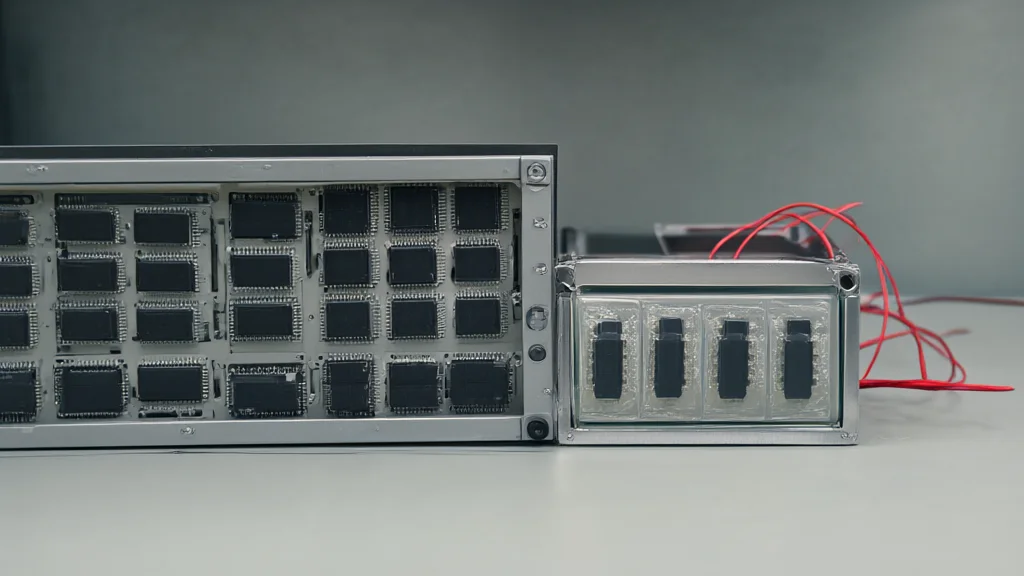
Amazon is reportedly exploring moving roughly $8 billion of Nvidia Blackwell chips off its balance sheet through a so-called special purpose vehicle (SPV) that would lease the chips back to the company, according to the Financial Times. The unusual part: the chips have already been bought or leased and installed in data centers across five US states — and the plan has not been confirmed by Amazon.
What's New
The Financial Times reported on October 1, 2026, citing people familiar with the matter, that Amazon (AMZN) is considering spinning off thousands of Nvidia chips (NVDA) into an SPV as part of a more "asset-light" strategy. The report was relayed by Investopedia and Yahoo Finance on October 2.
The sum involved is roughly $8 billion. The chips, from Nvidia's Blackwell generation, have reportedly already been bought or leased by Amazon and installed in data centers in five states. According to Investopedia, Amazon had not responded to a request for comment at the time of publication. That means this is, for now, an exploratory project — not a completed transaction.
How the Mechanism Works
An SPV is a legal entity created for a narrowly defined purpose, often financing. According to Yahoo Finance, the structure in this case would look like this: the SPV would own the chips, Amazon would lease them back and continue using them as before, and outside investors — that is, investors outside Amazon — could invest in the vehicle.
The effect on the financial statements is the point. Assets that sit on the balance sheet and are depreciated over time drag down metrics like return on assets and weigh on earnings through depreciation charges. Once the chips are moved off the balance sheet and Amazon only books the lease expense, operations continue as before, while the company appears more "asset-light" — less tied up in physical capital than the numbers would otherwise show.
Yahoo's commentators emphasized that SPVs have gradually become common in the AI buildout, but that this case is unusual for one reason: most such vehicles are structured from the start, when new infrastructure is being financed. Here, Amazon would in effect be refinancing hardware it is already using in its own operations.
Why Doing This With Chips You Already Have Is Unusual
Typical data center project financing is about raising capital for something not yet built. Amazon's reported plan turns that on its head: the chips are already in the racks. Moving them into an SPV is therefore not about funding construction, but about shifting existing assets — and the financial risk attached to them — off the company's own balance sheet.
One uncertainty in the sourcing is worth noting: Investopedia writes that the chips were "bought or leased," while commentary on Yahoo Finance suggested that Amazon owns the chips. If some of the chips are already leased, a similar move would in practice mean restructuring existing lease arrangements into a new vehicle — which would make the accounting effect less clean than a sale-and-leaseback of fully owned assets. The sources do not answer this.
The Backdrop: $3 Trillion Off the Balance Sheet
The report lands in the middle of a broader debate about how much of Big Tech's AI spending is actually visible to investors. According to The Wall Street Journal, as relayed by Investopedia, nine of the largest US technology companies had roughly $3 trillion in off-balance-sheet commitments as of August. The figure suggests, as Investopedia puts it, that large tech companies' spending plans may be bigger than they appear.
SPV structures are only one of several ways such commitments arise: data center leases, purchase commitments to chip suppliers, and power agreements can all keep future spending off the balance sheet. Amazon's reported plan stands out because it concerns assets the company has already acquired — not future commitments.
The Criticism: Less Transparency
The plan has already drawn criticism from investors. According to Yahoo Finance, bear investor Ed Citrone called the reported scheme "the dodgiest and most desperate thing I've seen in the bubble so far, really scraping the bottom of the barrel." The quote is relayed through a transcribed video broadcast and cannot be verified against a written original, but the tone is clear.
The most concrete criticism concerns transparency. When assets and commitments move off the balance sheet, it becomes harder for investors to see who is carrying the risk and whether commitments are being paid as agreed — a point made explicitly in Yahoo's commentary: "When it's off the balance sheet, there's less transparency."
There is also a counterpoint of the same coin: if the report is to be believed, the point is precisely to free up capital and spread the risk to investors who would consciously bear it, in exchange for a return. Whether that is financial engineering or sensible capital management depends on the terms — which are not yet known.
What We Don't Know
Several central questions remain open:
- Will Amazon go through with it at all? The company has only reportedly "considered" the move and has not commented.
- Who would buy the debt? Yahoo's commentators stressed that they do not know who would buy the SPV's debt. Without known counterparties, it is impossible to assess the pricing and any genuine transfer of risk.
- How are the chips owned today? Whether all are fully owned, or whether some are already leased, is described inconsistently across the sources.
- How would auditors and regulators classify the structure? Sale-and-leaseback arrangements can in some cases still have to be kept on the balance sheet, depending on whether ownership has genuinely been transferred. None of the sources address this.
What would move the story forward is concrete: a comment from Amazon, actual deal terms if the company proceeds, and future financial disclosures showing how the structure is classified. Until then, the reported scheme stands as an example of a trend investors are watching ever more closely: an AI buildout in which ever more of the financing happens off the books that investors actually read.
Sources: Investopedia (October 2, 2026, citing the Financial Times and The Wall Street Journal) and Yahoo Finance (October 2, 2026).