


Bruegel: EU's AI gap predates regulation – energy and capital are the real bottlenecks
The European Commission's November 2025 proposal to deregulate artificial intelligence is, according to the think tank Bruegel, broadly approved by the member states but not yet formally adopted. Bruegel argues that weaker rules are unlikely to close the technology gap with the US – the gap is largely attributable to industrial history, electricity prices and access to capital. At the same time, the Commission's own scientific advisers and the European Group on Ethics warn in a joint statement that weakening the rulebook could undermine its safeguards.
The story: a deregulation proposal at a live decision point
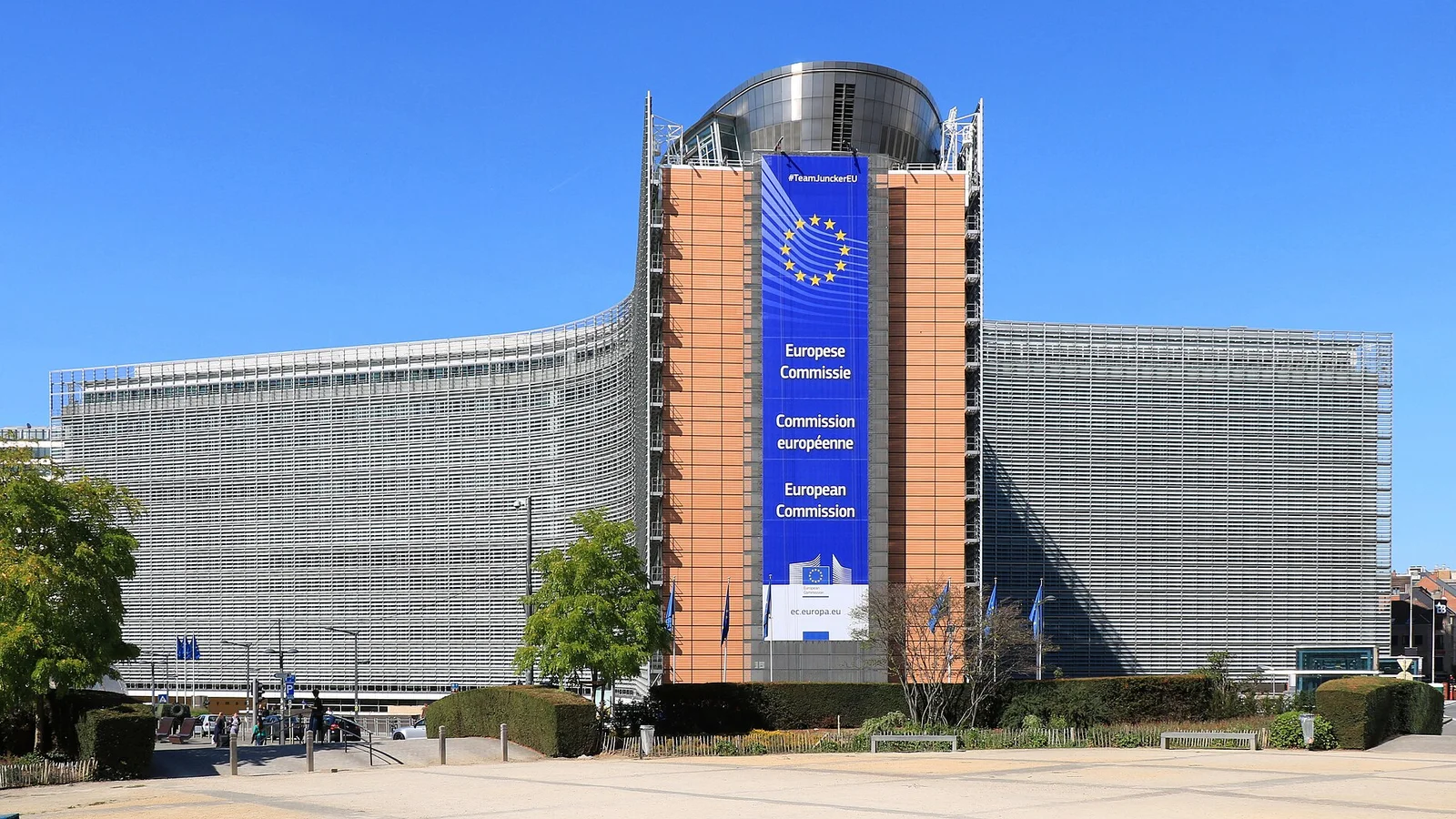
In November 2025, the European Commission put forward a proposal for lighter regulation of artificial intelligence in the EU. According to an analysis published by the think tank Bruegel on 24 March 2026, written by Mario Mariniello, the proposal has already been "broadly approved by EU countries, but awaits final adoption". The analysis describes the plan as a step towards the approach the US generally favours, adding that large technology companies support it – "not surprisingly", Mariniello writes (Bruegel).
One important caveat concerns sources: the text of the Commission's proposal is not available in the accessible source material. What is reported here about the proposal's concrete content therefore rests on Bruegel's summary, and is presented with that attribution. The same applies to the status "broadly approved but not final" – Bruegel is the only available source for the legislative situation in this story.
What the proposal means for users' rights
According to Bruegel's analysis, the plan weakens technology users' rights on three main points.
The first concerns training data: the proposal makes it easier for AI companies to use sensitive data to train their algorithms. Bruegel points to a concrete risk: Europeans could become more exposed to discrimination, for example because an algorithm could use information about sexual orientation or religious belief against their interests.
The second concerns transparency. If a developer itself assesses that an AI system is not high-risk, it would under the proposal no longer be required to register the application in a public EU database. Self-assessment thus becomes a less visible choice: without database registration, a central trail of which systems have escaped the high-risk classification disappears.
The third concerns fully automated decisions. Bruegel describes the proposal as expanding when it is permissible to use fully automated decisions, including machine-driven dismissals – situations in which an algorithm makes the decision without human intermediation.
All of these features are Bruegel's summary of a proposal whose primary text is not available in the sources. Readers should therefore treat them as a qualified expert's retelling, not as documented provisions.
Bruegel's core argument: the gap came before the regulation
The claim in the analysis's title is that "deregulating artificial intelligence will not boost EU tech markets". The reasoning behind it rests on a timeline.
If the EU's digital regulation – the GDPR, and the AI Act, which is not yet fully in force – were the main reason European AI markets lag behind, the gap should have emerged after those rules came into being. Bruegel points out that this is not the case: in 2003, Europe accounted for 22 percent of global high-tech R&D spending, against 55 percent in the US. Ten years later, in 2013 – before the GDPR and before the AI Act – the European share had fallen to 18 percent, while the American share was 53 percent.
"The current state of European tech says more about past industrial choices than about the effects of digital regulations," the analysis concludes. The point is that Europe had already fallen behind in high tech in the decades before the AI wave, partly because European industry has historically been weighted towards medium technology.
There is thus, according to Bruegel, no convincing documentation that the EU's protection of fundamental rights is the reason European AI markets perform poorly. And if the cause is not the regulation, it follows that removing the regulation cannot be the cure either.
The alternative explanations: power and capital
Bruegel points to two concrete economic factors that explain the gap better.
The first is energy. In 2024, the EU's industrial electricity prices were more than double China's. For AI training, which is highly energy-intensive, that means a structural cost disadvantage that no failure of regulation can compensate for.
The second is capital. From 2013 to 2024, private AI investment totalled 471 billion US dollars in the US, followed by China with 119 billion, while EU countries stood at around 50 billion dollars. That means European AI companies have had access to only a fraction of the private capital their American competitors have enjoyed, throughout the period in which modern AI grew up.
Both sets of figures are Bruegel's own and are not confirmed by independent sources in the available material. But they point in the same direction as the R&D figures: the gap has structural economic causes that deregulation would at best touch peripherally.
The China comparison – with an important caveat
The most striking argument in the analysis is China. According to Bruegel, China's frontier models in foundational AI are now estimated to be only about two months behind the US – despite the fact that Chinese technology regulation is "far from light", with approval requirements for training data, strict content moderation and restricted data flows across borders.
The logic of the argument is simple: if heavy regulation were what held models back, China's models should lag far behind. They do not – at least not according to this estimate.
However, the uncertainty must be clearly flagged here. "Two months behind the US" is presented in the analysis as an estimate ("it is estimated") without a named underlying source, and the estimate cannot be verified from the available source material. How one would even measure "months behind" in model performance is a methodological question the analysis does not elaborate. The China comparison should therefore be read as an illustration of Bruegel's main point, not as a documented measurement.
The counter-voice: the Commission's own experts want the rulebook kept strong
Another voice in the same debate comes from inside the Commission itself. On 16 November 2026, the Commission's Group of Chief Scientific Advisers and the European Group on Ethics issued a joint statement on AI regulation (Commission).
The groups argue that AI poses distinctive challenges for public policy, and that traditional safeguard mechanisms are no longer sufficient. They recommend keeping existing legislation strong, protecting human agency and meaningful human oversight, and ensuring that regulation and society's risk-management capacity evolve in step with AI capabilities.
The statement also contains a warning that speaks directly to the deregulation debate: the advisers warn that a lack of political commitment or institutional capacity risks undermining existing obligations, and that external attempts to delay or weaken legislation could further erode the safeguards.
At the same time, the advisers challenge the premise of the deregulation argument itself: "Europe need not choose between AI innovation and safety. It can continue to reap the benefits of AI, provided that growing capabilities are matched by stronger evidence, effective oversight and the capacity to identify, assess and manage risks," the statement says.
One thing the sources do not establish is the relationship between the statement and the deregulation proposal. It is not documented whether the joint statement is a response to the proposal, or whether it has had any impact on it. Readers should therefore not assume that the two documents are in direct dialogue – what is certain is that they represent opposing directions in the same political landscape, and that the statement comes from bodies advising the Commission itself.
What remains open
Several decisive questions remain unanswered in the available source material.
The first is the formal status: the proposal is, according to Bruegel, broadly approved by the member states but not finally adopted. That means the decision point is still live – details can change before adoption, and there is so far no primary Commission or Council documentation confirming the status beyond Bruegel's description.
The second is the text of the proposal itself. Every concrete feature – sensitive training data, the removal of the database requirement, expanded scope for fully automated decisions – rests on Bruegel's summary. A finally adopted text could clarify how far the weakening actually extends.
The third is whether the analysis gains political traction. Bruegel supplies the figures pointing to energy, capital and industrial history as the real bottlenecks. But political decisions on regulation are rarely made solely on the basis of economic analysis – and the opposition, as the joint statement from the advisers and the ethics group shows, comes partly from the Commission's own expert apparatus. Which of these voices prevails before final adoption is a question the sources cannot yet answer.