


Female AI Agent Received 10.25 Percent Less Payout for Identical Work in VR Experiment
A VR experiment at the University of Limerick shows that participants gave a female-presenting AI assistant 10.25 percent less of real money than an identical male agent — same technology, same work, only the appearance differed.
A VR experiment at the University of Limerick shows that participants gave a female-presenting AI assistant 10.25 percent less of real money than an identical male agent — same technology, same work, only the appearance was different. The finding will be presented at NordiCHI '26, but it came from a lab session involving discretionary money splitting, not a wage.
The Finding
A research team at the Kemmy Business School at the University of Limerick, with Dr. Mary Hausfeld as co-author alongside colleagues at the University of Zurich and SKEMA Business School, conducted an experiment in which humans worked side by side with AI assistants in a virtual office. The result: a female-presenting AI agent received 10.25 percent less distributed in real money than a corresponding male agent, for the same work — despite both systems running on exactly the same underlying AI technology.
The study is to be presented at the 14th Nordic Conference on Human-Computer Interaction, NordiCHI '26, in Vaasa, Finland, and will be published in the conference proceedings of the Association for Computing Machinery (ACM), according to bioengineer.org. Moneycontrol reported the same figure of 10.25 percent on 5 October 2026.
It is worth noting that both available sources are secondary reports that appear to stem from the same announcement of the study. The research article itself in the ACM proceedings is not available in this material, so details on statistics and per-condition results are lacking for now.
How the Experiment Worked
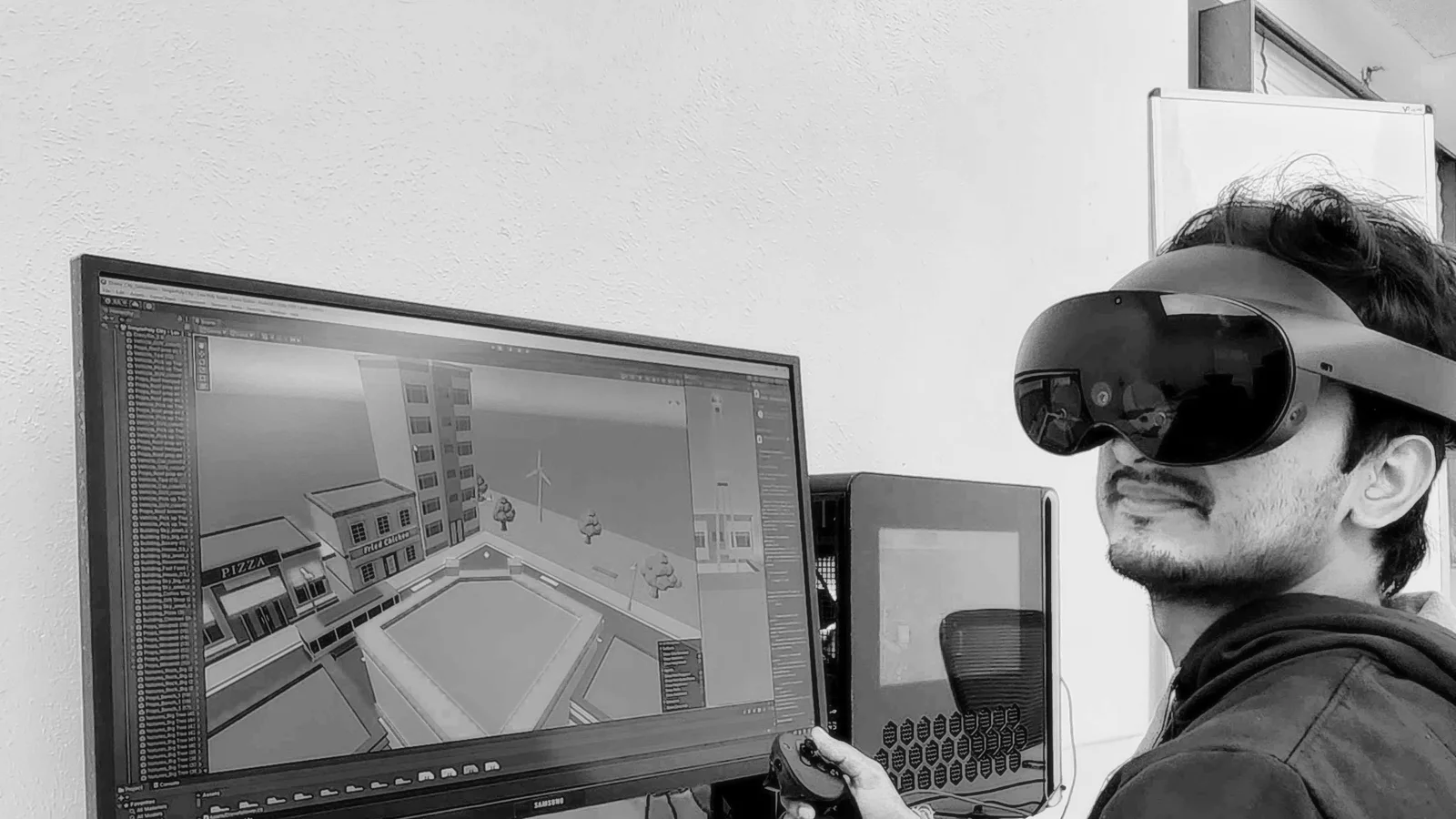
The researchers placed 189 participants in a virtual office in VR and asked them to complete work-related tasks alongside a range of AI assistants. Some worked with a simple text-based chatbot, others with a desktop robot, and others with human-like virtual avatars presented with either a male or female appearance.
The crucial design choice is that all of these systems ran on the same underlying AI technology. Thus, any differences in how the humans treated the assistants can be traced back to the presentation — the appearance and form of the agent — and not to performance.
The decisive moment came at the end of each session. Participants were given real money and asked to split it between themselves and the AI assistant that had helped them. This recreated a genuine financial transaction inside the laboratory, so that bias was measured as an actual economic decision rather than as a hypothetical answer to a question.
Why the Design Matters
The experiment is built to isolate one variable: the presentation of the AI agent. Since performance was identical between the male and female agent, the 10.25 percent difference in money distribution cannot be explained by one assistant doing a better job. That is a strength of the study — it captures a clean effect of presentation on a real economic decision.
The triangular setup of chatbot, robot, and avatar also provides a possible gradient from abstract to human-like. But the sources do not report the per-condition results, so we do not know whether the gender difference applied only to the human-like avatars, or whether it also appeared in the other groups. That is an open question until the article becomes available.
Why "Payout" Is the Most Accurate Terminology
Headlines suggesting that female AI agents "earn" less, or that there is an AI "pay gap," stretch the finding too far. What participants did was discretely split a sum of money they had been given between themselves and the assistant. It is more like a tip or a bonus scheme than a wage: the agent had no contract, no negotiating position, and no right to the money.
At the same time, this is precisely what makes the finding interesting. The decision was voluntary and free of formal pressure, and even there, humans chose to give the female agent less. This suggests that bias does not need a wage system to express itself — a simple economic sharing decision may be enough.
What We Do Not Know Yet
Several key details are missing from the available documentation:
- Statistical significance: The sources do not say whether the 10.25 percent difference is statistically significant, or what confidence level applies.
- Per-condition results: We do not know how the effect varies across the chatbot, robot, and avatar groups, or whether it is consistent across tasks.
- Background variables: The age, gender, and other background characteristics of the 189 participants are not reported, nor whether participants' own gender influenced the splits.
- Mechanism: The sources offer no explanation of why participants gave less to the female agent, and this article does not speculate on that.
As long as both reports appear to build on the same announcement from the University of Limerick, the figure of 10.25 percent should be read as solidly reported, but not yet verified against first-hand documentation.
Why It May Matter
The context is that AI agents with human-like appearances are being rolled out in the workplace as "colleagues," with voices, avatars, and names. If humans transfer gender-based discriminatory patterns to such agents in a laboratory, it raises the question of whether the same patterns follow them out into real workplaces — for instance, when humans recommend, give feedback on, or share credit for work with AI agents.
However, that is a leap this single finding cannot carry alone. A discretionary money split in a VR office is not a wage relationship, and we do not know whether the finding generalizes to other situations or cultures. But as an early, controlled measure showing that gender bias can carry over into human–AI economic interactions, the experiment provides a concrete and unsettling number: 10.25 percent, for the same work, from the same technology.