Germany calls 'Full Self-Driving' misleading – the system is now named 'Tesla Assisted Driving' across the EU area
After September talks with Tesla, German authorities consider the name 'Full Self-Driving' partially misleading. Tesla has changed the name, accepted an agreement allowing a maximum ten percent speed-limit exceedance, and transport minister Steffen Bilger pledges to work for EU-wide approval. But the vote has been postponed until December, and road safety organizations still want to stop the speed compromise.
What Germany said – and what Tesla did
It was Germany's Federal Ministry of Transport that laid its cards on the table in a statement on October 6. "The current name 'FSD' is somewhat misleading," the ministry wrote, according to TeslaNorth.com. "This is not a system that takes over the entire driving task."
Tesla offered in the talks to give the system a new name, according to the ministry: "Tesla Assisted Driving". On October 8, 2026, the name change had already been implemented on Tesla's European configurator and marketing pages, reports Basenor, citing posts from the informant Sawyer Merritt. In markets where the full system has not launched, Enhanced Autopilot has also been renamed – to "Tesla Assisted Driving Basic".
The speed-limit agreement
But the name was not the only thing under negotiation. The ministry stated that Germany and Tesla agreed that the system may exceed the applicable speed limit "slightly, by a maximum of ten percent", and that Germany is willing to support this approach in the European process.
It is a compromise in a longer conflict. According to Ynet, the speed exceedance has been one of the main points of contention between Tesla and EU countries, and several member states have demanded that the system never be allowed to exceed the speed limit – even with driver intervention. Yahoo/Benzinga, citing Reuters, writes that the European Transport Safety Council (ETSC) has urged EU governments to reject parts of the system precisely because of the feature that permits speeds above detected limits.
Bilger's pledge – and Musk's reply
Germany's transport minister Steffen Bilger said that in September he went through technical and liability-related questions with Tesla. "We quickly found a common understanding and reached a constructive agreement," Bilger said, according to TeslaNorth.com. "On this basis, I will now work to ensure that the system is approved across Europe within a reasonable time."
Elon Musk was quick to thank him for the support. "Danke Schön!", Musk wrote on X on October 7, 2026, according to Yahoo/Benzinga.
How far has approval come?
Even though Germany now supports the system, Germany itself is not among the countries where FSD Supervised has already been approved. According to TeslaNorth.com, which cites Tesla's own page, the approval applies in eight countries: the Netherlands, Lithuania, Estonia, Denmark, Belgium, Slovenia, the Czech Republic and Croatia, which approved the system in late September. A post from Tesla Europe on X dated September 29, 2026 confirms the list, according to TeslaNorth.com.
A European approval requires the Dutch type-approval authority RDW to submit the request to the European Commission, and that a majority of member states then vote in favor in the responsible committee. Basenor refers to the committee as the "Technical Committee on Motor Vehicles" (TCMV) and states that a vote originally scheduled for October 6 has been postponed until December 2026 at the earliest. Reuters, carried via Yahoo/Benzinga, likewise writes that the expected EU vote was postponed from October, and that December appears to be the most likely window for a decision.
A contested approval process
Behind the formal process lies a controversy. A Reuters investigation, carried via Benzinga/Yahoo, concludes that Tesla repeatedly pressed RDW to make parts of the review cheaper and less extensive, and that the regulator yielded to some of the requests. In one example, Tesla disputed an invoice of €365,000 for five months of regulatory work. According to Reuters, external experts question Tesla's influence over the safety assessment. RDW has itself claimed that the assessment was independent – a contradiction that is not resolved in the available source material.
RDW approved the system in the Netherlands in April, after an evaluation that the regulator itself said comprised more than 3,000 hours of testing, over 1,000 test runs and data from 1.8 million kilometers of driving in Europe, according to RDW as reported by Yahoo/Benzinga.
Tesla has since published data covering more than 100 million kilometers of European driving, claiming it shows that cars with FSD had a collision rate 4.1 times lower than manually driven Teslas. That is Tesla's own claim, not an independent verification.
What remains
Several questions are still open. The date of the EU vote is known only as "December 2026 at the earliest". It is unclear whether the new name will also be implemented in the car's software, or whether it applies only to marketing and the configurator. The details of how the ten percent rule will interact with local speed limits have not been made public.
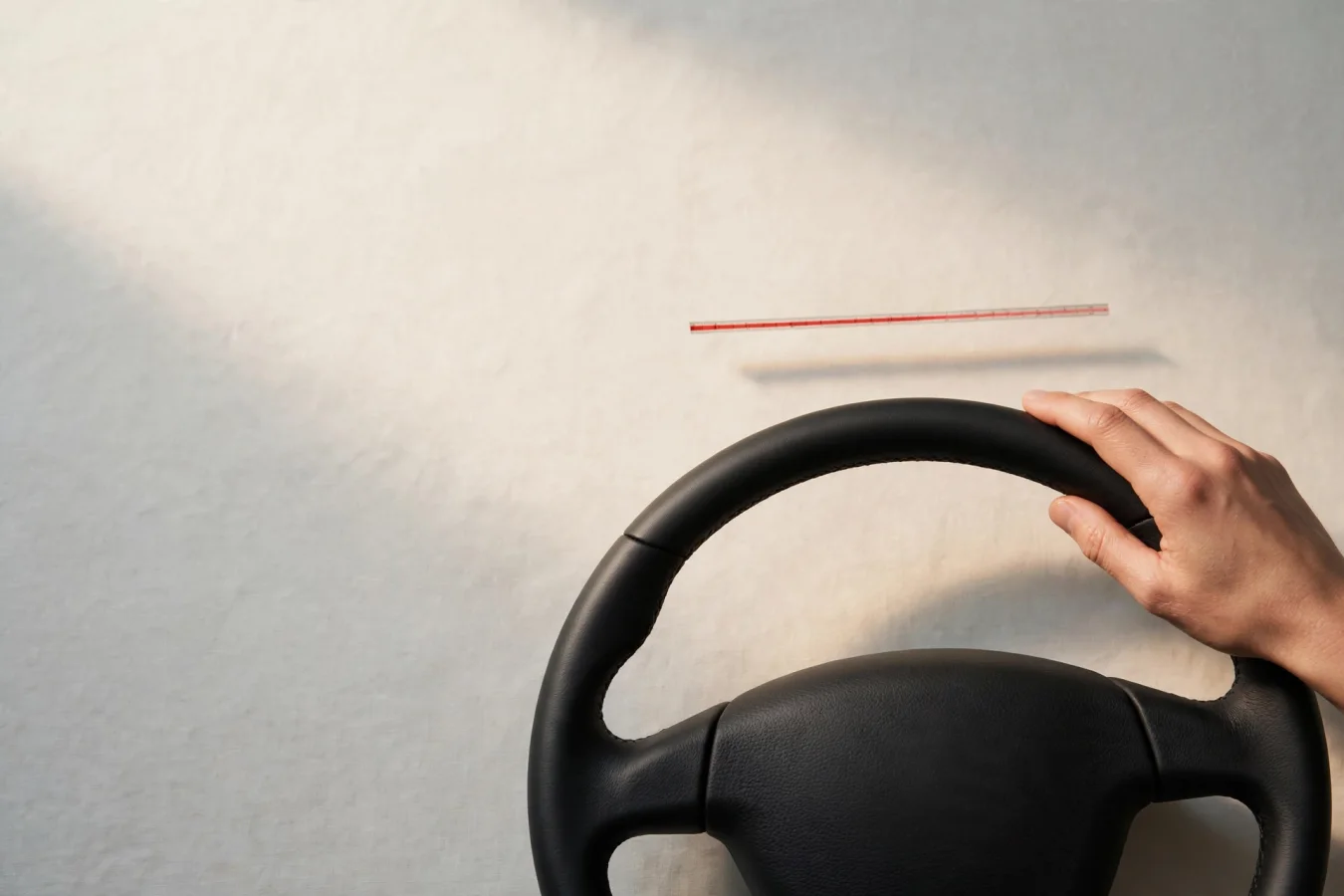
And there is the fundamental classification: despite the name change and the constructive tone from the German side, the system remains a driver-assistance system. The driver is, according to the ministry, "100 percent responsible" for driving safely, including in city traffic. The name has become more humble – the actual distribution of responsibility is unchanged.