Google is set to launch four TPUs into orbit Thursday — but they will run for only 15 minutes at a time
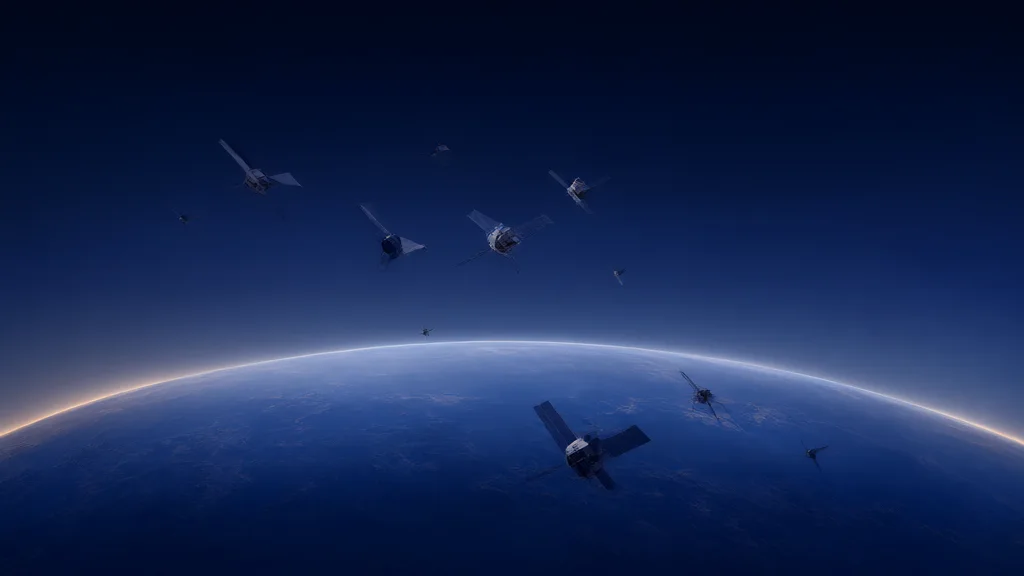
On Thursday, October 1, a refrigerator-sized prototype satellite is due to lift off from Vandenberg Space Force Base carrying four of Google's TPU chips.

Google is set to launch four TPUs into orbit Thursday — but they will run for only 15 minutes at a time
On Thursday, October 1, a refrigerator-sized prototype satellite is due to lift off from Vandenberg Space Force Base carrying four of Google's TPU chips. But the experiment is far smaller than the hype: the chips will run for only about 15 minutes at a time, with the computing power of a single server rack — and Google itself says nothing becomes operational for years.
Google announced on September 24, 2026, that the Project Suncatcher prototype will launch into orbit as early as October 1, aboard SpaceX's Transporter-18 rideshare mission from Vandenberg Space Force Base in California (28b3c4fd; 41c560a4; e27e9cb2). It is the first orbital hardware test of Google's long-term plan to move AI computing out of terrestrial data centers and into low Earth orbit — a concept the company says will explore whether space can one day "host scalable machine learning" (MSN/People).
What the satellite actually does
The satellite was developed in collaboration with the satellite company Planet Labs and carries four Trillium-generation TPUs, Google's own microprocessors for AI training and inference (28b3c4fd). According to the reporting, it has the computing power of a single data center server rack and runs on 1 kilowatt of solar power — enough to answer simple AI questions (Motley Fool via MSN).
The biggest practical constraint is cooling. In the vacuum of space there is no air to carry heat away, and program lead Travis Beals, a senior director at Google, has reportedly said the chips can run for only about 15 minutes before they must be shut down and cooled (9ba74abe; 28b3c4fd). Google is working on a cooling system based on heat pipes and radiators, but for now the TPUs will run Gemini models — Google's flagship family of AI systems — in short bursts, to measure real performance under orbital conditions (28b3c4fd).
The engineering groundwork so far
The New York Times got the first inside look at the project, reporting from a vibration test at Planet Labs in which the satellite passed with screws and chips intact (41c560a4). According to CoinCentral, the hardware was also exposed to proton radiation at UC Davis' Crocker Nuclear Laboratory, in addition to simulation of high-g vibrations (8d776337).
Radiation is a key question for ordinary consumer electronics in orbit, particularly the high-bandwidth memory (HBM) that TPUs depend on, which is especially fragile. Google says the TPUs withstood radiation doses of 2–15 krad without hard failures — a threshold that exceeds the expected exposure over an assumed five-year mission lifetime. These are the company's own figures, not independently verified (28b3c4fd).
The roadmap: laser links and a small constellation
Operating a single TPU prototype satellite is only the first step. The technically hardest part of orbital AI computing is linking many satellites into one virtual server via high-bandwidth lasers with extreme precision. Google itself uses an image to convey the precision required: like hitting a coin-sized target from far away, while both points are in motion. Two satellites are to be launched in 2027 to test this (e27e9cb2).
After that, the roadmap points toward a mid-sized constellation of roughly 80 satellites — sources disagree on whether it is 80 or 81, so the number should be read as approximate (28b3c4fd; b9c9e8df). According to NYT reporting, Google also aims to make the costs of orbital and terrestrial data center operations equal by the mid-2030s (b9c9e8df).
Google is not alone in looking to the sky. According to Cryptopolitan, rivals SpaceX and Blue Origin have FCC applications pending for far larger constellations — SpaceX has reportedly applied for up to one million data satellites, while Blue Origin's plan stands at around 52,000 (9ba74abe).
Google itself tempers expectations
Perhaps the most important counterweight to the "AI data centers in space" hype comes from Google itself. James Manyika, the company's senior vice president for research, told the New York Times: "We don't expect, to be perfectly frank, that we'll have anything usefully operational in the next few years." He likened the process to the development of self-driving cars, which took Google 15 years of research (b9c9e8df).
That is an important framing: this is research, not a product. One satellite with the computing power of a single server rack and 15-minute operating cycles is many orders of magnitude away from what would be needed to compete with terrestrial data centers — and several of the central technical questions (scalable laser linking, thermal management over time, economic viability) remain untested.
Open questions
Several details remain unresolved. The sources disagree on the satellite's lifetime: Motley Fool writes that it is expected to operate for one year (15af27b1), Cryptobriefing mentions a five-year mission lifetime (28b3c4fd), and Futurism reports that it could remain in orbit for up to six years before burning up in the atmosphere (b9c9e8df). These may refer to different things — operational lifetime versus orbital decay — but the documentation does not resolve it.
In addition, almost all the key figures — roughly eight times more solar power in low Earth orbit than on Earth, the radiation results, the constellation plans — come from Google itself, relayed through secondary sources citing the company's blog posts. No independent source has verified the figures (28b3c4fd; e27e9cb2).
And the launch, scheduled for October 1 aboard a Falcon 9, could slip — as rocket launches often do. But if it goes as planned, Google will get its first real data on how AI chips behave in space. Much suggests the answers — and not least the economics — are years away, as Google's own research chief openly says.
Sources
- Google is sending an AI data center to outer space — www.msn.com
- Google is taking a major step forward toward space-based AI data centers — www.msn.com
- Google Gearing Up to Launch Experimental "Data Center" Into Space Next Week — futurism.com
- Google launches AI chips into orbit October 1, ahead of Musk and Bezos - Cryptopolitan — www.cryptopolitan.com
- Google Is Sending an A.I. Data Center to Outer Space - The New York Times — www.nytimes.com
- Alphabet (GOOGL) Stock Ticks Up as Google Preps Satellite Launch - CoinCentral — coincentral.com
- Project Suncatcher tests TPUs in space aboard SpaceX's Transporter-18 — cryptobriefing.com