Google to Launch First TPU Satellite Next Week in Project Suncatcher Orbit Test
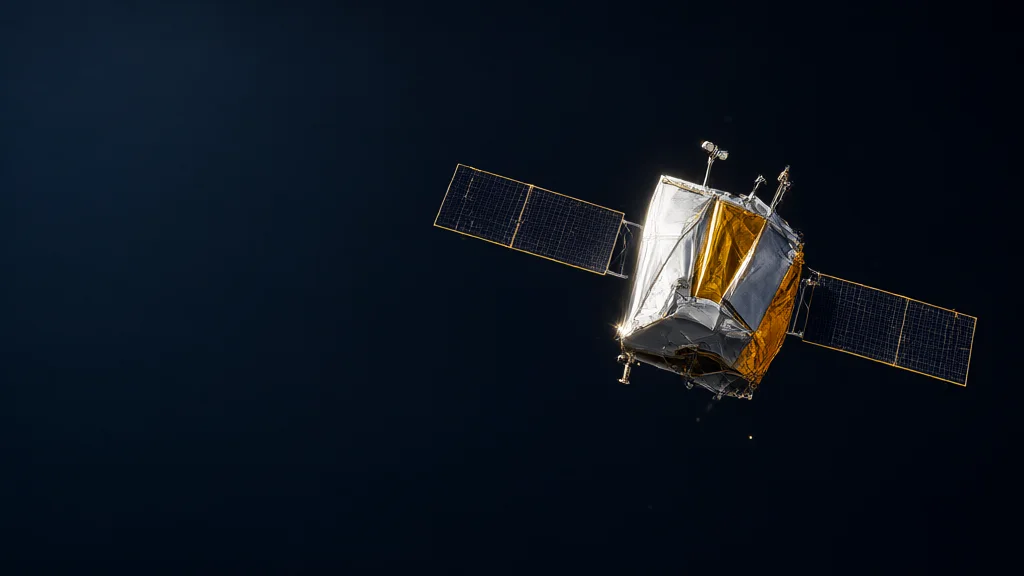
Google announced Thursday, September 24, that it will launch its first prototype satellite under Project Suncatcher next week — the research project exploring whether space can host large-scale AI computing.

Google to Launch First TPU Satellite Next Week in Project Suncatcher Orbit Test
Google announced Thursday, September 24, that it will launch its first prototype satellite under Project Suncatcher next week — the research project exploring whether space can host large-scale AI computing. The launch, reported for October 1 but unconfirmed, is a data-gathering mission — not an operational space data center — and experts caution that commercial viability remains years away.
What Is Actually Being Launched
Google announced Thursday, September 24, that it will launch a prototype satellite in the first orbital test under Project Suncatcher next week, according to Reuters. The launch is scheduled aboard SpaceX's upcoming Transporter-18 rideshare mission, in partnership with the satellite company Planet Labs, with October 1 cited as the date by multiple sources. AIMag has not confirmed the exact date with SpaceX or Planet directly, so it should be treated as "next week" until the launch is confirmed.
The mission's goal is to assess how Google's TPU hardware — the company's own AI accelerator chips — withstands three stresses in low Earth orbit: launch forces, radiation, and extreme temperatures.
Why Ground Tests Weren't Enough
Google has already run TPUs through significant ground testing. Engineers used the University of California, Davis's Crocker Nuclear Laboratory to simulate high-g vibrations and expose the hardware to proton beams, according to CoinCentral. Google says the Trillium TPUs survived radiation levels higher than those expected over a five-year space mission — a company claim relayed via Stocktwits/MSN and not independently verified.
But some elements of the satellite can only be tested in space, as Google itself has noted according to Firstpost. That applies especially to the cooling system: in a vacuum, conventional air cooling is impossible, so Google will evaluate a design that combines heat pipes with radiators to draw heat away from the power-hungry chips. The real space environment — real radiation, real thermal cycles, real vacuum — is the only way to validate this kind of design.
The Roadmap: From Prototype to Laser Links in 2027
Google frames the mission explicitly as exploratory. "Exploring space as a viable location for scalable AI compute won't happen all at once," the company wrote in a blog post Thursday, cited by Barron's. According to the company, the first launch is about seeing what works, identifying failure points, and applying the findings to future missions.
The first Suncatcher mission is designed to gather orbital data and identify potential failure points — not to demonstrate an operational orbital data center, according to Reuters. The next step is planned for 2027, when Google aims to launch two satellites to test the high-bandwidth laser links needed to connect future data clusters in orbit. It is a staged plan: first determine whether the chips survive, then determine whether satellites can communicate fast enough with each other to function as a distributed computing system.
The Backdrop and the Skepticism
Interest in AI computing in orbit stems from an earthly bottleneck: the power grid is struggling to keep up with data centers' growing demand, as Barron's frames it. But experts cited by Reuters say the concept remains years from commercial viability, given high launch costs, engineering constraints, and satellite production bottlenecks.
The competition is already underway: SpaceX plans to launch its own AI computing satellites as early as 2027 aboard its fully reusable Starship rocket system, according to Barron's; SpaceX did not respond to comment requests.
What to Watch
Three main questions define what matters in the coming months. First: is the Transporter-18 launch confirmed, and does it happen on schedule? Second: what data does Google publish on how the TPUs and the cooling system actually perform in orbit — and how detailed and verifiable are the findings? Third: do the 2027 laser-link test satellites remain on schedule, or do they slip? Since no primary Google documentation is available to AIMag directly, the company's own publications will be the natural place to verify both dates and results.
Sources
- Google takes AI computing to space with first orbital test under Project Suncatcher — www.firstpost.com
- Google to send AI chips into orbit next week aboard SpaceX rocket, eyes data center in space — www.msn.com
- Alphabet (GOOGL) Stock Ticks Up as Google Preps Satellite Launch - CoinCentral — coincentral.com
- Google plans first test of AI chips in space under Project Suncatcher | MarketScreener — www.marketscreener.com
- Why Google and SpaceX are testing AI in orbit: The earthly grid can’t keep up — www.msn.com