
Meta's tax savings on AI data centers have grown to $3.9 billion
The company describes the facilities as "pilot models" to the tax authorities, making it the largest recipient of the US research tax credit among publicly traded companies. The reporting lands in the middle of a political storm in Washington, but so far rests on anonymous sources relayed through secondary coverage — and it has not been reported that the tax agency, the IRS, has made any ruling in the matter.
What's new
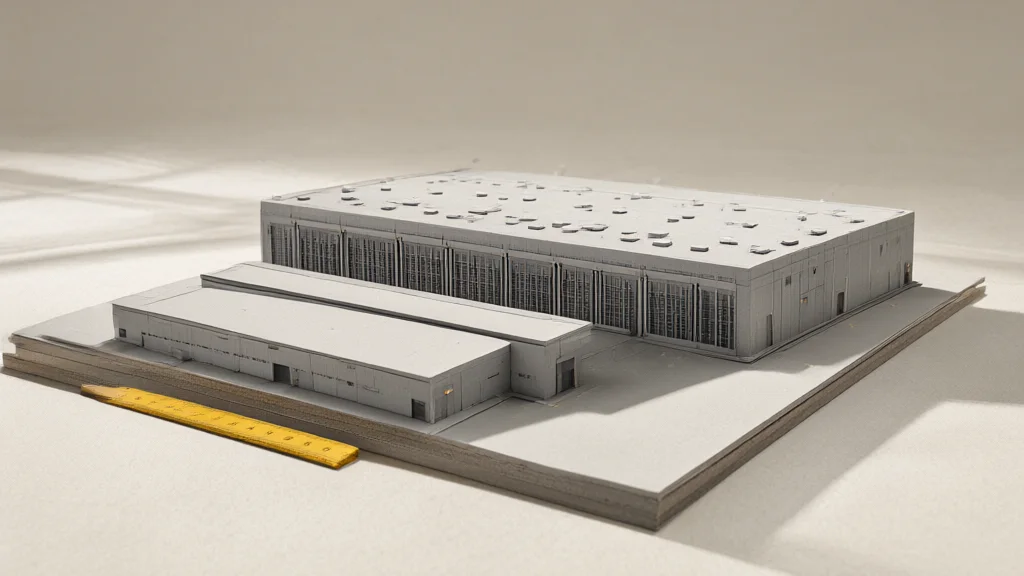
Meta has classified its AI data centers as experimental facilities in order to claim the US federal research and experimentation credit, according to reporting in The New York Times relayed by Quartz via Yahoo Finance (Yahoo Finance). According to the Times, the strategy has been flagged as legally risky by the company's own accountants. Over three years, the savings have grown from $700 million (2023) to $2 billion (2024) to $3.9 billion (2025). That makes Meta the largest recipient of the credit among publicly traded companies, based on a review of securities filings.
Gizmodo, which also cites the Times, describes how Meta presents itself differently to the IRS than in other communications: according to four sources familiar with the company's operations, the AI data centers are described in the tax filings as "pilot models" — a classification that is also listed as a risk in the company's securities filings (Gizmodo).
How the mechanism works
The research and experimentation credit is intended as a rebate for equipment and resources used in experimental work — not in standard operations. That is where the distinction lies: from late 2024, Meta drew, according to the Times, a tax distinction between chips destined for AI data centers and chips destined for ordinary data centers, citing people familiar with the company's operations. The AI facilities are thus presented as pilot projects — experimental trial setups — while equivalent infrastructure for ordinary data centers would not have qualified.
According to the Times, the tactic was reportedly passed along: Meta's accounting auditor EY is said to have marketed it to other AI companies. This claim is known only through Gizmodo's retelling of the Times report and has not been independently confirmed.
How large a share of the credit does Meta account for
The numbers put the matter in perspective. According to the Joint Committee on Taxation's latest estimates, the research credit will reduce federal revenues by $32.1 billion in 2025 — making it the second most expensive federal corporate tax break. Meta's credit alone accounts for more than ten percent of that total cost to the Treasury.
The risk Meta itself signals
The reserve Meta holds against possible IRS challenges rose 45 percent over the same period, from $12.9 billion to $18.74 billion, according to the company's securities filings. There, "uncertainties related to our research tax credits" is listed as the primary driver of the exposure. It is worth stressing: the reserve covers tax uncertainties broadly, not only the data center credits.
Professionals are skeptical. Andre Shevchuck, a partner at the advisory firm BPM and a specialist in precisely this credit, told the Times that describing data centers as experimental facilities is "kind of wild and out there."
Meta's spokesman Andy Stone rejects the characterization. "Meta is one of the largest investors in research and development in the United States," he says in a statement relayed by Quartz via Yahoo Finance. "Like other companies investing at this scale, we use the tax incentives Congress established decades ago to encourage this type of domestic investment" (Yahoo Finance).
It is important to hold on to what is actually documented: the core of the reporting rests on anonymous sources relayed through secondary coverage, and it has not been reported that the IRS has made any ruling on the classification of the AI data centers. No finding of wrongdoing exists.
Political friction in Washington
The story lands in a highly charged week. Senator Elizabeth Warren led letters sent Sunday evening, September 28, 2026, to the chief executives of Meta, Google, Amazon and Microsoft, shared exclusively with CNBC (CNBC). The letters request information about the tax credits the companies have claimed related to AI and data center development, and about their lobbying ahead of the 2025 law, often called the "one big beautiful bill" law. Senators Tina Smith, Jeff Merkley, Elissa Slotkin, Bernie Sanders and Richard Blumenthal joined the letters.
Meta's credit practices are, according to the reporting, separate from two other IRS disputes: a disagreement in which the IRS is demanding $355 million, based on the agency's claim that Meta improperly saved money by counting $4.1 billion in stock options exercised by chief executive Mark Zuckerberg as deductible research costs; and a claim of roughly $16 billion tied to revenue allegedly moved to the Cayman Islands. The data center strategy is thus a separate matter, not part of these.
What remains
Three things will determine where this story ends up. First, whether the IRS intends to test the classification of the AI data centers as experimental — no such ruling has been reported. Second, whether the Warren letters lead to hearings or changes to the credit rules, the outcome of which no source addresses. Third, whether the claims that EY offered the tactic to other AI companies can be confirmed — that would broaden the story from one company's tax position to an industry practice. For now, the reader is left with figures showing that the research credit largely ends up with a single company, and a company that itself sets aside large reserves against the possibility that the tax authorities disagree.