

Nscale's Glomfjord Facility Is Running at a Fifth of Planned Capacity — With $103bn in Contracts
AI infrastructure company Nscale is set to list on the New York Stock Exchange at a valuation of up to $35 billion, with a contracted backlog of $103 billion. But the company's Norwegian flagship in Glomfjord is running roughly six months behind schedule and operating at just a fifth of planned capacity — and last year's largest customer, ByteDance, has been removed from the public prospectus. Together, those two facts raise a concrete question about whether the backlog can be delivered on plan.
The concrete news
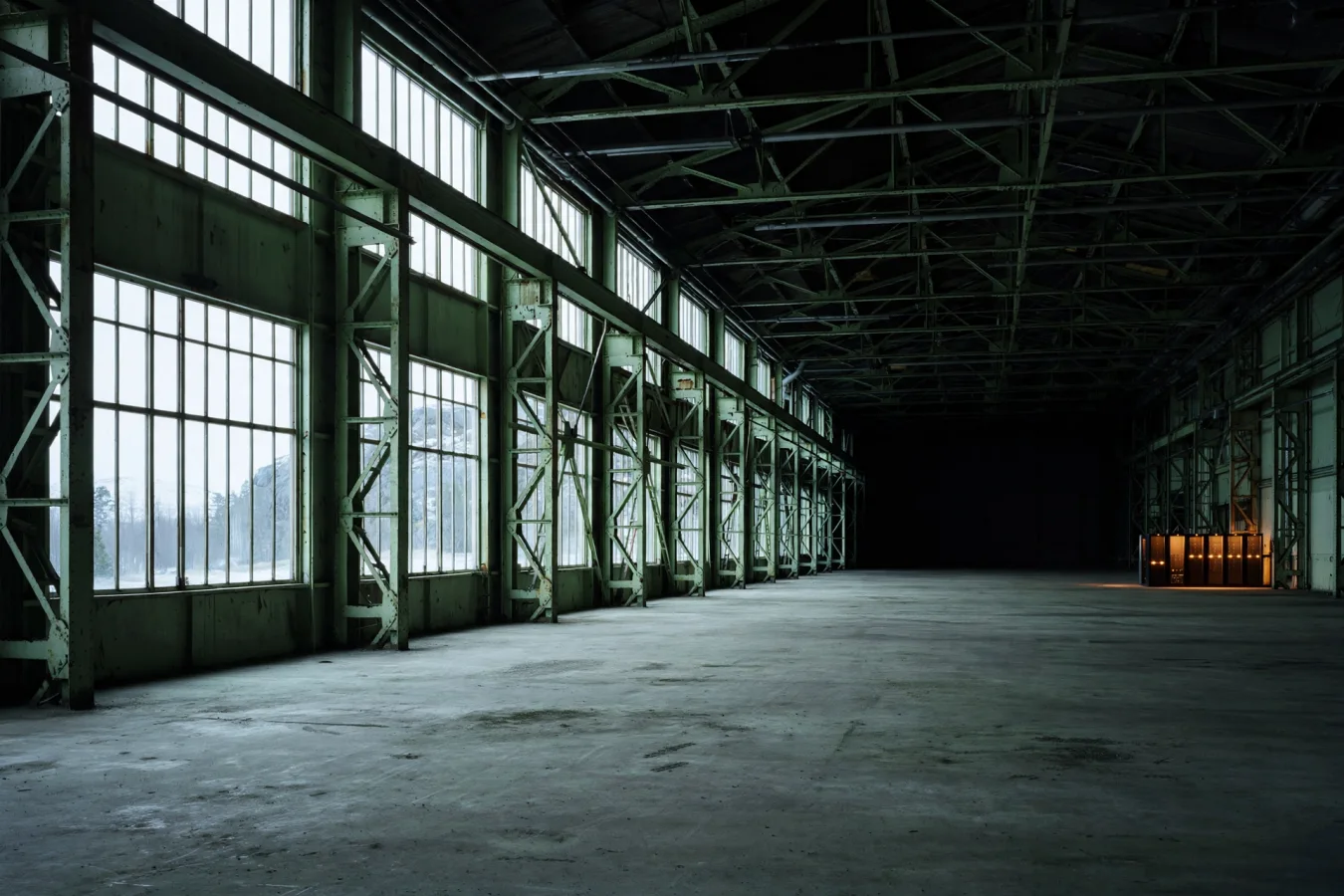
Nscale's flagship data centre in Glomfjord, north of the Arctic Circle, is roughly six months behind schedule. Of the facility's planned 30 megawatts, only 6.4 megawatts are operational, according to Bloomberg reporting carried by AI Weekly shortly before the company's planned listing on the New York Stock Exchange (NYSE) at a valuation of up to $35 billion (AI Weekly).
The delay is attributed to several factors: cooling system leaks, local regulations, construction delays, and a fire. Bloomberg's sources say the delay has triggered "penalties owed to Microsoft and ByteDance" — contractual penalties owed to Microsoft and ByteDance. There is so far no public figure for how large these amounts are. It is worth stressing that the very existence of the penalties rests on Bloomberg's sources, not on documents in publicly available filings.
For a company that needs to convince American investors it can deliver a $103 billion contracted backlog, Glomfjord is more than just another project. It is the facility where the company's largest customer last year rented access to Nvidia chips, and it is one of the concrete delivery points on which the paper value of those contracts rests.
The ByteDance disclosure that disappeared
In February, in a confidential draft prospectus, Nscale — then trading under the name DSNS Holdings — wrote the following: "For the year ended December 31, 2025, our largest customer was Bytedance." The quotation is as reported by The Telegraph from the February filing (The Telegraph via Yahoo Finance).
The final, 192-page prospectus, published in September ahead of the listing, does not mention ByteDance once. It is understood the name was removed on grounds of commercial confidentiality — an explanation given as "it is understood," that is, not as an official company statement. Nscale has declined to comment.
There is, however, a trace. In a little-noticed letter accompanying the listing documents, Nscale discloses an agreement with Spring, a Singaporean company understood to be a ByteDance subsidiary. According to AI Weekly, citing Tom's Hardware and the Financial Times, Spring accounted for 73 per cent of Nscale's 2025 revenue and rents 2,304 Nvidia B200 chips at the Glomfjord facility — chips the Chinese parent company could not legally have bought inside China under US export rules.
We cannot independently verify the 73 per cent figure or the chip count here; they rest on secondary sources drawing on Bloomberg, Tom's Hardware and the FT. What is documented through the filings themselves is that ByteDance was Nscale's largest customer in 2025, and that the name is gone from the prospectus. Nothing in the available evidence supports the claim that the removal was unlawful or improper — only that it happened, and that the explanation is unofficial and second-hand.
Why Glomfjord matters for the whole backlog
The prospectus lays out $103 billion in contracted backlog, led by two giant deals: a Microsoft contract worth $43.8 billion through December 2033, and a deal with Anthropic worth $44.6 billion (AI Weekly). Such figures are only worth anything if the company can actually build out the capacity the contracts assume.
That is where the Glomfjord numbers bite. 6.4 of 30 megawatts in operation means the facility is running at roughly a fifth of planned capacity, about six months late. Delivering on the Microsoft and Anthropic contracts requires Nscale to build out capacity quickly and on schedule — and the only larger facility for which we have concrete operating figures shows the company has so far failed to do so.
The financial frame sharpens the picture. In the first half of 2026, Nscale had $140.6 million in revenue against a net loss of $1.02 billion — up from a loss of $368.9 million the year before. This is the classic neocloud model: enormous capital outlays ahead of revenue that only arrives once data centres are completed and customers start paying. But the model depends on construction holding to schedule. Every delay pushes both revenue forward and costs outward — and can, as Glomfjord shows, trigger contractual penalties owed to the very customers who are supposed to deliver the revenue later.
The export-rule exposure the company itself warned about
Another detail from the February filing is worth noting because it points to a structural risk beyond construction engineering. Nscale itself wrote in February that a proposed US bill, the Remote Access Security Act, could lead to "restrictions on our ability to provide remote access to these customers, which would have a negative effect on our business" (The Telegraph).
The quotation shows the company itself saw its relationships with customers like ByteDance as vulnerable to US regulation. Analysts have, according to The Telegraph, warned that the US could close the loophole that lets Chinese companies rent computing power abroad — on chips they could not have bought at home. For a company where — according to the same secondary sources — a ByteDance subsidiary accounted for nearly three-quarters of last year's revenue, that is not a minor risk, but one that strikes at the core of the business model.
The capital behind it, and another bottleneck in Britain
Nscale has secured capital on a large scale ahead of the listing: $3.36 billion in convertible bonds, led by Third Point, with Nvidia, Apollo, Citadel, Hudson Bay Capital, Abu Dhabi Investment Council and around 20 other investors alongside (MarketScreener). A further $1 billion from Nvidia is expected in mid-November.
That financing simultaneously illustrates the neocloud model's dependencies: the company builds with borrowed capital and strategic investments, against contracts that lie years in the future. Nvidia both sells chips to and invests in its own customers — an entangled structure that leaves the whole sector vulnerable if one link fails.
Glomfjord, moreover, is not the only delivery problem. In Loughton in Essex, south-east England, Nscale has been told by grid operator UK Power Networks that the grid will not be able to supply enough power for the planned facility until the early 2030s (TechRadar via Yahoo Finance). The background is a national queue of hundreds of data centres waiting for grid connections. That means Nscale's challenges are not only about Norwegian construction pace, but about fundamental infrastructure limits — access to power — that the company does not itself control.
What remains unknown
Several of the most important numbers are still missing from the public picture. We do not know how large the contractual penalties owed to Microsoft and ByteDance are. We do not know whether ByteDance remains a significant Nscale customer in 2026, or whether the relationship has ended — there is only an assertion-level claim, made by The Telegraph as an "it is understood," that it is no longer the largest customer. We have no official explanation for why the ByteDance name was removed from the prospectus, only an informal reference to commercial confidentiality, and the company has declined to comment.
There is also nothing documented on whether the Remote Access Security Act will actually pass, or in what form — the bill is described as a proposal, not enacted legislation.
What can be established, however, is this: a company set to be valued at up to $35 billion on the basis of $103 billion in contracts has a flagship facility that is six months behind, running at a fifth of planned capacity, and reportedly owing contractual penalties to its two most important customers; and in the prospectus meant to sell the shares, the name of last year's largest customer has been replaced by silence and a little-noticed letter about a Singaporean company. None of these facts is by itself proof that the backlog will not be delivered. But they are enough to make the question of whether it will be a real one — and that is precisely what investors must now weigh before the listing.