
NVIDIA sells 64 GB DGX Spark from Friday for $4,999
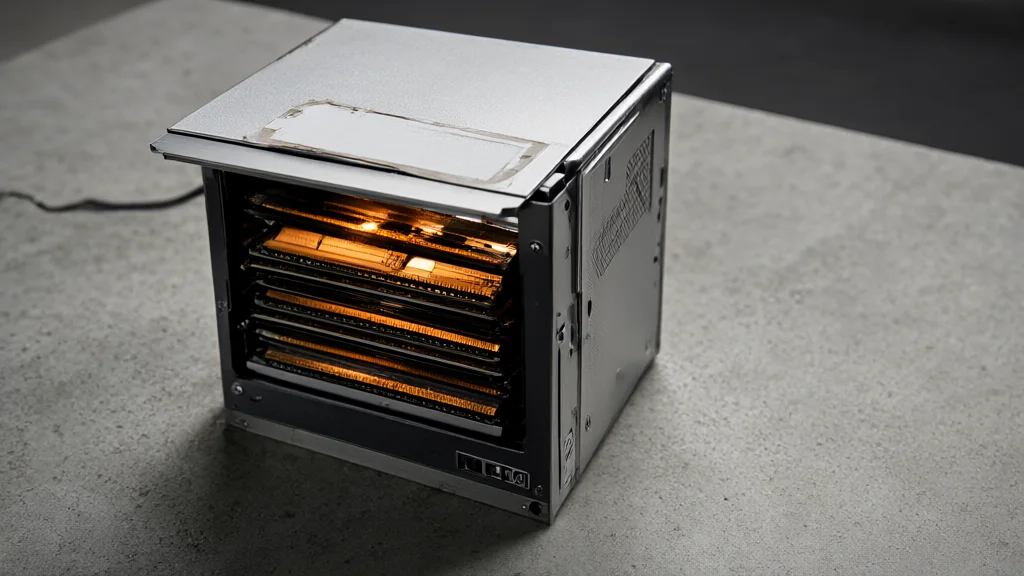
NVIDIA's new 64GB version of the DGX Spark goes on sale Friday, Oct. 23, starting at $4,999, sold through six OEM partners. The launch lands as memory prices have pushed the 128GB model from roughly $4,000 in original MSRP to nearly $7,000 at retail — making the 64GB box NVIDIA's de facto entry point to desktop local AI.
The news
NVIDIA announced the 64GB variant of the DGX Spark on Oct. 2, 2026, and it becomes available Friday, Oct. 23. According to MSN's reporting on the announcement, the machine is sold exclusively through OEM partners Acer, ASUS, Dell, GIGABYTE, HP and MSI, with a starting price of $4,999. MarkTechPost reports it will also be available via the NVIDIA Marketplace and retailers.
The price is no accident. XDA writes that the 128GB model originally carried an MSRP of around $4,000, but that price increases now mean you "see it more around the $7,000 mark" at retail. Cryptobriefing presents a slightly different but converging picture: the 128GB model now trades for $6,950 after a price increase of almost 75 percent. It is worth stressing that these are observed retail prices reported by media outlets — not official prices from NVIDIA, and the two sources are not fully consistent with each other ($6,950 versus "around $7,000"). But the direction is the same: with a gap of nearly $2,000 to the cheapest 128GB unit, NVIDIA is positioning the 64GB variant as the new accessible entry point for local AI agents, fine-tuning and inference.
What it is — the hardware
The 64GB model is built on the same GB10 Grace Blackwell Superchip as the 128GB model. According to PCMag's article, which is BrandX content produced for NVIDIA and should therefore be read as promotional material, the superchip consists of a Blackwell GPU with fifth-generation Tensor Cores and FP4 support, delivering up to one petaflop of AI compute (with sparsity), plus a Grace CPU with 20 Arm cores on the same package, connected via NVIDIA's NVLink-C2C.
MarkTechPost's spec table, labeled "Source: NVIDIA specifications," completes the picture:
- Memory: 64GB LPDDR5x, coherent and unified, with 273 GB/s bandwidth
- Storage: 1, 2 or 4TB self-encrypting NVMe M.2
- Networking: ConnectX-7 NIC with 200GbE, plus Wi-Fi 7 and Bluetooth 5.3
- Display: 1× HDMI 2.1a
- OS: NVIDIA DGX OS (Ubuntu-based)
- Size and weight: 150 × 150 × 50.5 mm, 1.2 kg
It is worth noting that the memory bandwidth stays at 273 GB/s — identical to the 128GB model, according to Cryptobriefing. The halving applies to capacity, not speed.
The software
The software stack is, according to the announcement as reported by Technobezz, unchanged from the 128GB model: buyers get the NVIDIA Agent Toolkit, CUDA-X AI libraries, open Nemotron models, and the Ollama, vLLM and PyTorch runtimes with CUDA "out of the box." A Sync Model Launcher is, according to the announcement, due out at the end of the month — that is, something promised rather than delivered, and it should be treated as upcoming functionality until it actually ships.
Clustering two units
The most interesting mechanism in the announcement is clustering via ConnectX-7. Two DGX Spark units are connected directly with a QSFP cable over a 200GbE fabric, and according to MSN's reporting they then pool their unified memory for a total of 128GB, with doubled memory bandwidth and support for models of up to 200 billion parameters.
The performance figures here come from NVIDIA's own testing, not independent measurements. NVIDIA claims that two clustered 64GB units deliver up to 1.7 times the performance of a single unit, and that two clustered 64GB systems in NVIDIA's own Qwen 3.8 27B testing delivered up to 70 percent higher throughput than a single 128GB unit. The latter is an intriguing sales argument: if it holds up in practice, two cheap 64GB boxes could beat one expensive 128GB box on throughput — but these are the manufacturer's own numbers, with no independent verification so far.
The caveats
There is an important limitation for those who already own the 128GB model and are considering expanding: MSN points out that although you can connect a 128GB DGX Spark to a 64GB unit, the cluster is capped at 64GB of RAM "because of how the machines are designed." For anyone who already owns 128GB and is weighing expansion, this could be a bad path to take.
Furthermore, according to Technobezz, there is no benchmark in the announcement comparing the 64GB configuration directly against the 128GB model beyond the cluster figures, and no indication of whether the 128GB version's price will change. Technobezz's characterization here is its own assessment of the gaps in NVIDIA's announcement.
Unresolved: 100 billion or 26–35 billion parameters?
This is the most open question in the story. NVIDIA claims, according to both MSN and MarkTechPost's spec table, that the 64GB model can run models of up to 100 billion parameters fully on-device. But Cryptobriefing reports that NVIDIA's target audience for this box is models of roughly 26 to 35 billion parameters, described as "mid-sized model inference."
The two figures can plausibly be reconciled as maximum versus recommended use — 100 billion parameters as a technical ceiling, 26–35 billion as the comfortable working range. But the sources do not resolve this, and we should not guess. We leave the contradiction standing with both attributions, as they appear in the source material.
NVIDIA's economic argument
MarkTechPost describes NVIDIA's value proposition for this type of hardware as follows: token consumption has, according to the company, grown 14-fold since the beginning of 2026. On a cloud solution, every single token is billed; on owned hardware there is no per-token fee. The 14x figure should be attributed to NVIDIA and is not independently verified, but the logic is the same one driving the entire local AI box market: for token-heavy agent workloads, fixed hardware can beat cloud pricing over time — provided you actually use the capacity.
What we don't know
Several things remain unresolved:
- There is no independent benchmark comparing the 64GB and 128GB configurations directly.
- It is unclear whether the 128GB model's price will be adjusted as a result of this launch.
- All details come from secondary sources reporting NVIDIA's announcement; NVIDIA's own press release or specification page is not available as a primary source in this material, and the PCMag material was produced for NVIDIA and cannot count as independent confirmation.
- The Sync Model Launcher is promised, but not delivered.
For buyers, this means the 64GB DGX Spark is NVIDIA's new, official entry into local AI on the desktop — at a price that today sits below both the original 128GB MSRP and the current market reality for the larger model. Whether it delivers what the numbers promise remains to be seen once independent tests arrive.