

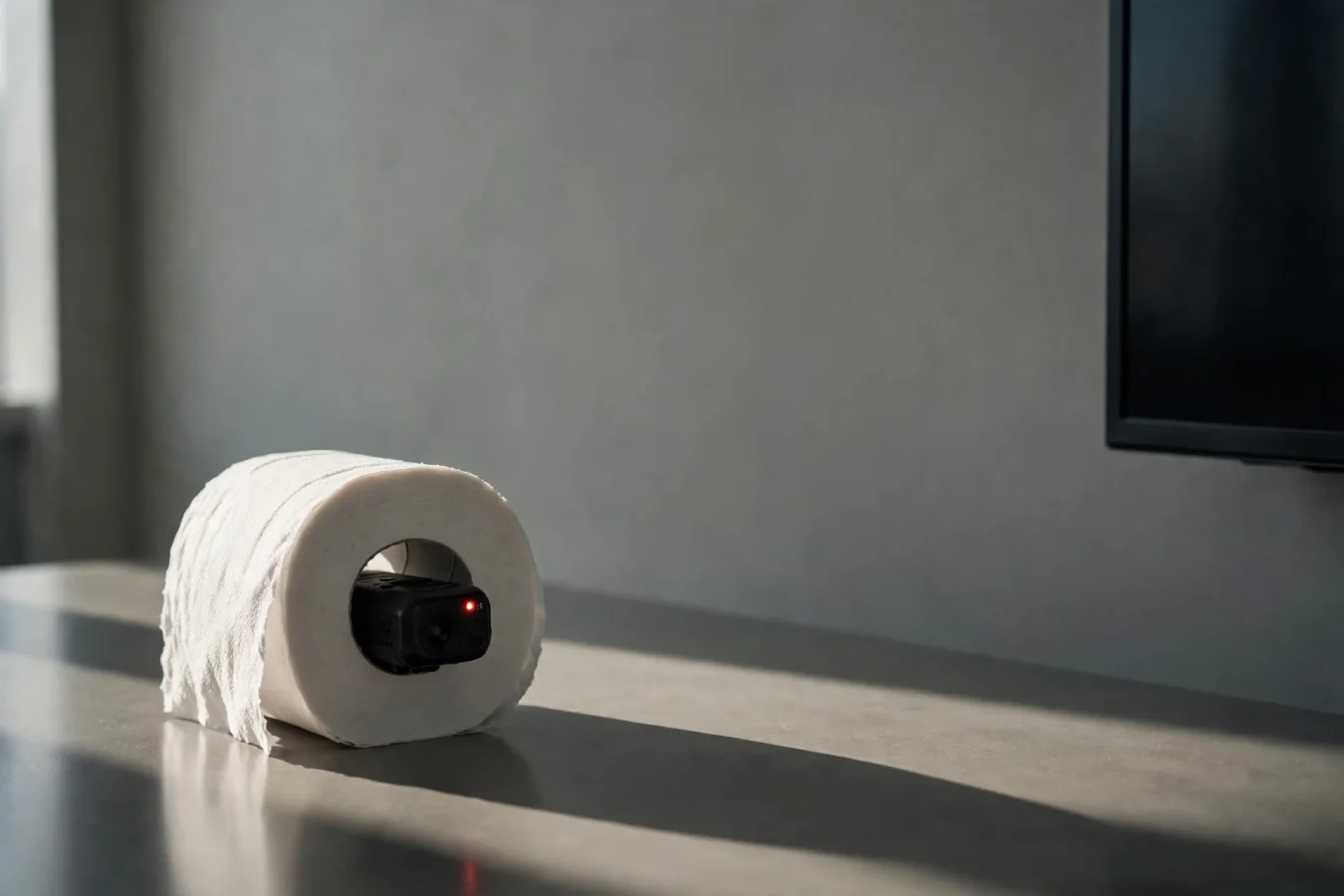
OpenAI engineer charged after hidden recorder found in conference room — faces up to five years
Abdulrahman Alfozan, 35, an OpenAI engineer since July 2025, was arrested on October 9 and charged with unlawful interception. The hidden recorder was found concealed in toilet paper in a TV port in an executive conference room — and the company claims its own models identified who planted it, a claim that remains undocumented.
An OpenAI employee has been arrested and charged with installing a hidden audio recorder in an executive conference room at the company's San Francisco offices. Abdulrahman Alfozan, a 35-year-old Saudi national, was arrested on October 9 and made his initial appearance in federal court on October 13, 2026, according to the Department of Justice (DOJ). The charge is using, or attempting to use, an electronic, mechanical, or other device to intercept oral communications. If convicted, he faces up to five years in prison, a $250,000 fine, and three years of supervised release.
The device in the TV port
According to the complaint, the recorder was discovered on September 30 by OpenAI employees: a "surreptitious audio recorder" sitting in a USB port on the back of a TV in an executive conference room. The company concluded that the device, which was hidden in toilet paper, had been installed on or around September 28, and that its contents were encrypted (DOJ).
The conference room was not chosen at random. The complaint states that meetings there frequently involved highly confidential technical, commercial, and strategic information — proprietary research, product plans, business opportunities, and non-public information about OpenAI's technical progress, strategic decisions, capabilities, priorities, government engagements, and commercial relationships (Business Insider, citing the DOJ).
How the trail was followed
Several threads converged in the investigation, as laid out in the complaint:
The chatbot log. A chatbot account linked to Alfozan's spouse — which shared several identifiers with his own account — submitted queries between September 24 and 30 about building, customizing, installing, testing, hiding, and remotely controlling a device. The questions included how to "build a continuous audio recorder," "customize Wi-Fi connectivity," "improve audio and live listening," and "encrypt the SD card." The log also contained questions about the device's custom header and the MAC address of the recorder in question (DOJ).
The surveillance cameras. The conference room had no camera when the device was installed, but CCTV footage from the offices showed that Alfozan had been near the room around half a dozen times in September, without having access authorization to the area. OpenAI then mounted a camera that captured him checking behind the TV on October 5 (AP via Seattle Times).
The bag. That same day, on or around October 5, Alfozan left a bag in another room in the building, according to the complaint. Security personnel opened it and found — in addition to his wallet and ID — a second recorder resembling the first (DOJ).
OpenAI's account
OpenAI went public with the case in a message on X on October 13: "We detected a sophisticated recorder hidden inside one of our offices. We used our models to understand the device and where it had come from, and identified that a particular employee had planted it a few days earlier. We referred the matter to the FBI" (The Verge). The company writes that the FBI investigation is ongoing and that it will continue to cooperate.
It is a striking detail: a company claiming that its own AI models were used to analyze the interception equipment and identify the employee. But exactly how the models were used is unclear — it is a company description, not a documented investigative technique (Business Insider).
At the same time, OpenAI states that the case so far shows no sign of intrusion into the technology itself: "At this time, we have no indications that this individual gained unauthorized access to or exfiltrated model weights, source code, or customer data" (TechCrunch via Yahoo).
What the FBI Director says — and what the complaint doesn't
FBI Director Kash Patel has characterized the alleged act as an attempt to "intercept sensitive communications about the company's superintelligent technology" (TechCrunch via Yahoo). That is an official characterization from an agency, not an established fact: according to TechCrunch, it is unclear exactly what purpose the recorder was used for, and the complaint reportedly does not describe what Alfozan intended to do with any intercepted communications.
What remains open
Several significant questions are unanswered. It is not known whether any information was actually recorded, stored, or transmitted from the device — its contents were encrypted, and it is unclear whether they were ever decrypted, or whether there were any recordings on it at all. Nor is it settled how technically advanced the equipment was compared with ordinary recorders, according to TechCrunch.
Alfozan has been charged, not convicted: all allegations are claims from prosecutors, and neither he nor a defense attorney has been reached for comment, AP and TechCrunch report. The FBI investigation is ongoing, and it remains to be seen whether the charges are expanded, or what any trial would reveal about motive.
For OpenAI, the case points to something bigger than one employee: a company working on technology surrounded by national security interest has now publicly disclosed that physical eavesdropping in its own conference rooms is a threat it must manage — and that it uses its own models as tools in its security work. Whatever the outcome of the trial, that combination is in itself news in the industry.