
Utah pilot lets AI prescribe acne medication from a face scan — under a three-stage leash
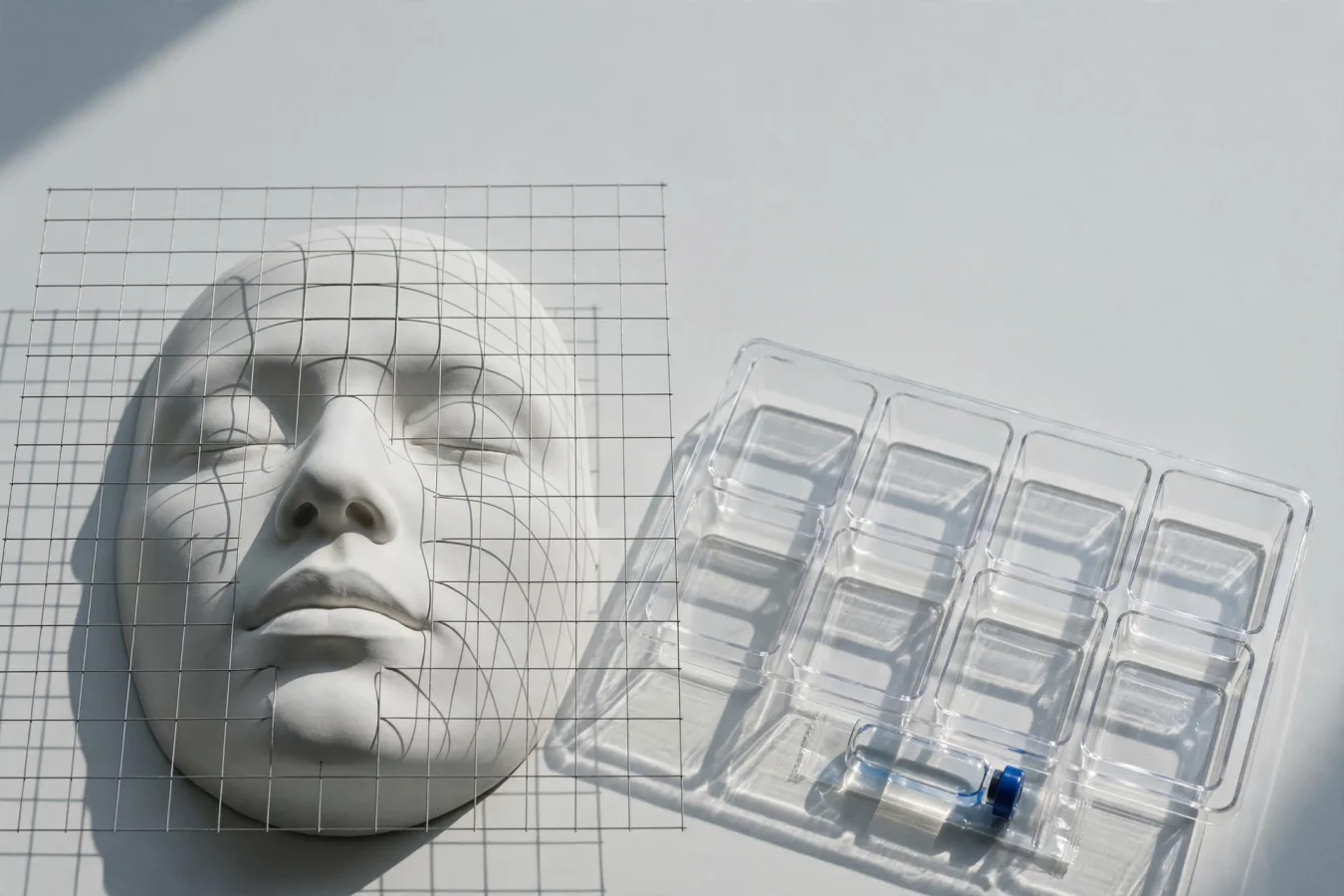
Since October 5, adults in Utah can get an initial prescription for acne treatment without seeing a doctor: a face scan in an app, a severity assessment from software, and a prescription drawn from a list of eight approved treatments. The pilot, run by the company Nolla Health, is — as far as is known — the first in the US where an AI system can issue an initial medication prescription, and it is authorized through the state's so-called sandbox program under close monitoring in three phases. But the state is careful to stress that participation is not the same as approval.
What actually happened
The pilot received its formal framework through a regulatory agreement between Nolla Health, Utah's Office of Artificial Intelligence Policy (OAIP), and the state's Division of Professional Licensing, signed September 22, 2026, according to the state's public pilot registry. The agreement falls under the AI Learning Lab, a sandbox program that relaxes certain state rules so companies can test AI products under supervision (MSN).
The pilot went live on October 5, allowing Utah residents aged 18 and over to use the company's Nolla Derm app to receive acne treatment recommendations and, where appropriate, a prescription (Newsweek). Newsweek describes the arrangement as the first in the US — as far as is known — to let an AI system issue an initial prescription without a doctor's visit. That phrasing is worth keeping: there is no independent confirmation that similar pilots do not exist elsewhere.
How it works
The process, as Bloomberg described it via CNET, is simple: the patient scans their face in the app and fills out medical history forms. The AI software analyzes the face and generates an acne severity score. If the scan and the medical information warrant it, the patient receives a prescription for a treatment drawn from a list of eight approved treatments.
The agreement runs for one year and is divided into three phases:
- Phase one: The first 100 prescriptions are to be overseen by a state-certified physician before they are sent to the pharmacy.
- Phase two: If it works, the AI can treat more patients fully — here the sources diverge. CNET (citing Bloomberg) says 400 patients, while MSN says up to 500. The extent of physician review in this phase is also unclear: CNET writes that a physician reviews the decisions weekly, while MSN describes a physician reviewing cases "afterwards, at least weekly." We therefore deliberately do not state a single figure or setup.
- Phase three: The physician audits at least 10% of prescriptions each month.
To advance between phases, MSN reports, requires 95% agreement with physicians, zero serious adverse events, and written approval from the state. Adverse events must be reported to the state within 24 hours.
What the state has approved — and has not
Utah has created a legal space for testing, but explicitly distinguishes this from a professional endorsement. OAIP states on its page for authorized pilots: "Participation in our AI sandbox does not mean that the state of Utah has approved, endorsed, certified, or vouches for the product" (MSN).
The framework is broader than Nolla alone. The company is one of five organizations that have entered pilot agreements with OAIP to gather data on clinical AI tools. The others are Expect Fitness, which works on AI-assisted physical therapy for women in postpartum recovery, with urinary incontinence and pelvic floor issues; August AI, which deals with routine renewal of existing prescriptions; and University of Utah Health and Intermountain Health, which are to help get health AI pilots in place (Yahoo/PCMag). Among these, only Nolla (initial prescriptions, acne) and August AI (routine prescription renewals) touch prescribing as far as is known.
The physicians' caution
The Utah Medical Association (UMA) is noticeably quietly positive, but no enthusiast. Michelle McOmber, UMA's executive director, tells CNET in an email that Nolla did not need UMA approval to run the pilot, but that OAIP had a brief conversation with the organization's sitting president, who is a dermatologist. "We never talked with them," says McOmber. "The Office of AI Policy had a brief conversation with our sitting president, who is a dermatologist. OAIP also had the subcommittee of the Utah Medical Licensing Board look at [the plan] and comment" (CNET).
She frames the skepticism this way: "We think people are trying to move too fast in using and trusting AI in healthcare," says McOmber. "We feel that AI, as a tool, can help physicians in different ways, and that it's going to be used — and even should be used" (CNET).
The skepticism has a concrete history. In April, the Utah Medical Licensing Board formally asked state authorities to "immediately" halt a program run by the company Doctronic, which let AI handle certain prescription renewals of existing medications. In a letter to OAIP, the board wrote that it had only first discovered the program existed after it was in operation, and argued that prescription decisions touch "critical safety and clinical issues," including monitoring of adverse events, drug interactions, and whether the medications work (Newsweek). The difference from the Nolla pilot is precisely the structuring: the Doctronic program was discovered in operation, while the Nolla agreement builds in the phases, thresholds, and reporting requirements in advance.
The access claims — and which numbers are the company's own
Nolla justifies the pilot with an access gap, but the figures come from the company itself. According to MSN, Nolla points out that over 80% of US counties are considered healthcare deserts, and that roughly 100,000 Utah residents have active acne at any given time. Only about 10% of them ever see a dermatologist. The average wait time for an appointment in the state is 61 days, nearly double the national median; eleven counties have no dermatologist at all; and a single visit can cost up to 300 dollars.
The performance figure is also self-reported: Nolla states that licensed clinicians agreed with the AI's recommendations in 96% of cases in practice, with deviations that were minor — for example, the strength of a topical preparation. The figure has not been independently verified (MSN).
If the pilot goes well, Nolla is interested in expanding to more conditions and medications. Dr. Zaid Fadul, the company's chief medical advisor, suggested to Inc. rosacea, influenza, and urinary tract infections with limited complications as possible next steps (Yahoo/PCMag).
What remains open
Several key points are unresolved in the public documentation so far. The agreement itself between Nolla and the state has not been published in full text, so all details about phase advancement and thresholds come from secondary sources building on the state's pilot registry. The stage-two figure — 400 or 500 patients — and the exact scope of physician review in that phase vary between outlets and have not yet been resolved. CNET also reports that Nolla Health did not respond to the outlet's request for comment, so the company has not itself confirmed the details directly to that outlet.
The biggest open question, however, is independent evidence: as long as the 96% figure and the access figures come only from the company, the three phases — with physician oversight, the 95% agreement requirement, zero tolerance for serious adverse events, and 24-hour reporting — will be the only real documentation of whether an AI can write initial prescriptions safely. In a year, we will know more.